

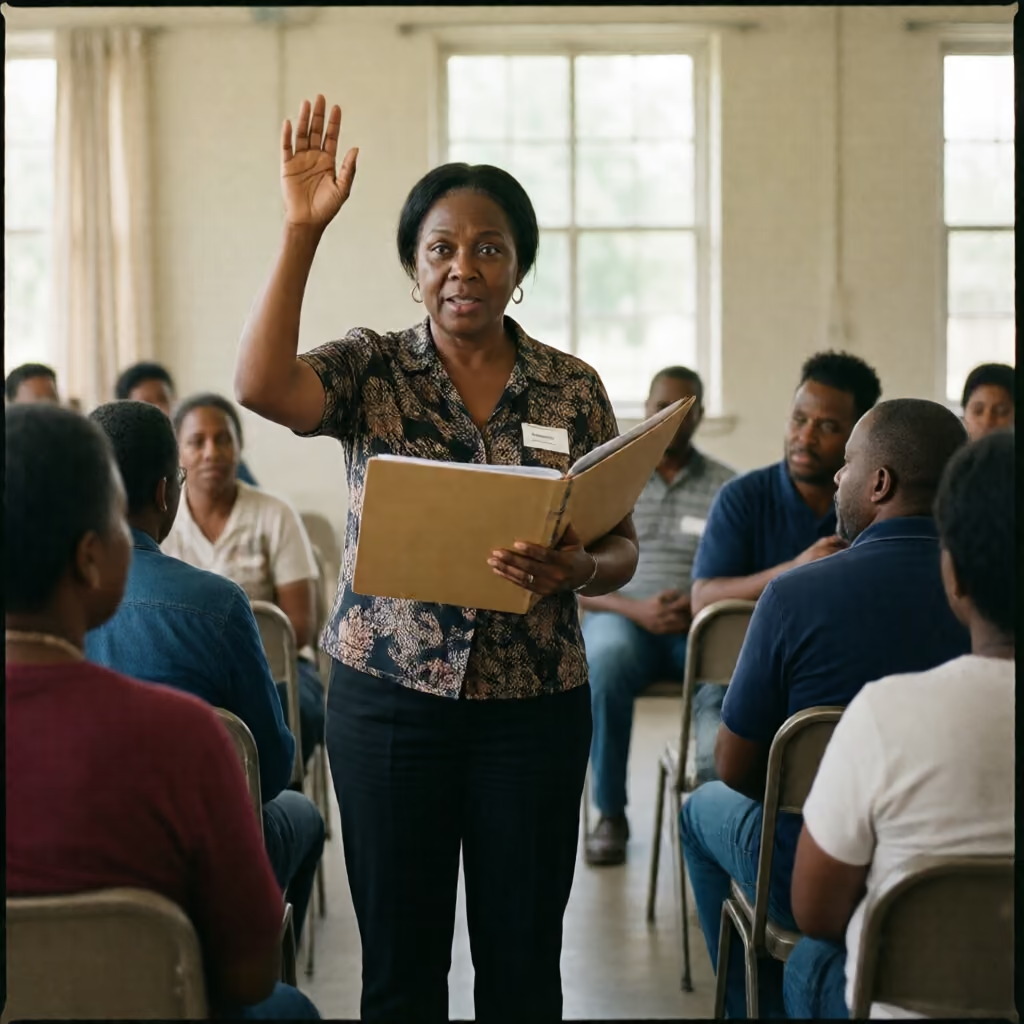
vorneweg
first / at the outset
In advance or at the beginning; before anything else happens or is said.
EXAMPLE
Vorneweg möchte ich mich bei allen Helfern bedanken.
First of all, I would like to thank all the helpers.
ahead / first
Loading your saved state.
first / at the outset
In advance or at the beginning; before anything else happens or is said.
Vorneweg möchte ich mich bei allen Helfern bedanken.
First of all, I would like to thank all the helpers.

ahead
At the front or at the head of a group, movement, or line.
Der erfahrenste Wanderer ging vorneweg.
The most experienced hiker went ahead.
The meaning is often clear from the verb and the situation: when speaking, explaining, or thanking, „vorneweg“ (beforehand) refers to an introductory statement; with verbs of movement, it refers to the front position in a group or line.
Vorneweg sei gesagt, dass der Termin noch nicht feststeht.
Let me say first of all that the date has not yet been fixed.
Beim Aufstieg ging die Bergführerin vorneweg.
During the ascent, the mountain guide went ahead.
„Vorneweg“ (beforehand / ahead) can appear at the beginning of a sentence, in which case it takes the first position; the finite verb follows directly afterward. However, it can also appear later in the sentence.
Vorneweg erklärte der Trainer die wichtigsten Regeln.
First, the coach explained the most important rules.
Beim Festumzug fuhr ein bunt geschmückter Traktor vorneweg.
During the parade, a brightly decorated tractor led the way.
In the meaning „zu Beginn“ (at the beginning), „vorneweg“ (beforehand) often appears with statements used to announce, explain, or emphasize something. Typical combinations are „vorneweg sagen“ (to say beforehand), „vorneweg erklären“ (to explain beforehand), and „vorneweg betonen“ (to emphasize beforehand).
Ich möchte vorneweg betonen, dass niemand bestraft werden soll.
I would like to stress at the outset that no one is to be punished.
In the meaning „an der Spitze“ (at the head), „vorneweg“ (ahead) is especially often used with verbs of movement. It then describes who or what is moving at the very front of a group.
Die Kinder rannten vorneweg, die Eltern folgten langsam.
The children ran ahead while the parents followed slowly.