


vorweg
beforehand
Before something else happens or is said; in advance.
EXAMPLE
Um es gleich vorweg zu nehmen: Ich bin mit dem Vorschlag nicht einverstanden.
To say it right at the outset: I don't agree with the proposal.
beforehand / ahead
Loading your saved state.
beforehand
Before something else happens or is said; in advance.
Um es gleich vorweg zu nehmen: Ich bin mit dem Vorschlag nicht einverstanden.
To say it right at the outset: I don't agree with the proposal.
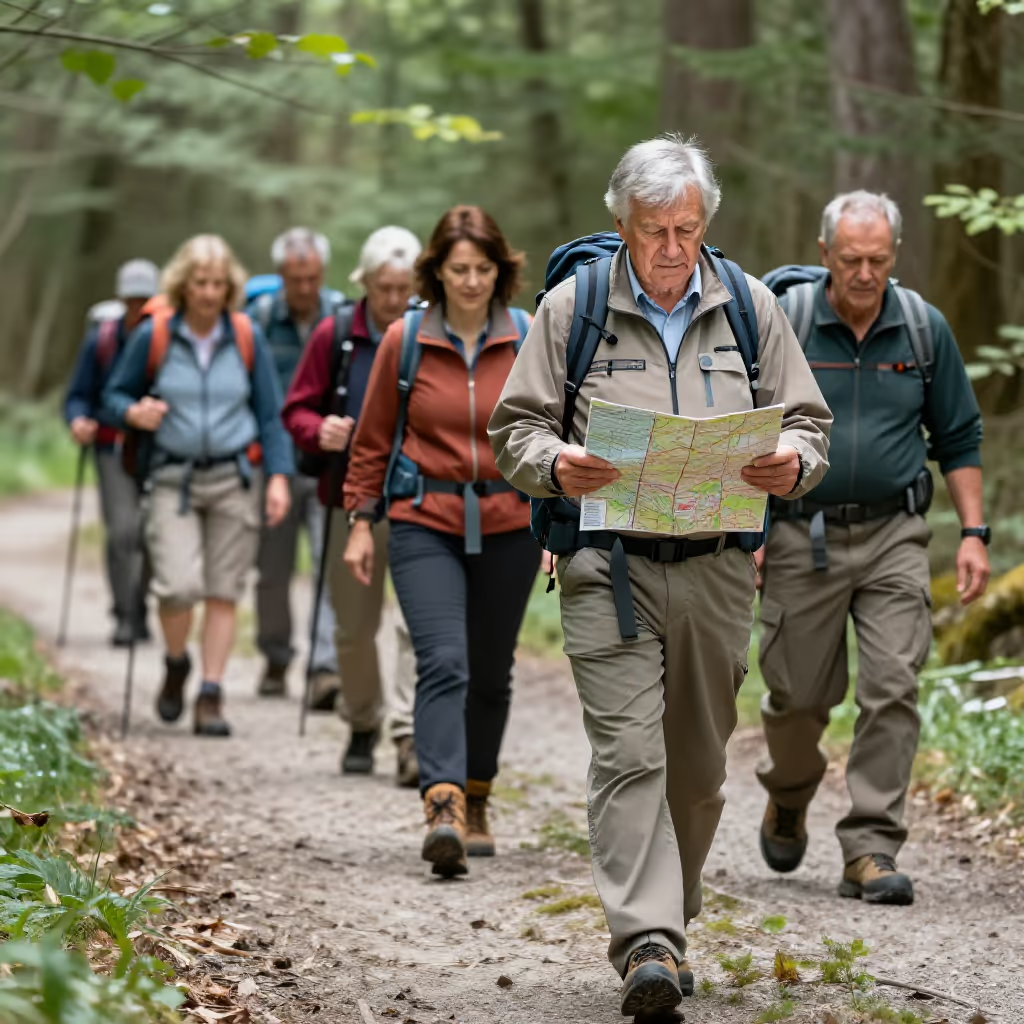
ahead
At the front of a movement or group; ahead.
Der Kapitän ging seiner Mannschaft als Erster vorweg auf das Spielfeld.
The captain went ahead of his team onto the playing field first.
The adverb 'vorweg' (beforehand/ahead) is made up of 'vor' (before/in front of) and 'weg' (away/way). This combination can be understood both temporally ('before') and spatially ('in front on the way'), which explains the two main meanings.
Vorweg eine kurze Bemerkung: Die Frist wurde verlängert.
First, a brief note: The deadline has been extended.
When 'vorweg' (beforehand) stands at the beginning of a sentence, the verb follows directly after it and then the subject. This word order is called inversion and emphasizes the introductory information.
Vorweg möchte ich mich bei allen für die Hilfe bedanken.
First, I would like to thank everyone for their help.
A very common and useful phrase is 'etwas vorwegnehmen' (to reveal something in advance / to anticipate something). It means to reveal a result or information before it would actually be its turn.
Ich will nicht zu viel vorwegnehmen, aber das Ende des Films ist sehr überraschend.
I don't want to give away too much in advance, but the ending of the film is very surprising.
In the meaning of 'to go ahead', 'vorweg' (ahead) is often used with a verb of movement and a person in the dative. The dative indicates whom you are going ahead of.
Der Guide ging der Gruppe auf dem schmalen Pfad vorweg.
The guide went ahead of the group on the narrow path.
first / for now
Zunächst and vorweg can put a statement first. Zunächst introduces the first part of a sequence that follows. Vorweg announces a remark made before the actual presentation and situated more outside its main flow.

Vorweg sage ich, dass noch nicht alle Einzelheiten des Berichts feststehen.
Beforehand, I should say that not all the details of the report have been finalized yet.
Zunächst beschreibe ich das Problem, danach erkläre ich unsere Lösung.
First, I will describe the problem; then I will explain our solution.