

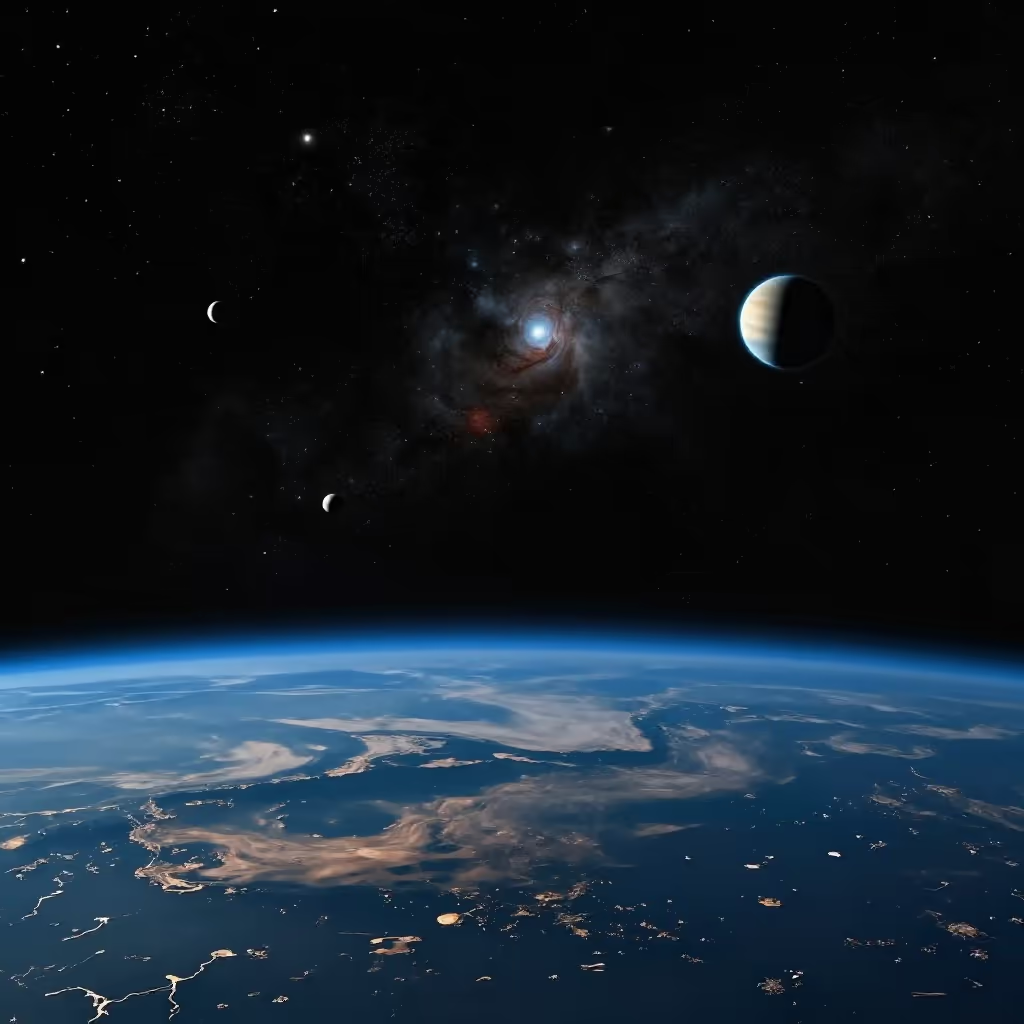
das Weltall
outer space
The entire space outside Earth with all stars, planets, and other celestial bodies; the cosmos.
Die Erforschung des Weltalls fasziniert die Menschheit seit jeher.
The exploration of outer space has always fascinated humanity.
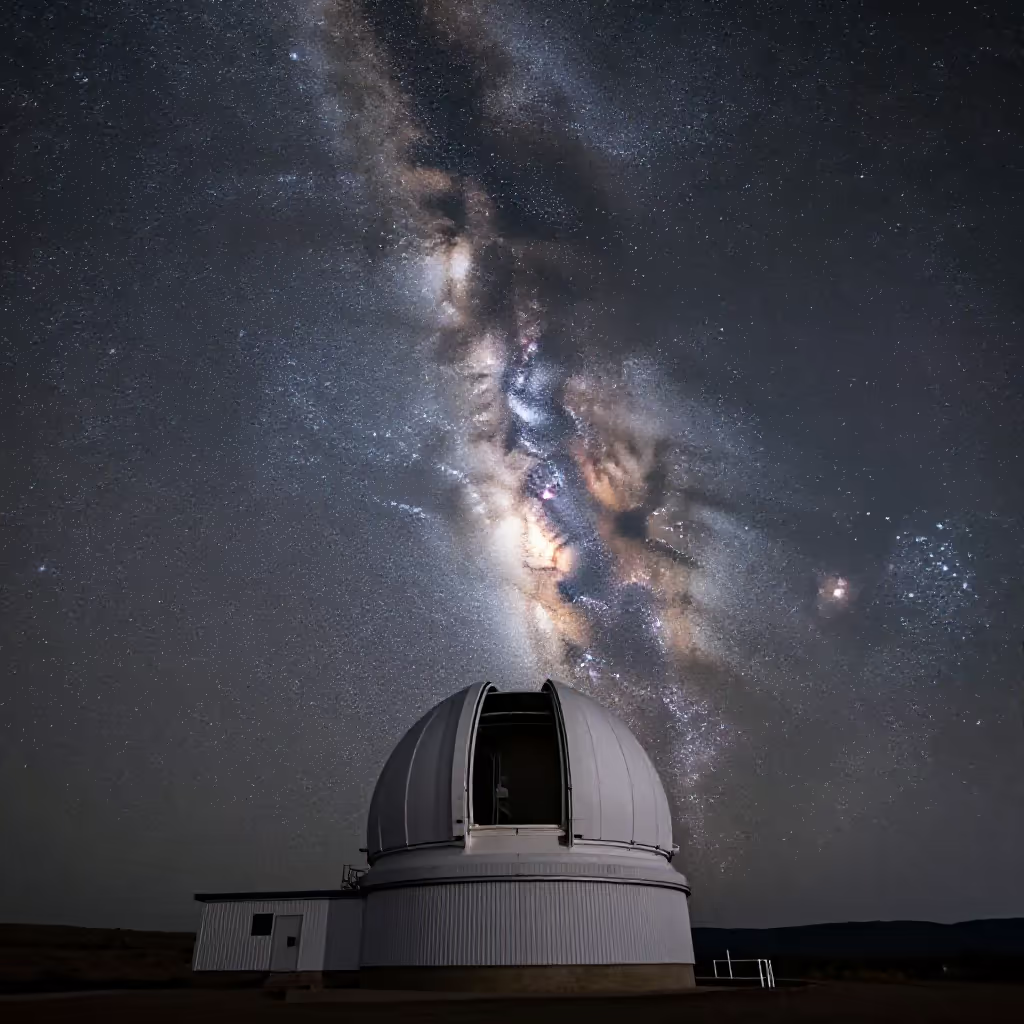
outer space
Loading your saved state.

outer space
The entire space outside Earth with all stars, planets, and other celestial bodies; the cosmos.
Die Erforschung des Weltalls fasziniert die Menschheit seit jeher.
The exploration of outer space has always fascinated humanity.
'Weltall' (outer space) is a compound of 'Welt' (world) and 'All' (universe/space). The word 'All' is an old term for the cosmos or the universe. Literally, it therefore means something like 'world-universe.'
Astronauten reisen ins Weltall, um Planeten zu erforschen.
Astronauts travel into outer space to explore planets.
Pay attention to the prepositions and the case: movement into space is expressed with 'ins Weltall' (into outer space, accusative), while a state or location is described with 'im Weltall' (in outer space, dative).
Die Rakete fliegt ins Weltall.
The rocket is flying into outer space.
Common verbs used with 'Weltall' (outer space) are 'erforschen' (to explore), 'fliegen' (to fly), and 'reisen' (to travel). These describe typical activities connected with space.
Viele Wissenschaftler träumen davon, das Weltall zu erforschen.
Many scientists dream of exploring outer space.
universe
Universum and Weltall can both refer to the space containing stars, planets, and other celestial bodies. Weltall mainly refers to the space outside Earth and sounds direct and vivid in everyday language. Universum is broader and more abstract because it encompasses the whole of cosmic reality.

Das Kind beobachtete durch das Teleskop das Weltall außerhalb der Erde.
The child observed outer space beyond Earth through the telescope.
Die Forschenden versuchen, die Entstehung des Universums besser zu verstehen.
The researchers are trying to better understand how the universe came into being.