


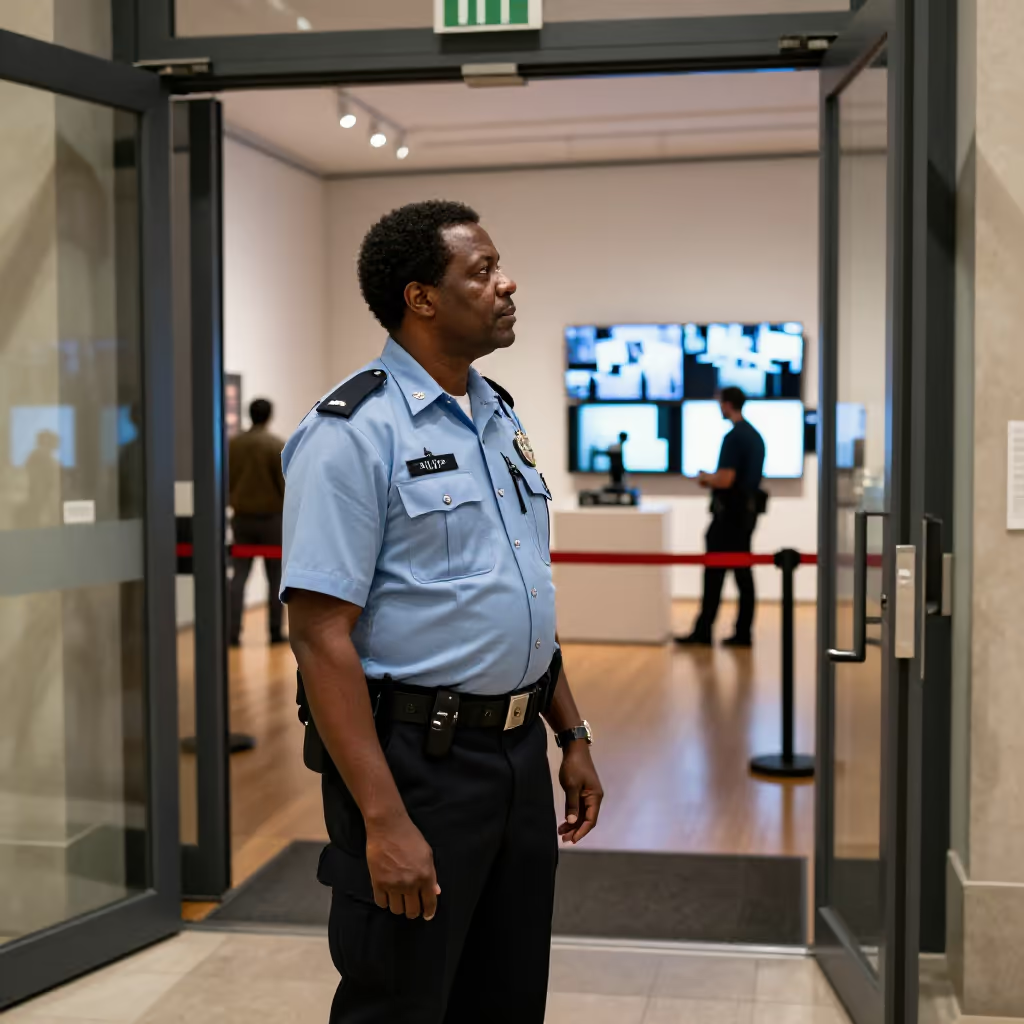
A male person whose job is to guard and protect a building, an area, or people.
example
Der Wachmann machte nachts seine Runde durch das leere Bürogebäude.
The security guard made his rounds through the empty office building at night.
Usage tips
Compound structure
The term is made up of the verb stem 'wach-' from 'wachen' (to keep watch) and 'Mann' (man). So it literally describes a man whose task is to keep watch or guard something.
EXAMPLE
Ein Wachmann kontrollierte am Eingang die Taschen der Besucher.
A security guard checked the visitors' bags at the entrance.
Word family
The word belongs to the family of 'wachen' (to guard, to keep watch) and 'die Wache' (the act of guarding; guard duty). This connection helps you understand and remember the meaning.
EXAMPLE
Die Soldaten halten abwechselnd Wache.
The soldiers take turns keeping watch.
Typical activities
A 'Wachmann' (security guard) is often associated with certain activities. Typical phrases are: 'Der Wachmann macht seine Runde' (the security guard makes his rounds), 'kontrolliert den Eingang' (checks the entrance), or 'sorgt für Sicherheit' (ensures security).
EXAMPLE
Der Wachmann sorgt auf dem Festivalgelände für Ordnung.
The security guard maintains order on the festival grounds.
Compare with
confusable
Wachmann vs Polizist
police officer
'der Polizist' and 'der Wachmann' both have to do with security. However, a Polizist belongs to the police and is allowed to investigate crimes or check people. A Wachmann usually protects a building, an area, or people, for example in a store, at an entrance, or at an event. Learners may confuse the words because both can wear uniforms. When it is about the state police, 'Polizist' fits. When someone guards something privately or for a company, 'Wachmann' fits.
Wachmann
Am Eingang der Firma prüft der Wachmann die Ausweise.
At the company entrance, the security guard checks the IDs.
Polizist
Nach dem Diebstahl spricht der Kunde mit einem Polizisten.
After the theft, the customer speaks with a police officer.