

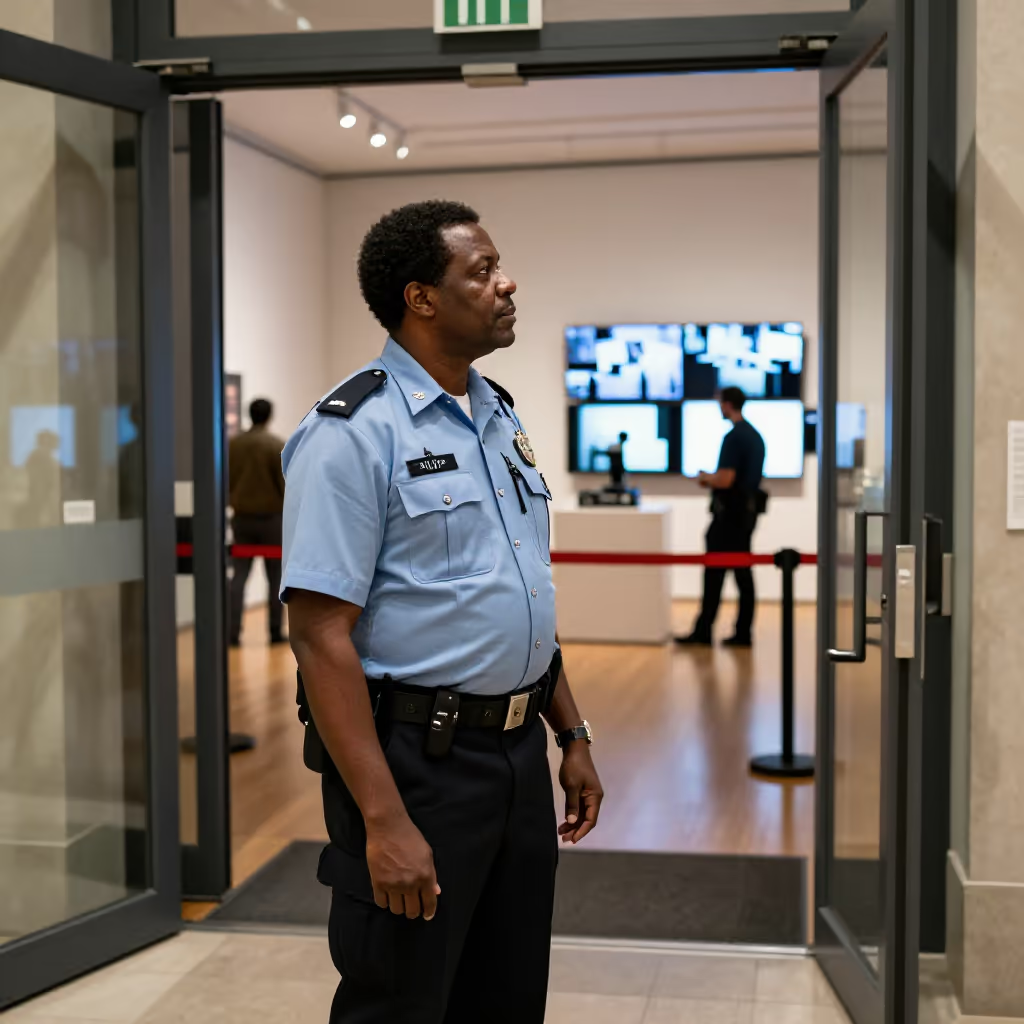
der Wächter
guard
A person whose job is to guard something or someone and protect them from danger, theft, or unauthorized entry.
EXAMPLE
Ein Wächter patrouilliert nachts um das Museumsgebäude.
A guard patrols around the museum building at night.
guard
Loading your saved state.
guard
A person whose job is to guard something or someone and protect them from danger, theft, or unauthorized entry.
Ein Wächter patrouilliert nachts um das Museumsgebäude.
A guard patrols around the museum building at night.
guardian
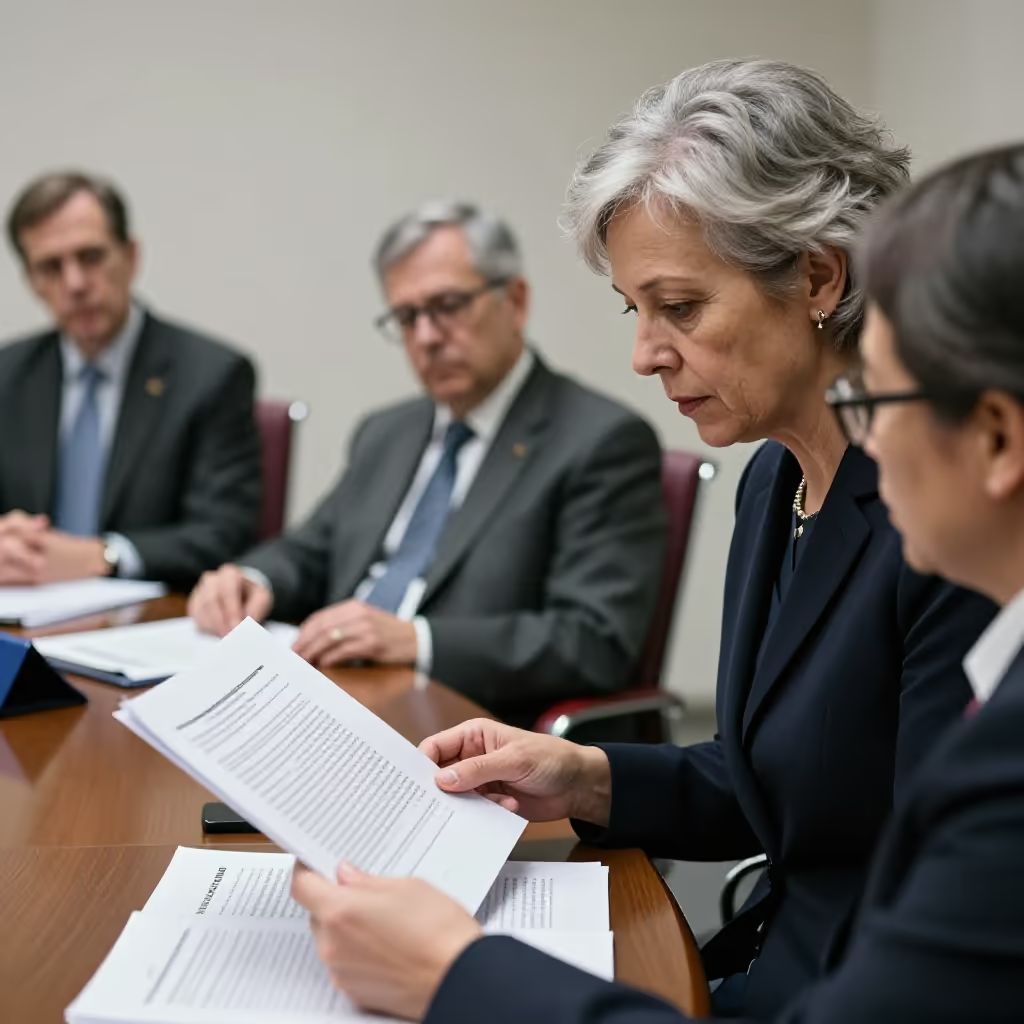
In a figurative sense, a person or institution that watches over whether certain rules, values, or principles are being upheld.
Das Verfassungsgericht gilt als Wächter der Demokratie.
The constitutional court is considered a guardian of democracy.
The noun 'Wächter' (guard) is derived directly from the verb 'wachen' (to watch/keep guard). The ending '-er' indicates the person who performs the action of keeping watch.
Die Aufgabe des Wächters ist es, die ganze Nacht zu wachen.
The guard's job is to keep watch all night.
When you want to express what a guard is watching over, the preposition 'über' with the accusative is often used. This construction comes from the verb 'wachen über' (to watch over).
Er ist der Wächter über die königlichen Juwelen.
He is the guardian of the royal jewels.
In its concrete meaning, 'Wächter' (guard) is often combined with the place or time of the watch, for example as 'Nachtwächter' (night watchman), 'Museumswächter' (museum guard), or 'Torwächter' (gatekeeper).
Der Nachtwächter macht jede Stunde seine Runde durch die Altstadt.
The night watchman makes his rounds through the old town every hour.
You can recognize the figurative meaning by the fact that the 'Wächter' (guardian) watches over something abstract. Typical formulations are 'Wächter der Verfassung' (guardian of the constitution), 'Wächter der Moral' (guardian of morality), or 'Wächter über die Tradition' (guardian of tradition).
Die Presse wird oft als Wächter der Demokratie bezeichnet.
The press is often described as a guardian of democracy.
security guard
Both words can refer to a person who guards a place or objects. Wächter sounds more general, often associated with a role or somewhat elevated in style, while Sicherheitskraft is the modern occupational term. Sicherheitskraft is therefore usually more appropriate for an employee of a security service.
Nachts stand ein Wächter am Eingang des alten Schlosses.
At night, a guard stood at the entrance to the old castle.
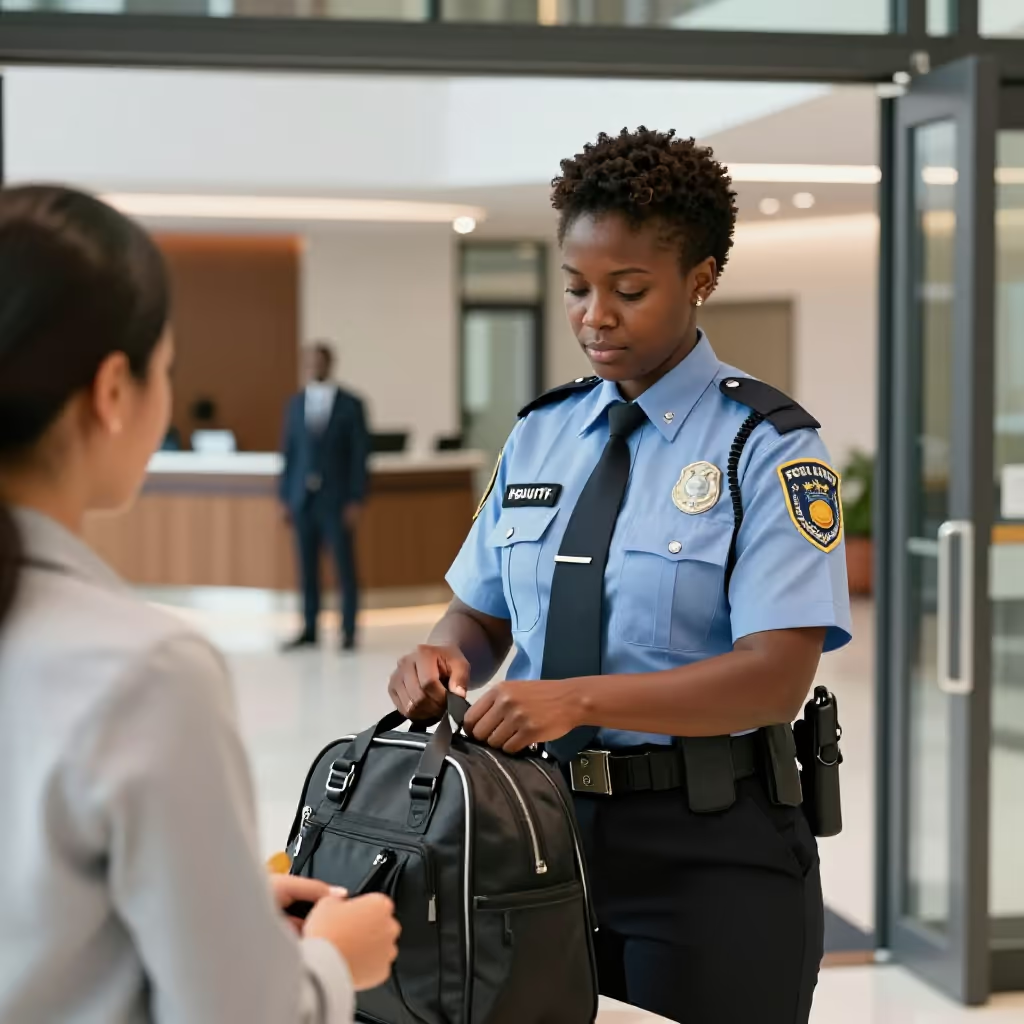
Eine Sicherheitskraft kontrollierte am Eingang des Einkaufszentrums die Besucher.
A security guard checked visitors at the entrance to the shopping center.