

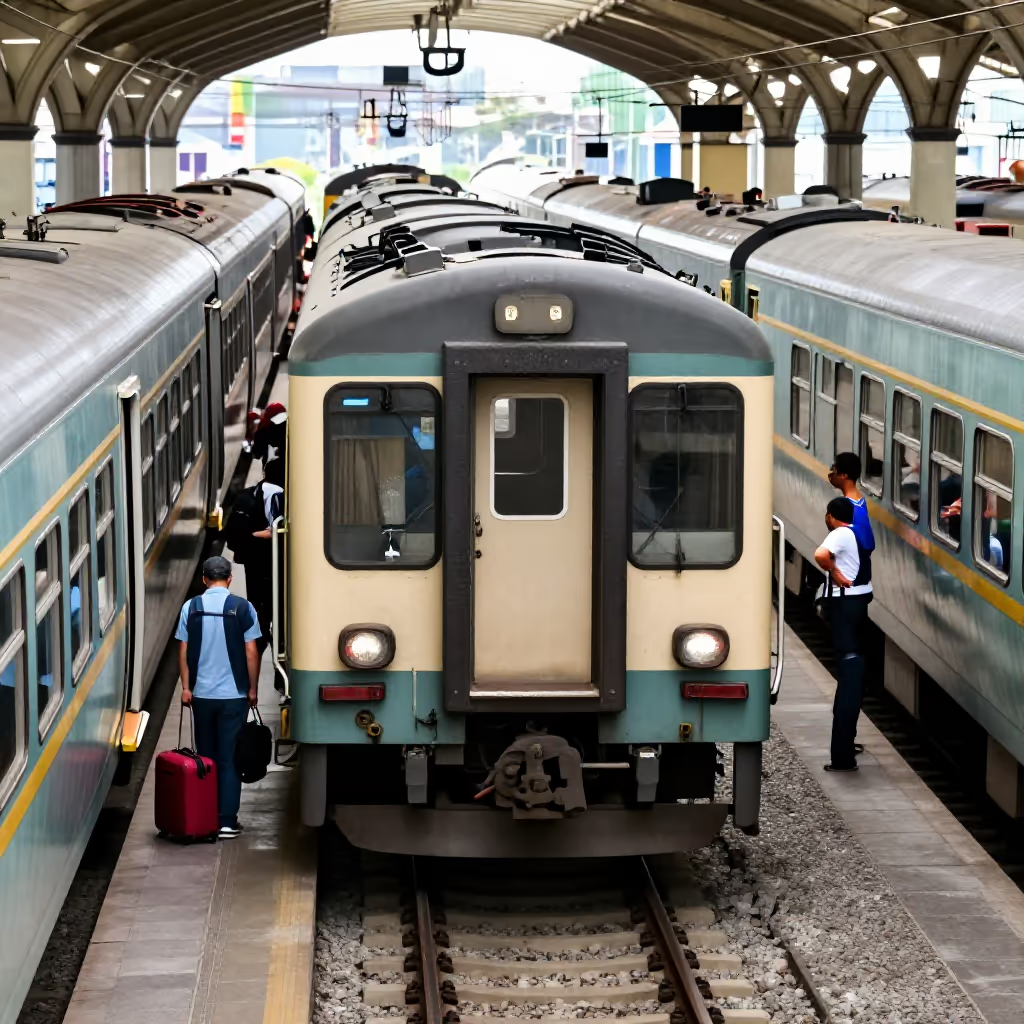
der Waggon
railcar
A single vehicle of a railway train intended for transporting people or goods.
EXAMPLE
Der Zug bestand aus acht Waggons, darunter ein Speisewagen.
The train consisted of eight railcars, including a dining car.
railcar
Loading your saved state.
railcar
A single vehicle of a railway train intended for transporting people or goods.
Der Zug bestand aus acht Waggons, darunter ein Speisewagen.
The train consisted of eight railcars, including a dining car.
'Waggon' is often described more precisely by a defining word in order to make the type of car clear, e.g., 'Personenwaggon' (passenger car), 'Güterwaggon' (freight car), or 'Schlafwaggon' (sleeping car).
Der letzte Waggon des Zuges war ein Güterwaggon.
The last car of the train was a freight car.
Pay attention to the preposition 'in' and the case: 'in den Waggon einsteigen' (to get into the car; accusative for direction) and 'im Waggon sitzen' (to sit in the car; dative for location).
Die Passagiere stiegen schnell in den Waggon.
The passengers quickly got into the railcar.
Common verbs in connection with 'Waggon' are 'einsteigen' (to get on/in), 'aussteigen' (to get off/out), 'umsteigen' (to transfer/change trains), as well as the technical terms 'ankoppeln' (to couple/attach) and 'abhängen' (to uncouple/detach).
Am Bahnhof wurden zwei weitere Waggons an den Zug angekoppelt.
At the station, two more railcars were coupled to the train.