

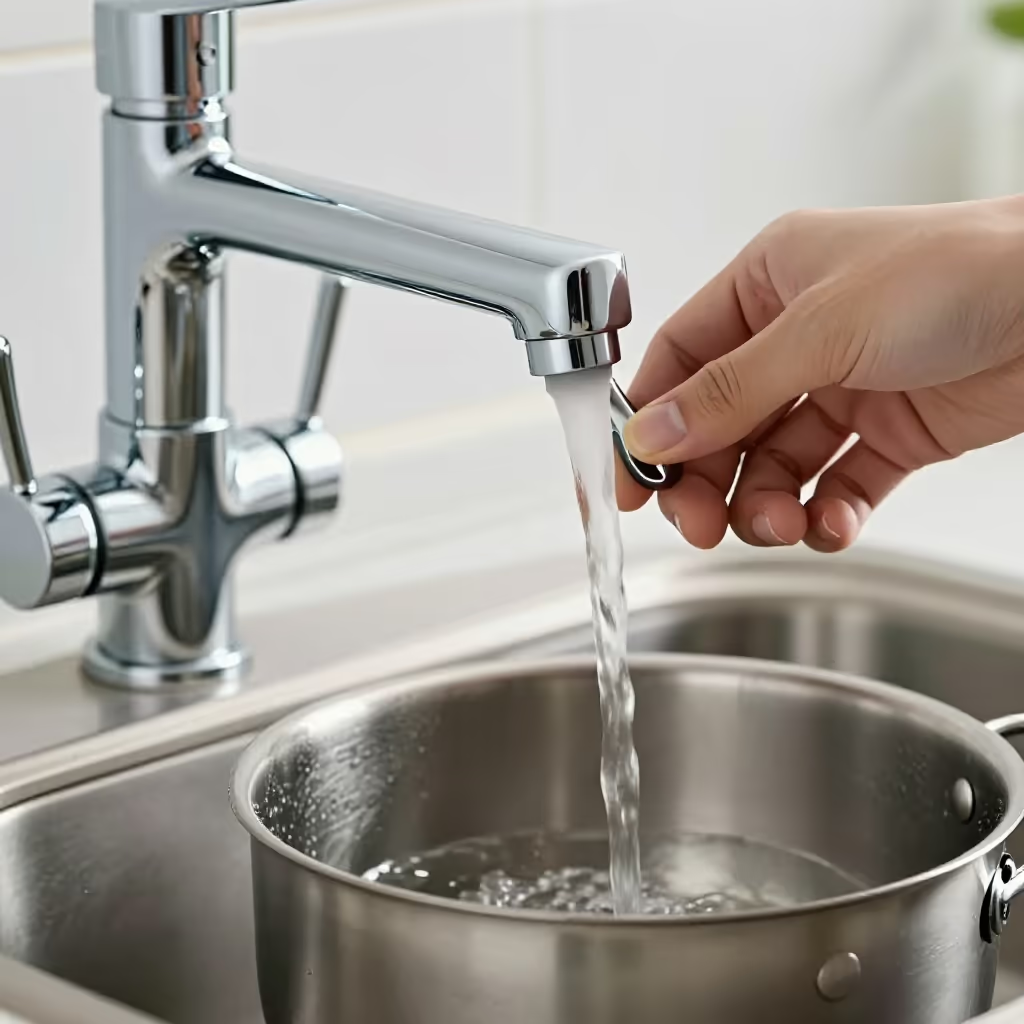
der Wasserhahn
faucet / tap
A device on a water pipe with which you can regulate and stop the flow of water.
EXAMPLE
Bitte dreh den Wasserhahn zu, er tropft.
Please turn off the faucet; it's dripping.
faucet / tap
Loading your saved state.
faucet / tap
A device on a water pipe with which you can regulate and stop the flow of water.
Bitte dreh den Wasserhahn zu, er tropft.
Please turn off the faucet; it's dripping.
The word is made up of 'Wasser' (water) and 'Hahn' (rooster). 'Hahn' actually means 'Gockel/rooster'. In the past, the handles often looked like a rooster's head, hence the name.
Der Wasserhahn in der Küche ist neu.
The faucet in the kitchen is new.
The most important verbs are 'aufdrehen' (to turn on/open) and 'zudrehen' (to turn off/close). If water is flowing uncontrolled, you say 'der Wasserhahn läuft' (the faucet is running) or 'der Wasserhahn tropft' (the faucet is dripping).
Kannst du bitte den Wasserhahn etwas wärmer aufdrehen?
Can you please turn the faucet a little warmer?
You get water 'aus dem Wasserhahn' (from the faucet; dative, origin). You hold something 'unter den Wasserhahn' (under the faucet; accusative, direction).
Fülle die Flasche bitte mit Wasser aus dem Wasserhahn.
Please fill the bottle with water from the faucet.
valve
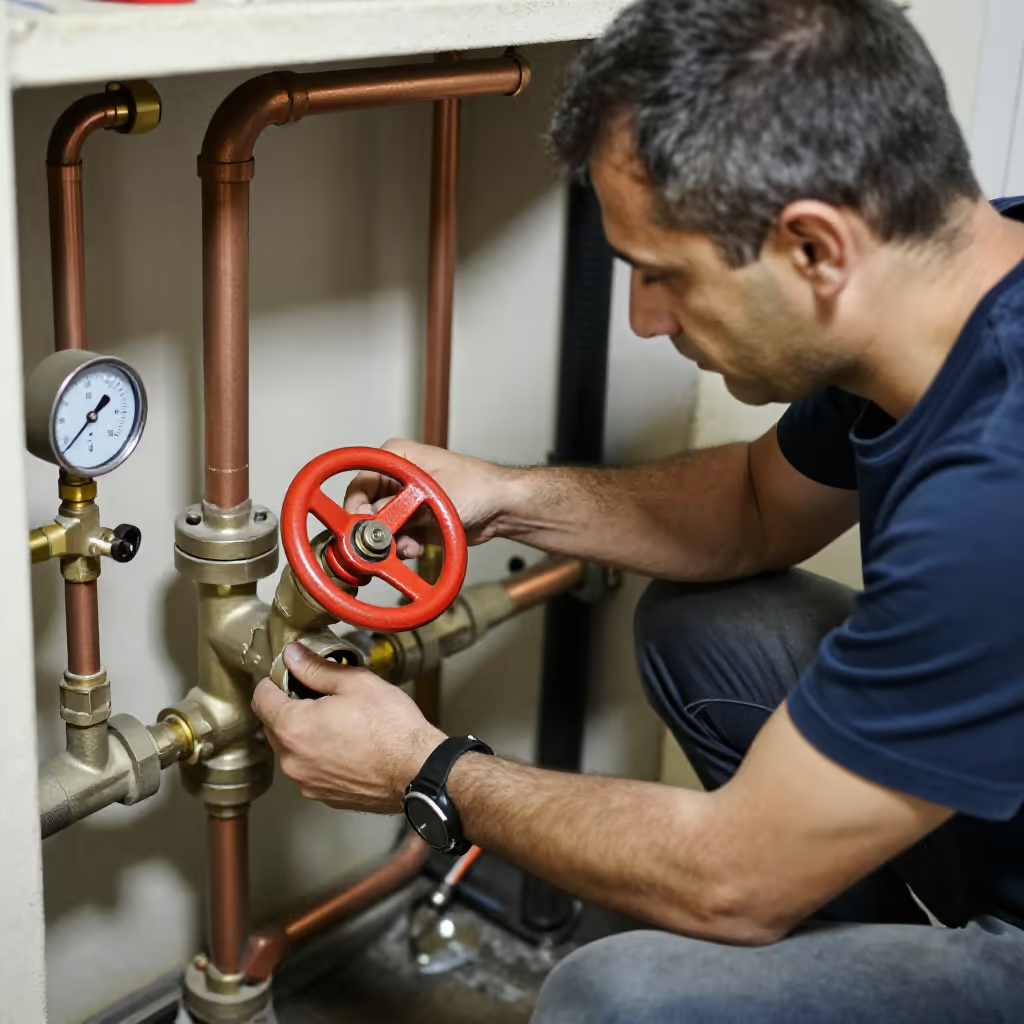
Both words refer to devices that can stop or regulate the flow of water. “Der Wasserhahn” is the outlet operated directly in everyday use, while “das Ventil” is the general technical device in a pipe system. When turning on the water at a sink, say Wasserhahn; when referring to technical control, say Ventil.
Ich drehte den Wasserhahn auf, um ein Glas Wasser zu füllen.
I turned on the faucet to fill a glass of water.
Der Techniker schloss das Ventil, damit kein Wasser mehr durch die Leitung floss.
The technician closed the valve so that no more water flowed through the pipe.