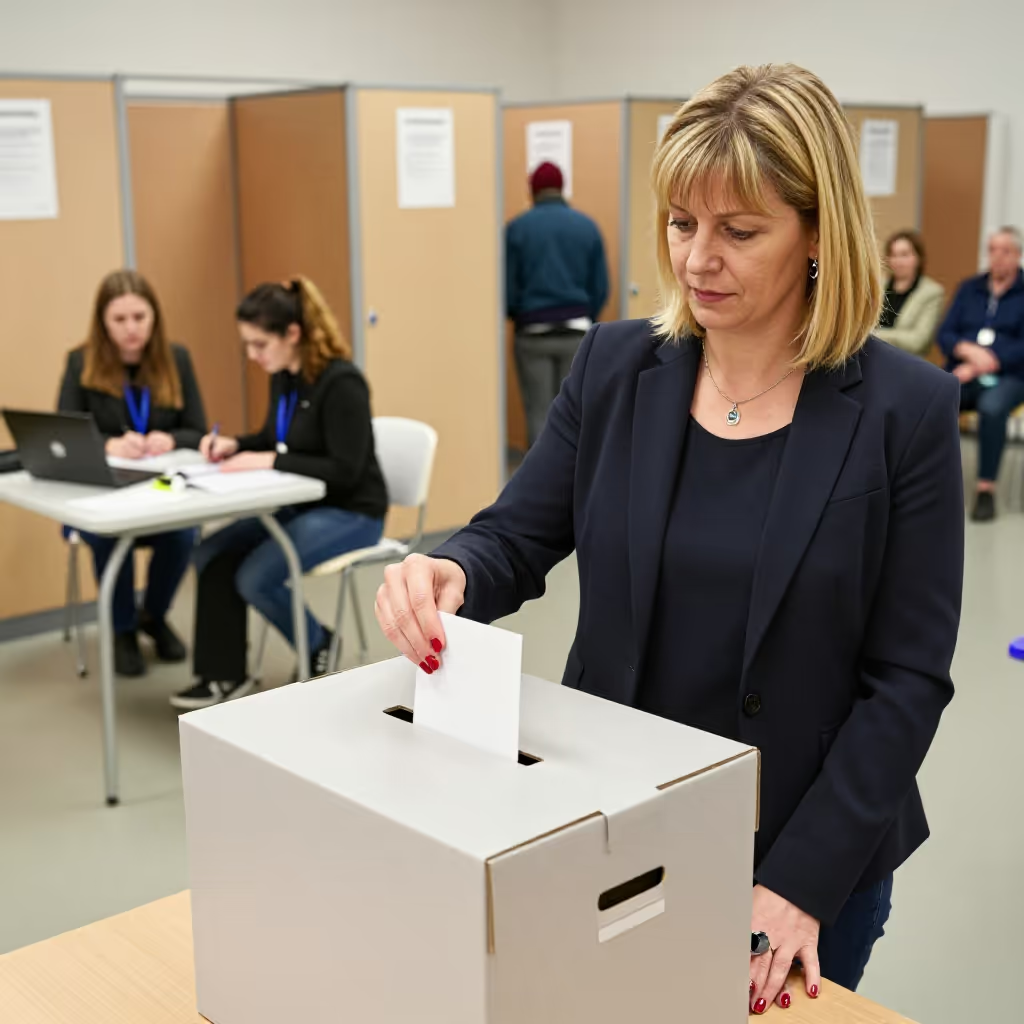
A single round of voting, especially when several rounds are needed to reach a decision.
example
Da kein Kandidat die absolute Mehrheit erreichte, ist ein zweiter Wahlgang erforderlich.
Since no candidate achieved an absolute majority, a second voting round is required.
Usage tips
Word composition
The word is made up of 'Wahl' (election/vote) and 'Gang' (course/round/walk). The different meanings of 'Wahlgang' (ballot/voting round) come from the meanings of 'Gang': as a round ('erster Gang' = first round), as a process ('der Gang der Dinge' = the course of things), or as physical going ('der Gang zur Post' = the trip to the post office).
EXAMPLE
Der erste Wahlgang brachte noch keine Entscheidung.
The first voting round did not yet produce a decision.
Context clue: round
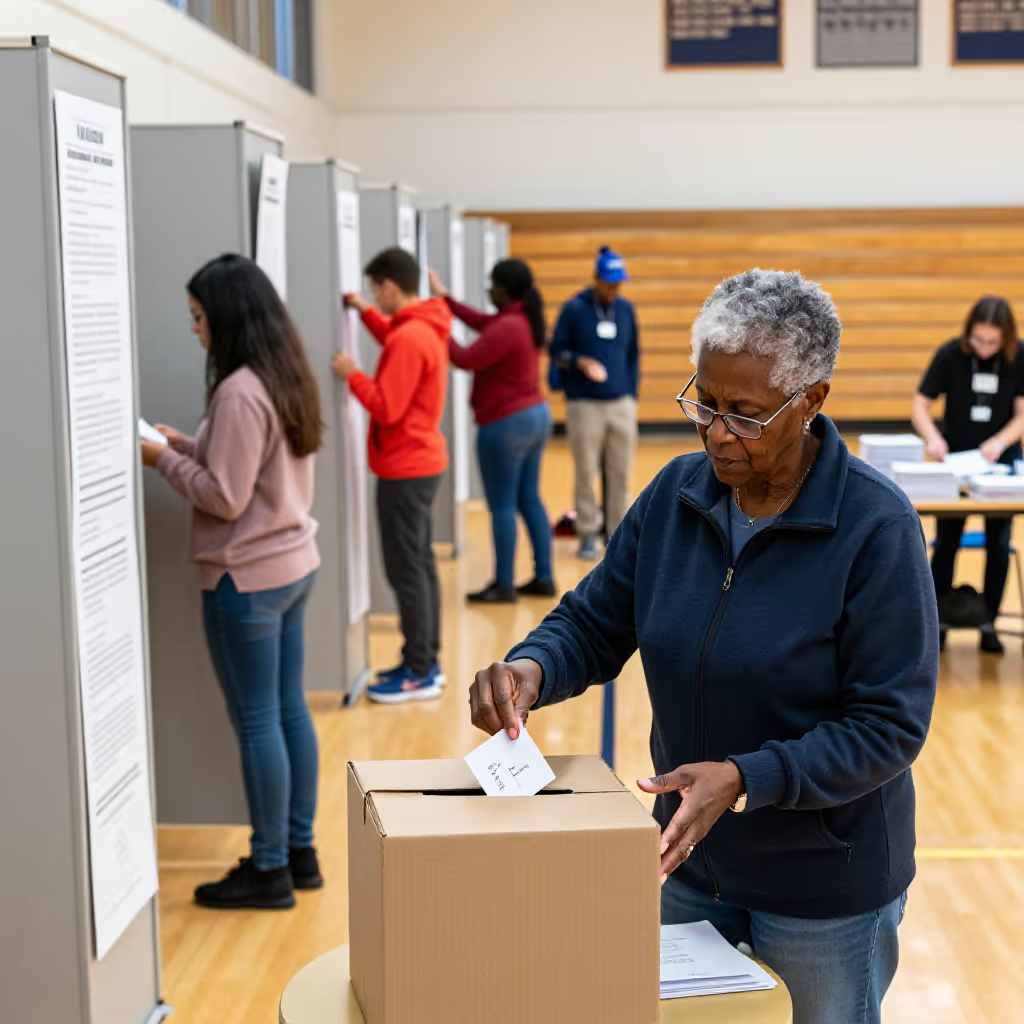
When a round of voting is meant, 'Wahlgang' (voting round) is often combined with ordinal numbers such as 'erster' (first), 'zweiter' (second), or 'letzter' (last). It is about finding a majority in several steps.
EXAMPLE
Da kein Kandidat die Mehrheit erhielt, kommt es zu einem zweiten Wahlgang.
Since no candidate received a majority, there will be a second voting round.
Context clue: process
When the entire course of an election is meant, 'Wahlgang' (ballot) is often described with adjectives such as 'ruhig' (calm), 'fair' (fair), or 'reibungslos' (smooth). The focus here is on organization and execution.
EXAMPLE
Internationale Beobachter überwachten den Wahlgang.
International observers monitored the ballot.
Context clue: act of voting
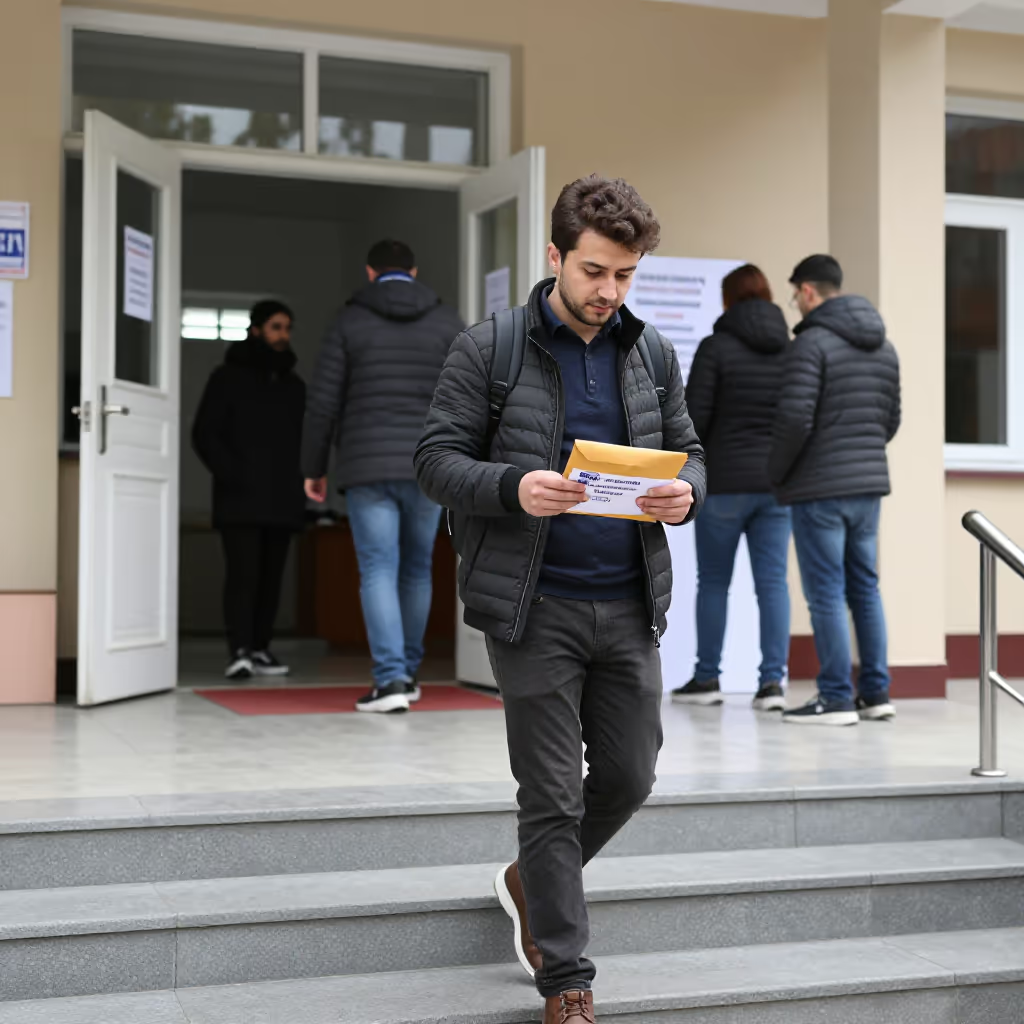
When the personal act of voting is meant, 'Wahlgang' (going to vote) often appears in connection with appeals to citizens or as an expression of personal participation. A typical formulation is 'den Wahlgang antreten' (to go to vote).
EXAMPLE
Der Wahlgang ist ein wichtiges demokratisches Recht.
Going to vote is an important democratic right.
Compare with
near_synonym · confusable
Wahlgang vs Wahl
choice / election
'die Wahl' and 'der Wahlgang' can both be part of political voting. 'die Wahl' is the general term for the event or process in which votes are cast. 'der Wahlgang' is more specific and describes a particular part or round of this process. This can be a single round of voting, the voting procedure, or even the personal act of going to the polling station. Learners may confuse the words because both occur in the same political context. When speaking generally about the event, 'Wahl' fits. When you mean a round, the procedure, or the concrete act of going to cast a vote, 'Wahlgang' is more precise.
Wahlgang
Im ersten Wahlgang bekam keiner der Kandidaten genug Stimmen.
In the first voting round, none of the candidates received enough votes.