

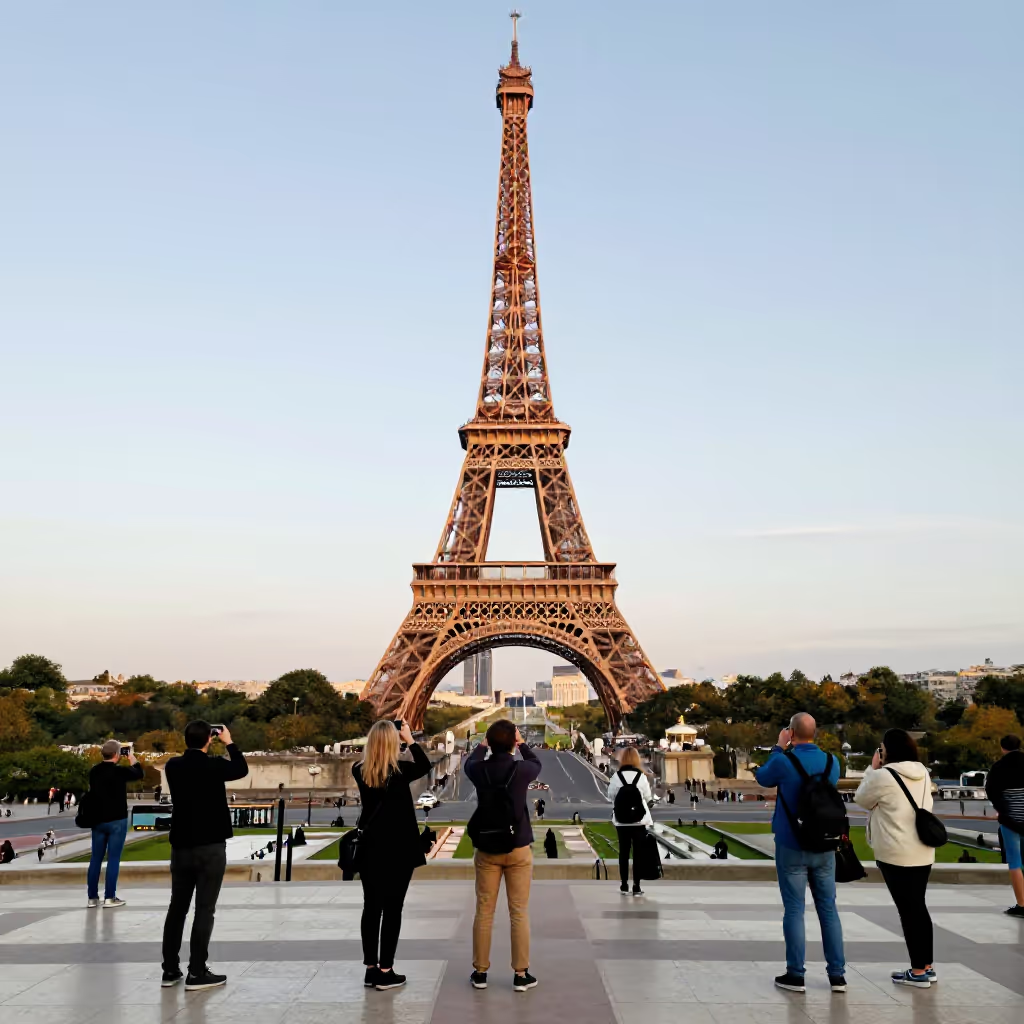
das Wahrzeichen
landmark
A well-known building, statue, or other distinctive feature that is considered a symbol of a city, region, or country.
Das Brandenburger Tor ist das Wahrzeichen von Berlin.
The Brandenburg Gate is the landmark of Berlin.
landmark
Loading your saved state.
landmark
A well-known building, statue, or other distinctive feature that is considered a symbol of a city, region, or country.
Das Brandenburger Tor ist das Wahrzeichen von Berlin.
The Brandenburg Gate is the landmark of Berlin.

The word is made up of 'wahr' (true) and 'Zeichen' (sign). A 'Wahrzeichen' (landmark) is therefore literally a 'true sign' or an unmistakable symbol of a place.
Der Eiffelturm ist das berühmteste Wahrzeichen von Paris.
The Eiffel Tower is the most famous landmark of Paris.
To name the place the landmark belongs to, you use either the genitive or the preposition 'von' with the dative. Both are correct and common.
Das Kölner Dom ist das Wahrzeichen Kölns.
Cologne Cathedral is Cologne's landmark.
Common verbs used with 'Wahrzeichen' (landmark) are 'sein' (to be), 'gelten als' (to be considered), and 'besichtigen' (to visit/sightsee). It is also often combined with adjectives like 'berühmt' (famous) or 'bekannt' (well-known).
Die Freiheitsstatue gilt als Wahrzeichen von New York.
The Statue of Liberty is considered a landmark of New York.
symbol
'das Symbol' and 'das Wahrzeichen' can both stand for something else. A symbol can be very general: a sign, an object, or an action can stand for an idea or a belief. A landmark is more specific. It is usually a well-known building, statue, or distinctive place that stands for a city, region, or country. Learners may confuse the words because a landmark is also a symbol. But not every symbol is a landmark. For cities and countries, 'Wahrzeichen' is often more precise.

Der Eiffelturm ist das bekannteste Wahrzeichen von Paris.
The Eiffel Tower is the best-known landmark of Paris.
Das rote Herz ist ein einfaches Symbol für Liebe.
The red heart is a simple symbol of love.