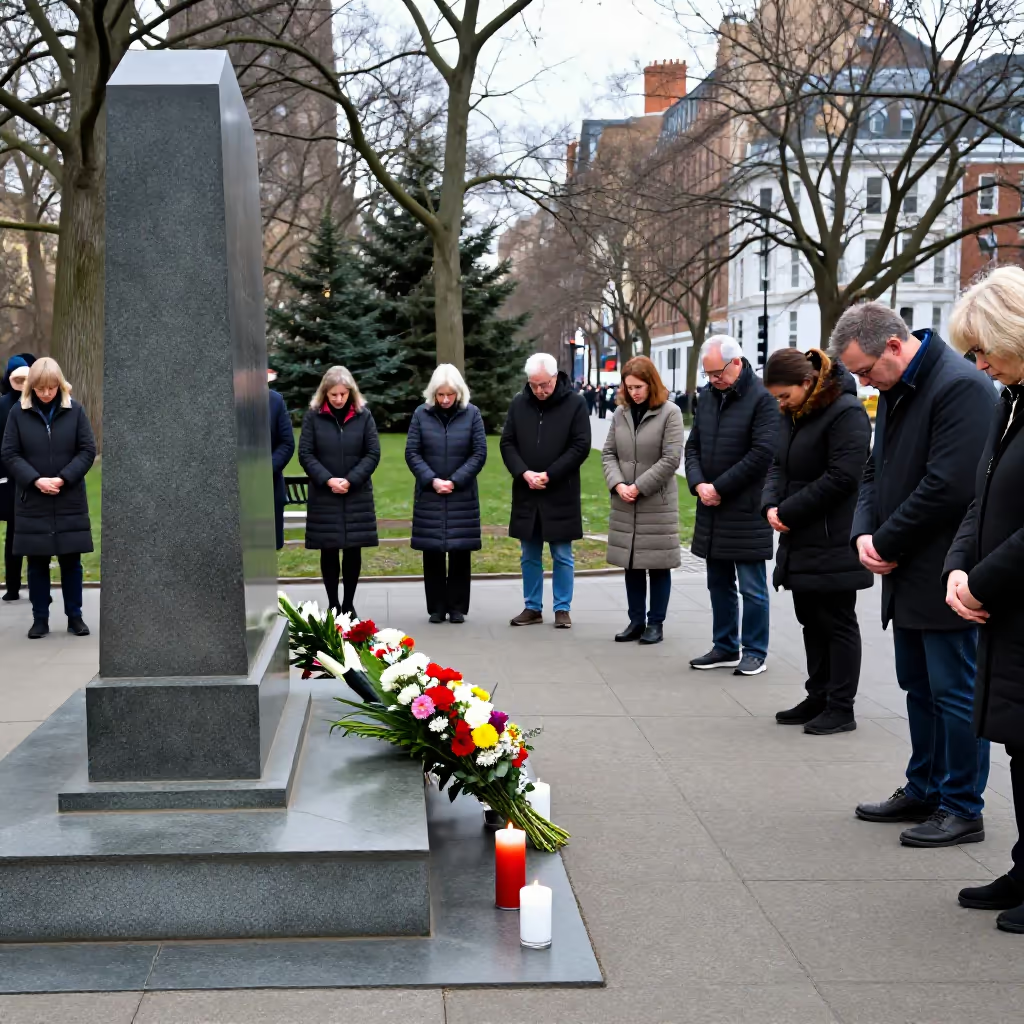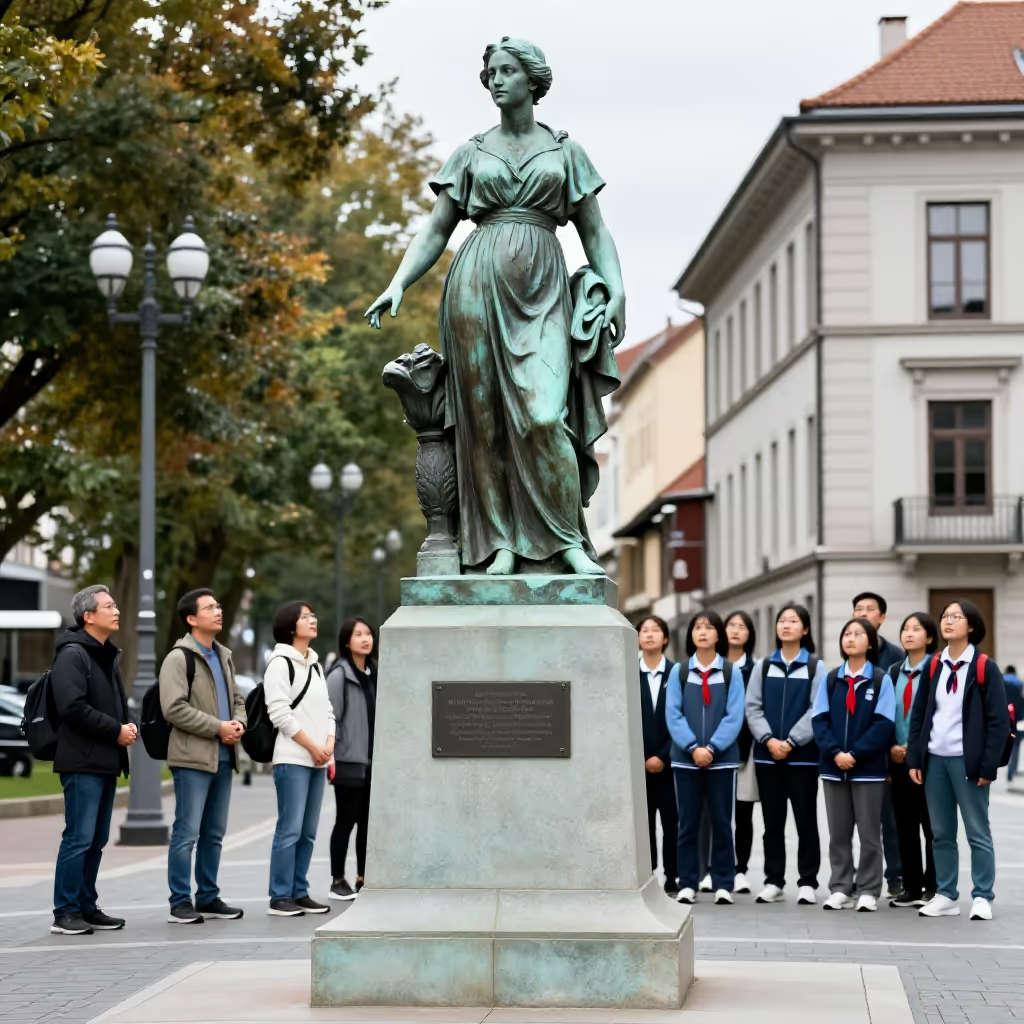
A structure, statue, or memorial plaque erected for public remembrance of an important person or historical event.
example
Vor dem Rathaus steht ein Denkmal zu Ehren des Stadtgründers.
In front of the town hall stands a monument in honor of the city's founder.
Usage tips
Compound formation
The word 'Denkmal' is made up of 'denken' (to think) and 'das Mal' (mark/sign). So it is literally a 'sign for thinking' or a marker of remembrance.
EXAMPLE
Jedes Denkmal soll uns an etwas Wichtiges erinnern.
Every monument is meant to remind us of something important.
Typical verbs
In connection with monuments, the verbs 'errichten' (to erect), 'enthüllen' (to unveil), or 'einweihen' (to inaugurate) are often used.
EXAMPLE
Die Stadt hat ein neues Denkmal für die Opfer des Krieges errichtet.
The city erected a new monument for the victims of the war.
Fixed expression
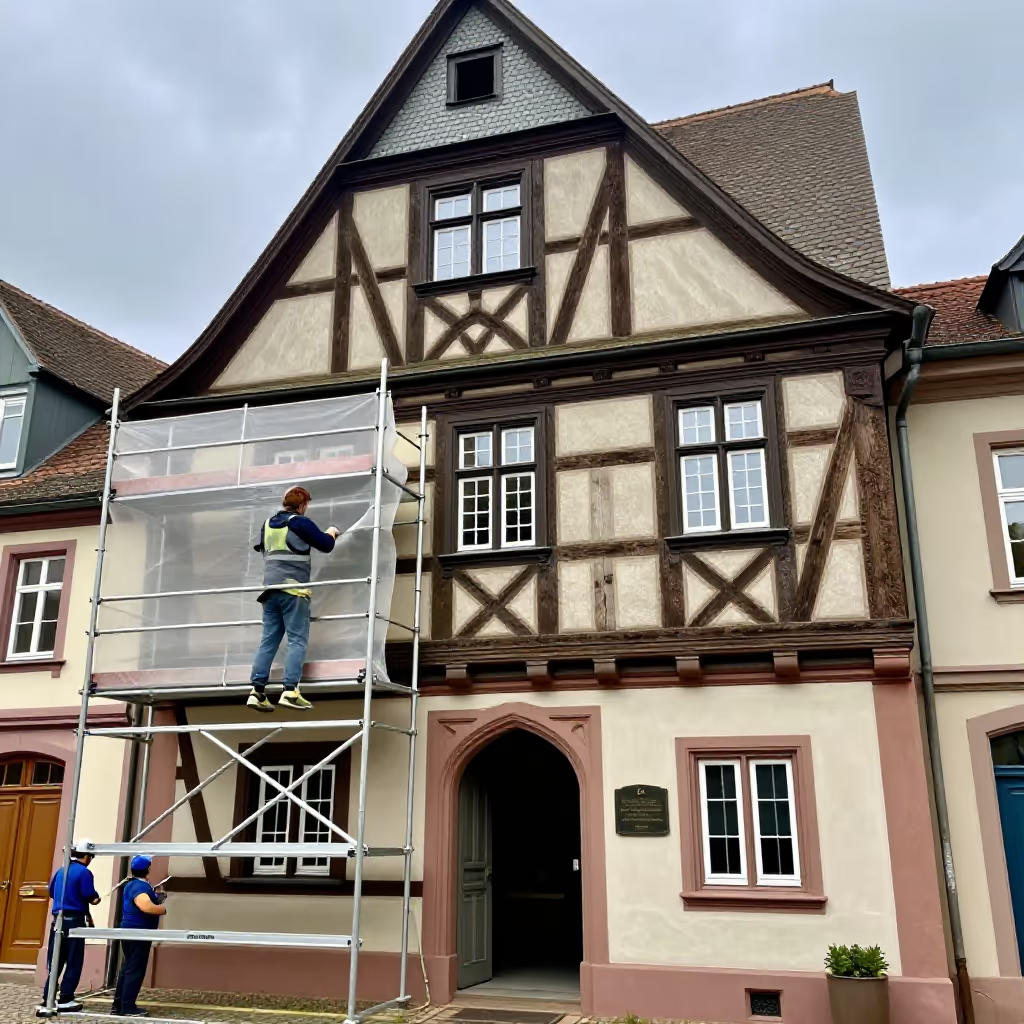
When a building or site has historical value, it is often 'unter Denkmalschutz' (under monument protection / listed as a historic monument). This expression means that it is legally protected.
EXAMPLE
Die alte Mühle steht seit 1980 unter Denkmalschutz.
The old mill has been listed as a historic monument since 1980.
Sentence structure of the idiom
The idiom 'sich ein Denkmal setzen' (to create a lasting legacy for oneself) uses a dative reflexive pronoun ('sich'). The person who accomplishes something special is the subject of the sentence.
EXAMPLE
Mit dieser Erfindung hat sich der Wissenschaftler ein Denkmal gesetzt.
With this invention, the scientist created a lasting legacy for himself.
Compare with
near_synonym · confusable
Denkmal vs Mal
time / mark
'das Mal' and 'das Denkmal' can both mean something that commemorates a person or an event. In this meaning, however, 'das Mal' is rare, formal, or outdated. In normal German, people almost always say 'das Denkmal' when they mean a statue, a structure, or a commemorative plaque. The words can be confusing because 'Denkmal' contains the word 'Mal'. For learners, the important point is: for public remembrance, 'Denkmal' is the natural word; 'Mal' is hardly ever heard on its own in this meaning.
Denkmal
Nach der Stadtführung besuchte Herr Müller noch das Denkmal am Marktplatz.
After the city tour, Mr. Müller also visited the monument in the marketplace.
Mal
Das alte Mal auf dem Hügel erinnert an eine Schlacht aus früherer Zeit.
The old memorial on the hill commemorates a battle from long ago.