

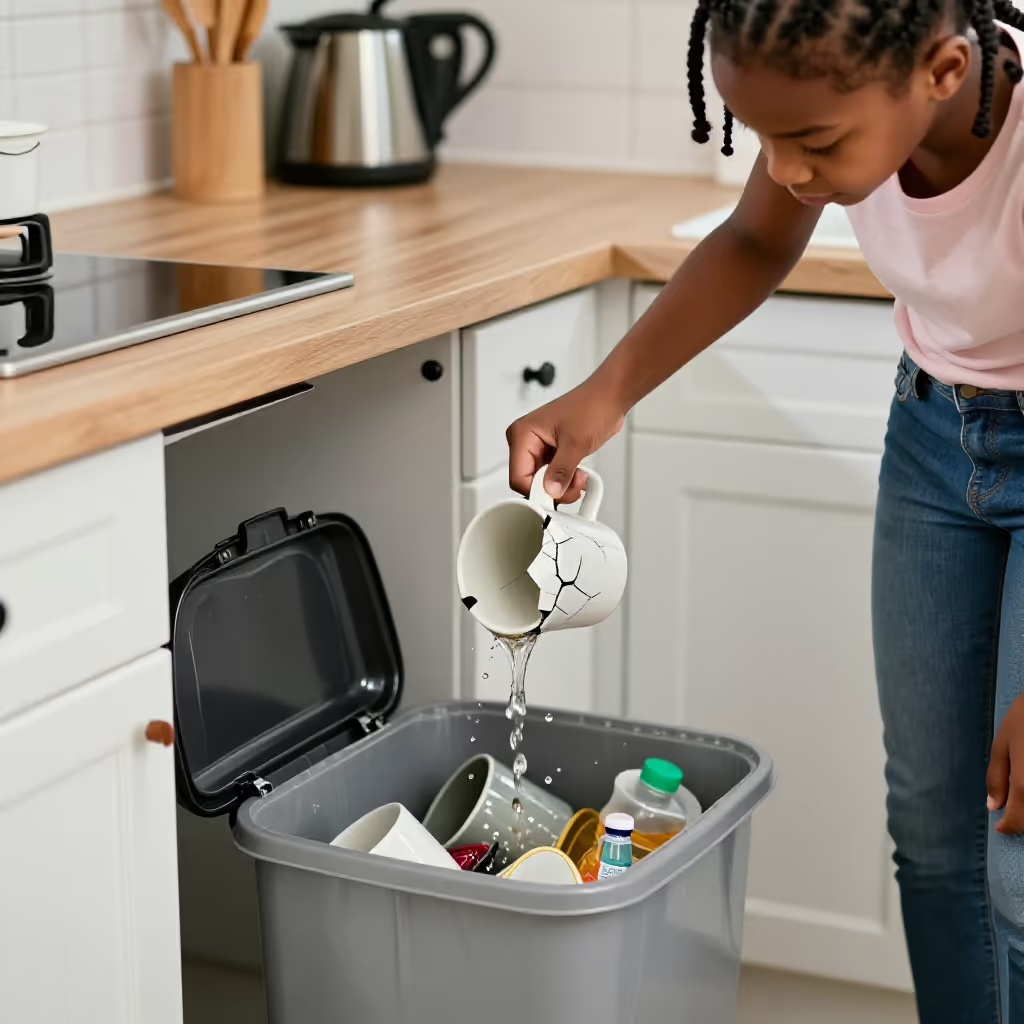
wegwerfen
to throw away
To throw something that you no longer need or that is broken into the trash.
EXAMPLE
Diese alten Zeitungen kannst du wegwerfen.
You can throw away these old newspapers.
to throw away
Loading your saved state.
to throw away
To throw something that you no longer need or that is broken into the trash.
Diese alten Zeitungen kannst du wegwerfen.
You can throw away these old newspapers.

to throw away
To carelessly give up or fail to use something valuable, such as a chance, talent, or opportunity.
Du solltest diese einmalige Chance nicht einfach wegwerfen.
You shouldn't just throw away this once-in-a-lifetime chance.

to die laughing
To laugh extremely hard and uncontrollably.
Als er den Witz erzählte, haben wir uns alle weggeworfen vor Lachen.
When he told the joke, we all died laughing.
'Wegwerfen' (to throw away) is a separable verb. The prefix 'weg' comes at the end in main clauses. In subordinate clauses and in the infinitive with 'zu', the verb stays together.
Er wirft die leere Flasche weg.
He throws the empty bottle away.
The verb consists of the directional particle 'weg' (away, off) and the verb 'werfen' (to throw). The literal meaning is therefore 'to throw something away from oneself.'
Bitte wirf deinen Abfall in den Mülleimer und nicht einfach auf die Straße weg.
Please throw your trash into the garbage can and not just onto the street.
You can recognize whether the verb is meant literally (disposing of trash) or figuratively (wasting something) from the object. If it is waste, the meaning is literal. If it is something valuable like a chance, money, or talent, the meaning is figurative.
Wirf die alten Zeitungen bitte weg.
Please throw away the old newspapers.
The idiom 'sich wegwerfen vor Lachen' (to die laughing) is a fixed reflexive construction. It means that someone is laughing extremely hard. The structure is always 'sich wegwerfen' followed by 'vor' and a noun in the dative.
Der Film war so komisch, ich habe mich weggeworfen vor Lachen.
The film was so funny, I died laughing.
to waste
Verschwenden describes using up something valuable without benefit or failing to use it sensibly. In a figurative sense, wegwerfen can mean carelessly giving up a valuable opportunity or talent. Use verschwenden for the waste itself, and wegwerfen for thoughtlessly giving up an opportunity.

Er warf seine große Chance auf eine neue Stelle weg.
He threw away his great chance at a new job.
Er verschwendete sein Talent, weil er jahrelang keine Aufgaben übernahm.
He wasted his talent because he did not take on any tasks for years.