

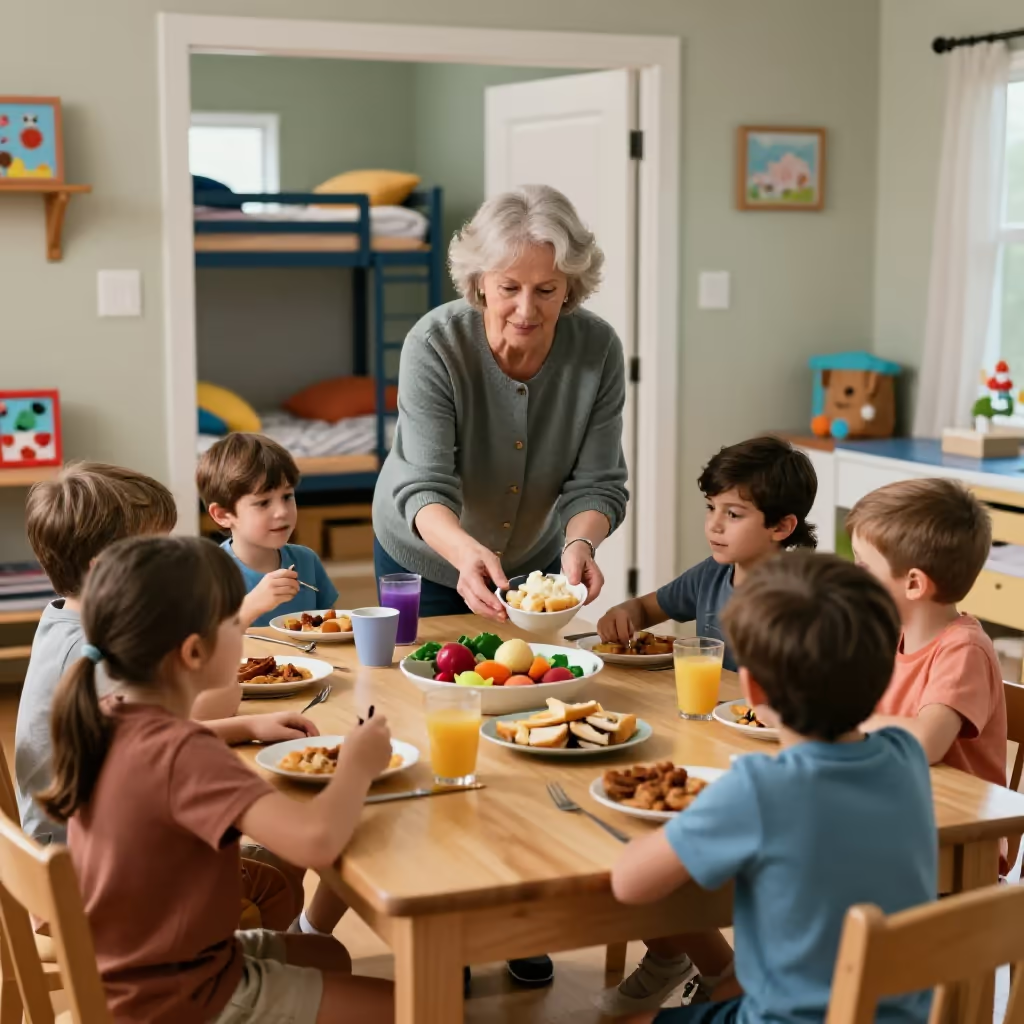
A home or institution where children live who no longer have parents or, for other reasons, cannot grow up with their family.
example
Früher gab es in jeder größeren Stadt ein Waisenhaus.
In the past, there was an orphanage in every larger town.
Usage tips
Word composition
The word 'Waisenhaus' (orphanage) is a compound made up of 'die Waise' (an orphan, a child without parents) and 'das Haus' (house). So it literally means a 'house for orphans'.
EXAMPLE
In vielen alten Romanen wachsen die Hauptfiguren in einem Waisenhaus auf.
In many old novels, the main characters grow up in an orphanage.
Movement and location
Pay attention to the preposition 'in' with the correct case. Movement toward the place is expressed with 'ins Waisenhaus' (into the orphanage; in das, accusative), while being there requires 'im Waisenhaus' (in the orphanage; in dem, dative).
EXAMPLE
Die Kinder kamen nach dem Tod ihrer Eltern ins Waisenhaus.
After their parents died, the children went to the orphanage.
Typical verbs
Common verbs used with 'Waisenhaus' (orphanage) are 'in einem Waisenhaus aufwachsen' (to grow up in an orphanage), 'in ein Waisenhaus kommen' (to go/come to an orphanage), and 'ein Waisenhaus leiten' (to run an orphanage).
EXAMPLE
Sie wuchs in einem Waisenhaus auf, bevor sie adoptiert wurde.
She grew up in an orphanage before she was adopted.
Compare with
near_synonym · confusable
Waisenhaus vs Heim
home / institution
'das Heim' and 'das Waisenhaus' can both refer to an institution where people live and receive care. However, 'Heim' is more general. It can be, for example, an 'Altenheim' (nursing home), 'Kinderheim' (children's home), or a home for people with disabilities. 'Waisenhaus' is much more specific: children live there who no longer have parents or who cannot live with their family. Learners may confuse the words because a 'Waisenhaus' is a type of 'Heim'. But not every 'Heim' is a 'Waisenhaus'. If the type of institution is important, 'Waisenhaus' is more precise.
Waisenhaus
David liest im Unterricht ein Buch über ein Kind, das in einem Waisenhaus aufwächst.
In class, David reads a book about a child who grows up in an orphanage.
Heim
Nach dem Krankenhaus zieht die alte Frau in ein Heim, weil sie täglich Hilfe braucht.
After leaving the hospital, the elderly woman moves into a care home because she needs help every day.