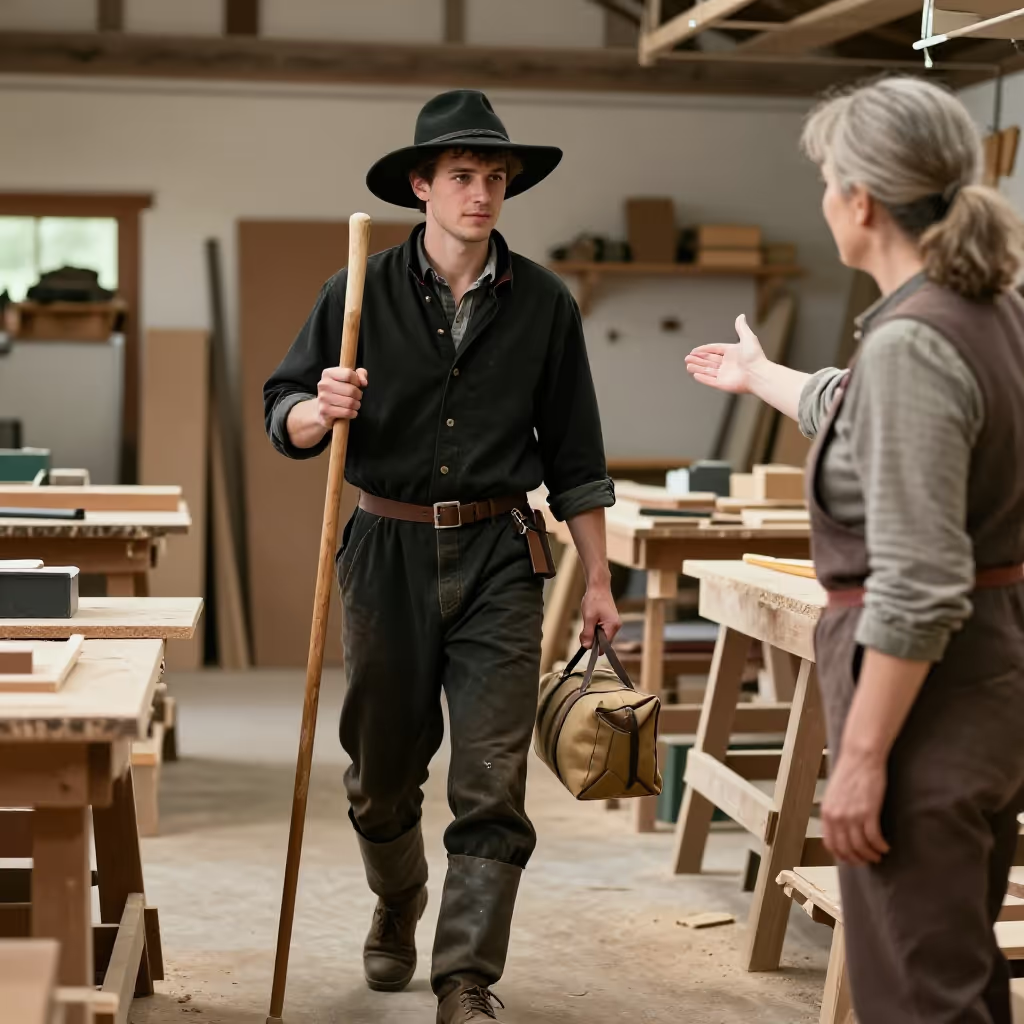
The traditional journey lasting several years that a journeyman craftsman takes after completing his apprenticeship in order to gain professional experience in different businesses. This period is also called 'Walz' (journeyman wandering).
example
Nach seiner Ausbildung zum Zimmermann ging er für drei Jahre und einen Tag auf Wanderschaft.
After his training as a carpenter, he went on his journeyman years for three years and one day.

Usage tips
Word structure
The word consists of the verb 'wandern' (to hike/wander) and the suffix '-schaft'. The ending '-schaft' often describes a state or a longer activity, similar to 'Freundschaft' (friendship) or 'Schwangerschaft' (pregnancy).
EXAMPLE
Seine Wanderschaft führte ihn durch viele unbekannte Länder.
His wandering took him through many unknown countries.
Cultural context
The traditional Wanderschaft (journeyman years) of journeyman craftsmen, also called 'Walz', is an established custom in German-speaking countries. It has clear rules, for example regarding duration and clothing.
EXAMPLE
Man erkennt die Gesellen auf Wanderschaft an ihrer traditionellen Kluft.
You can recognize journeymen on their journeyman years by their traditional outfit.
Typical collocations
In connection with the traditional journey of craftsmen, the fixed expressions 'auf Wanderschaft gehen' (to go on one's journeyman years) or 'auf Wanderschaft sein' (to be on one's journeyman years) are often used.
EXAMPLE
Mein Bruder ist seit einem Jahr als Bäckergeselle auf Wanderschaft.
My brother has been on his journeyman years as a baker's journeyman for a year.
Context clues
When 'Wanderschaft' (wandering) is used in a poetic or figurative sense, it often refers to a phase of life involving searching and self-discovery. Words like 'Suche' (search), 'Leben' (life), or 'Seele' (soul) point to this meaning.
EXAMPLE
Nach dem Ende seiner Karriere begann für ihn eine neue, geistige Wanderschaft.
After the end of his career, a new spiritual wandering began for him.
Compare with
near_synonym
Wanderschaft vs Reise
journey / trip
'die Reise' and 'die Wanderschaft' both have to do with being on the road for a longer time or over a greater distance. 'Reise' is the normal, general word: you can take a Reise by train, car, or plane, for vacation or for work. 'Wanderschaft' sounds more specific and often somewhat old-fashioned or poetic. It refers either to the traditional journeyman years of a craftsman on the Walz, or to a long wandering, often on foot and not always with a fixed destination. In everyday language, 'Reise' usually fits best, while 'Wanderschaft' emphasizes a special, longer, and freer journey.
Wanderschaft
Nach seiner Ausbildung ging der junge Tischler für zwei Jahre auf Wanderschaft.
After his training, the young cabinetmaker went on his journeyman years for two years.
Reise
Für die Reise nach Italien packt Lena nur einen kleinen Koffer.
For the trip to Italy, Lena is packing only a small suitcase.