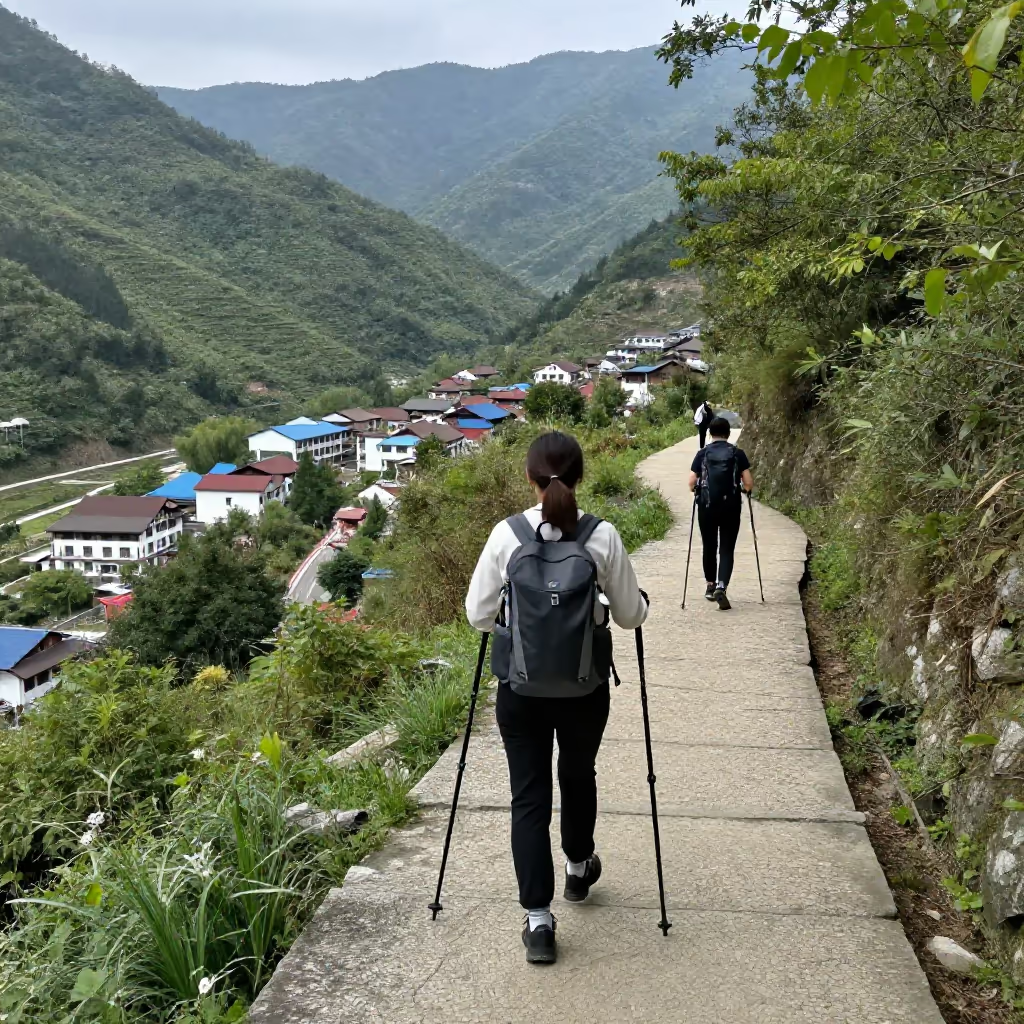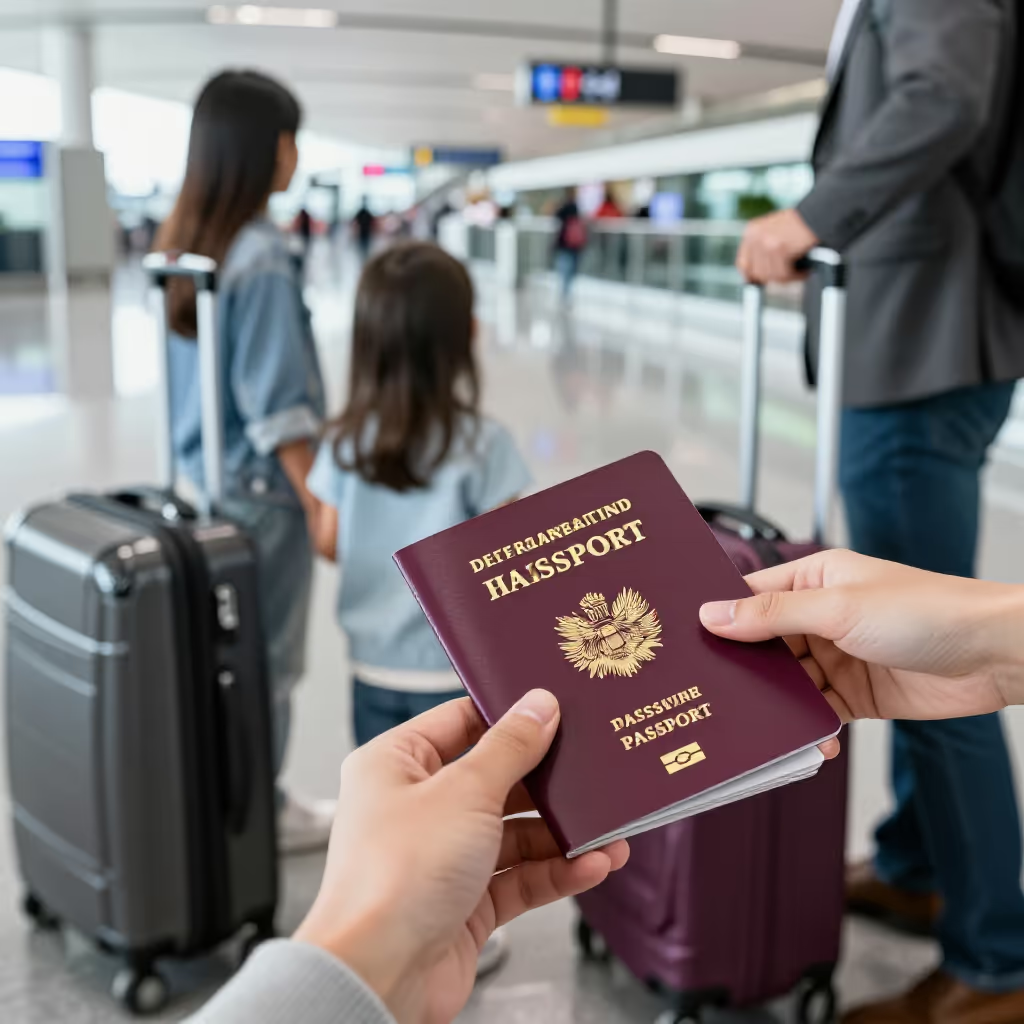
Travel over a longer distance to another place, often for a certain period of time and for a specific purpose such as vacation or business.
example
Nächstes Jahr planen wir eine Reise nach Japan.
Next year we're planning a trip to Japan.

Usage tips
Word family
'Die Reise' (journey/trip) belongs to a word family. The related verb is 'reisen' (to travel), and a person who travels is 'der/die Reisende' (the traveler).
EXAMPLE
Viele Reisende warteten am Bahnhof auf ihren Zug.
Many travelers were waiting at the train station for their train.
Typical verbs
'Reise' (journey/trip) is often combined with certain verbs. You can say 'eine Reise machen' (to take a trip), 'eine Reise buchen' (to book a trip), or, somewhat more formally, 'eine Reise antreten' (to set off on a journey) or 'eine Reise unternehmen' (to undertake a journey).
EXAMPLE
Wir haben unsere Reise schon vor sechs Monaten gebucht.
We booked our trip six months ago.
Important prepositions
To indicate the destination of a trip, you usually use 'nach' (to), e.g. 'eine Reise nach Italien' (a trip to Italy). If you want to say that someone is currently traveling, you use the expression 'auf Reisen sein' (to be traveling).
EXAMPLE
Meine Chefin ist nächste Woche auf Reisen und nicht im Büro.
My boss is traveling next week and won't be in the office.
Context clue
You can recognize the figurative meaning by the fact that the destination is not a geographic place. Instead, it is about abstract goals such as 'zu sich selbst' (to oneself), 'in die Vergangenheit' (into the past), or 'ins Innere' (inside/within).
EXAMPLE
Seine Autobiografie beschreibt eine Reise in die eigene Kindheit.
His autobiography describes a journey into his own childhood.
Compare with
near_synonym · confusable
Reise vs Entwicklung
development
'die Entwicklung' and 'die Reise' can both describe a process of change. 'Entwicklung' is the normal word when you are speaking objectively about growth, progress, or change. In this meaning, 'Reise' is figurative: you imagine a change as a path with experiences and stages. Learners may confuse the words because both can talk about a longer process. In reports, school, work, or academic contexts, 'Entwicklung' is usually more precise. 'Reise' fits better when you want to describe a personal or emotional change in a vivid way.
Reise
Für Sofia war das Studium eine Reise zu mehr Selbstvertrauen.
For Sofia, studying was a journey toward greater self-confidence.
Entwicklung
Im Unterricht sprechen wir über die Entwicklung der Stadt in den letzten Jahren.
In class, we are talking about the development of the city in recent years.