

wanken
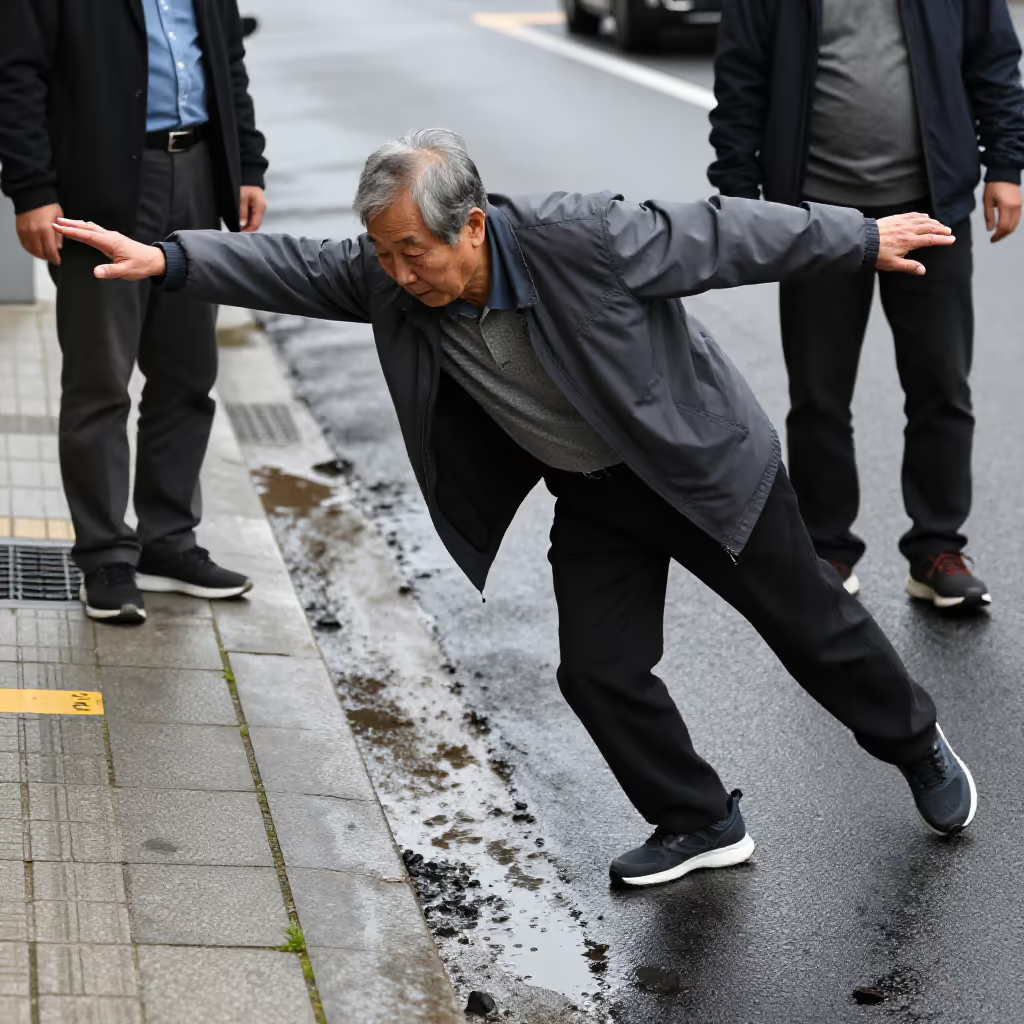
to wobble
To move unsteadily back and forth because one is losing support or balance. Describes physical instability.
EXAMPLE
Nach dem Karussell wankte er ein wenig, als er ausstieg.
After the carousel, he wobbled a little as he got off.
to wobble / waver
Loading your saved state.
to wobble
To move unsteadily back and forth because one is losing support or balance. Describes physical instability.
Nach dem Karussell wankte er ein wenig, als er ausstieg.
After the carousel, he wobbled a little as he got off.

to waver
To become uncertain in one's conviction, decision, or loyalty; to begin to doubt.
Obwohl er unter Druck gesetzt wurde, wankte er nicht in seiner Entscheidung.
Although he was put under pressure, he did not waver in his decision.
to totter
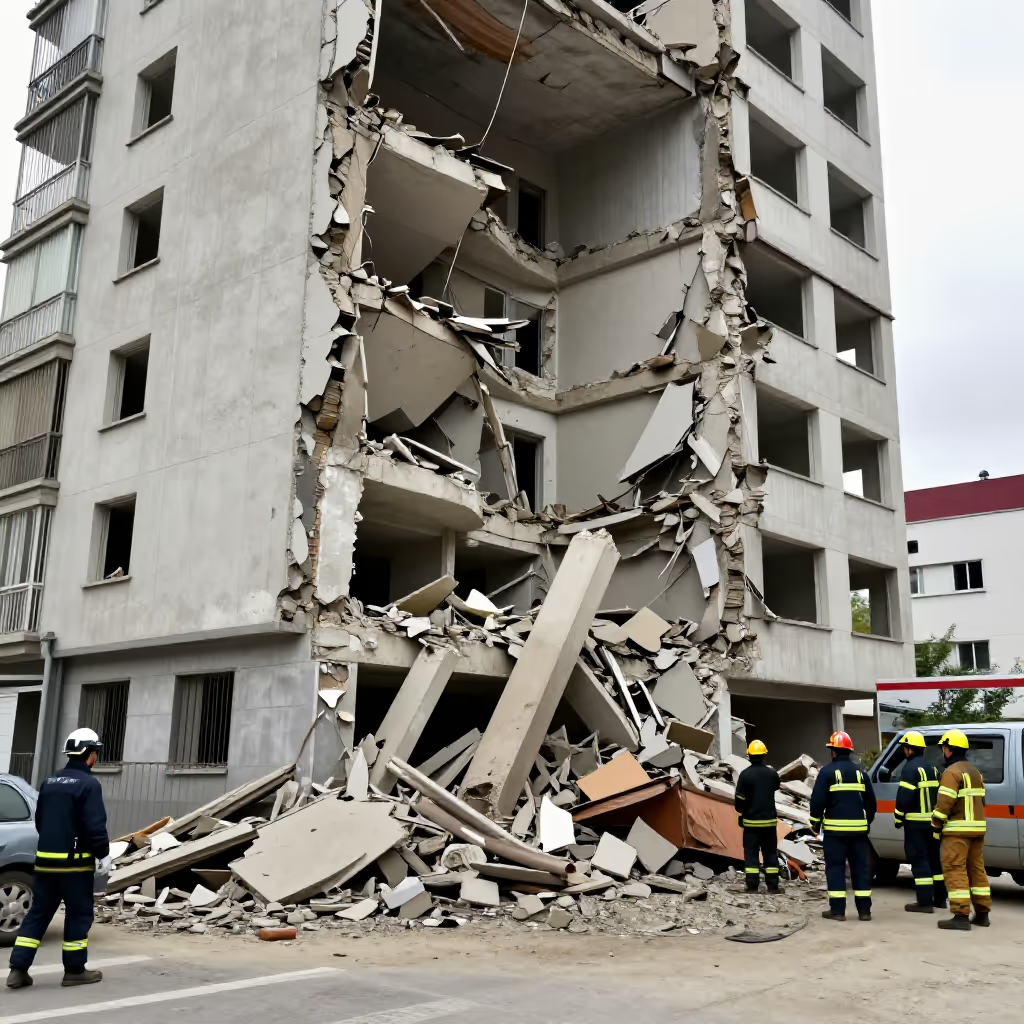
Describes the state of a system, position of power, or structure that becomes unstable and is on the verge of collapse.
Nach dem Skandal begann die Regierung zu wanken.
After the scandal, the government began to totter.
'Wanken' (to wobble/waver) usually forms the perfect tense with 'haben' when the movement takes place in one location. The perfect tense with 'sein' is used when movement from one place to another is being described.
Der alte Schrank hat bei der Berührung gewankt.
The old cabinet wobbled when it was touched.
The noun corresponding to this verb is 'das Wanken' (wobbling/wavering). It is often used in the fixed expressions 'ins Wanken geraten' (to become unstable) or 'etwas ins Wanken bringen' (to make something unstable).
Durch die Krise geriet das ganze Finanzsystem ins Wanken.
The crisis made the whole financial system start to totter.
In the figurative meaning, 'wanken' (to waver) refers to abstract things such as convictions, decisions, principles, or loyalty. You can recognize this meaning from the context of doubt or uncertainty.
Sie ließ sich nicht beirren und wankte nicht in ihrer Überzeugung.
She did not let herself be unsettled and did not waver in her conviction.
When 'wanken' (to totter) is used for structures, it often refers to large, powerful systems. Typical subjects are 'die Regierung' (the government), 'der Thron' (the throne), 'ein Imperium' (an empire), or 'ein Unternehmen' (a company).
Nach dem Rücktritt des Präsidenten wankte die gesamte Regierung.
After the president's resignation, the entire government tottered.
fluctuation / swaying
Schwankung and wanken can describe physical movement back and forth. Schwankung initially refers to the movement itself and can sound neutral, while wanken particularly emphasizes unsteady support or loss of balance. Use wanken when an object appears unstable.
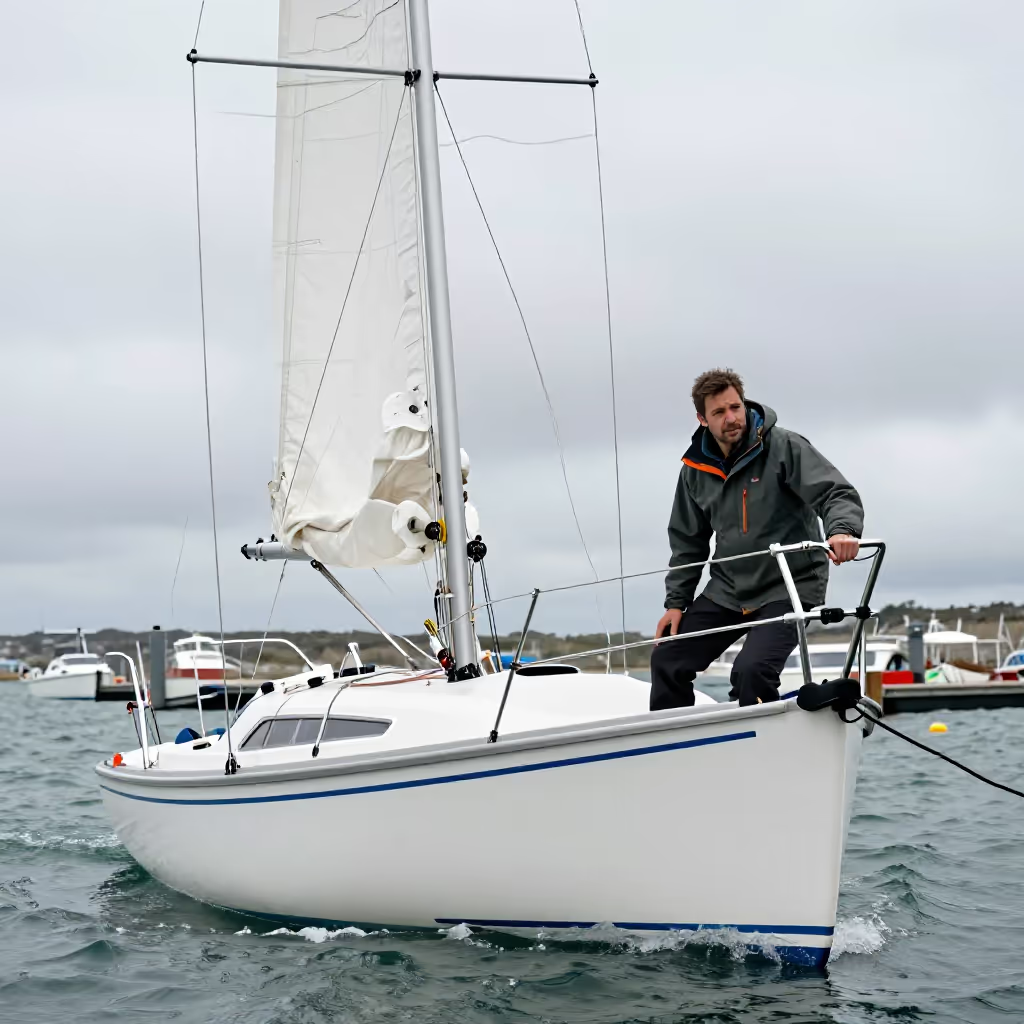
Der alte Steg wankte unter den Schritten der Wanderer.
The old pier wobbled under the hikers' footsteps.
Die leichte Schwankung des Stegs war auf den Wellen deutlich zu spüren.
The slight swaying of the pier was clearly noticeable on the waves.