

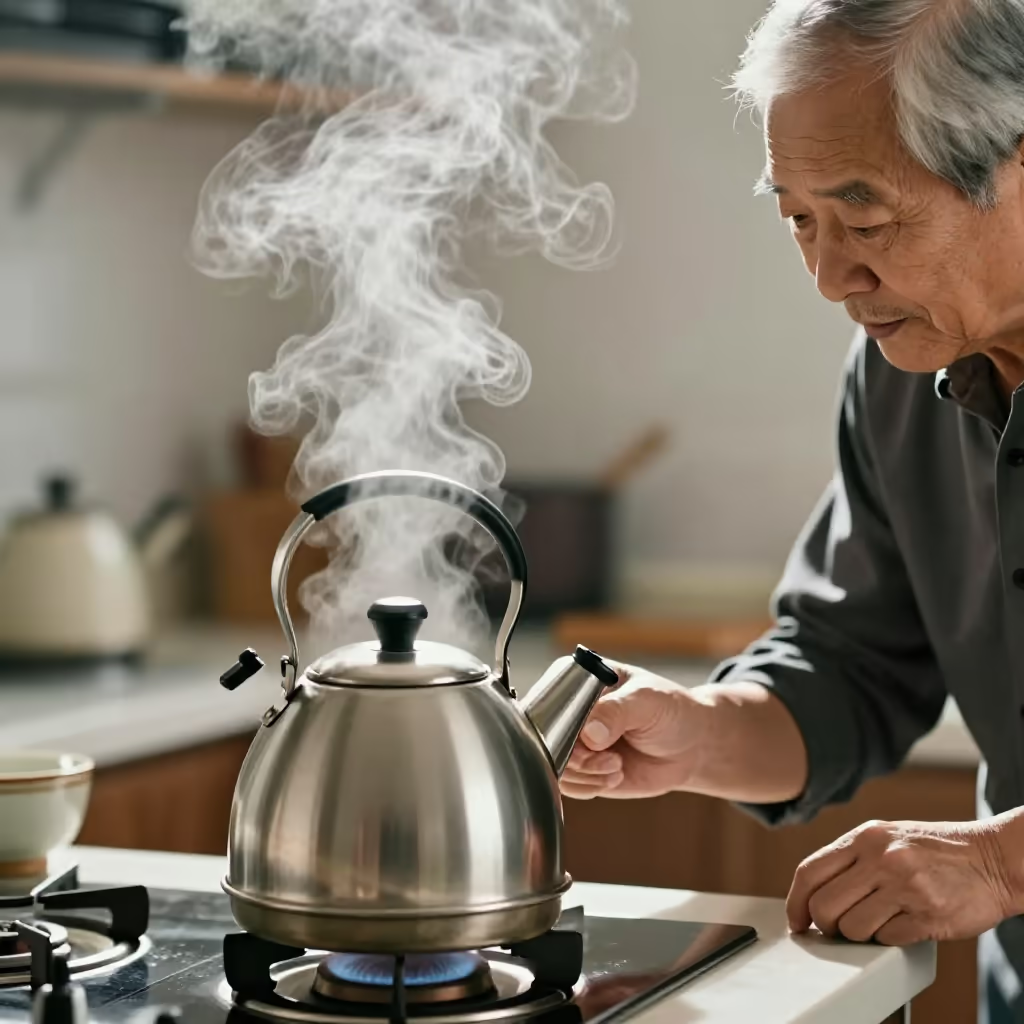
Water in a gaseous state, which forms when water is heated and boils. Although pure vapor is invisible, the term is often used for the visible cloud of tiny water droplets that forms through condensation in colder air.
example
Vorsicht, aus dem Wasserkocher steigt heißer Wasserdampf auf!
Careful, hot steam is rising from the kettle!
Usage tips
Compound word
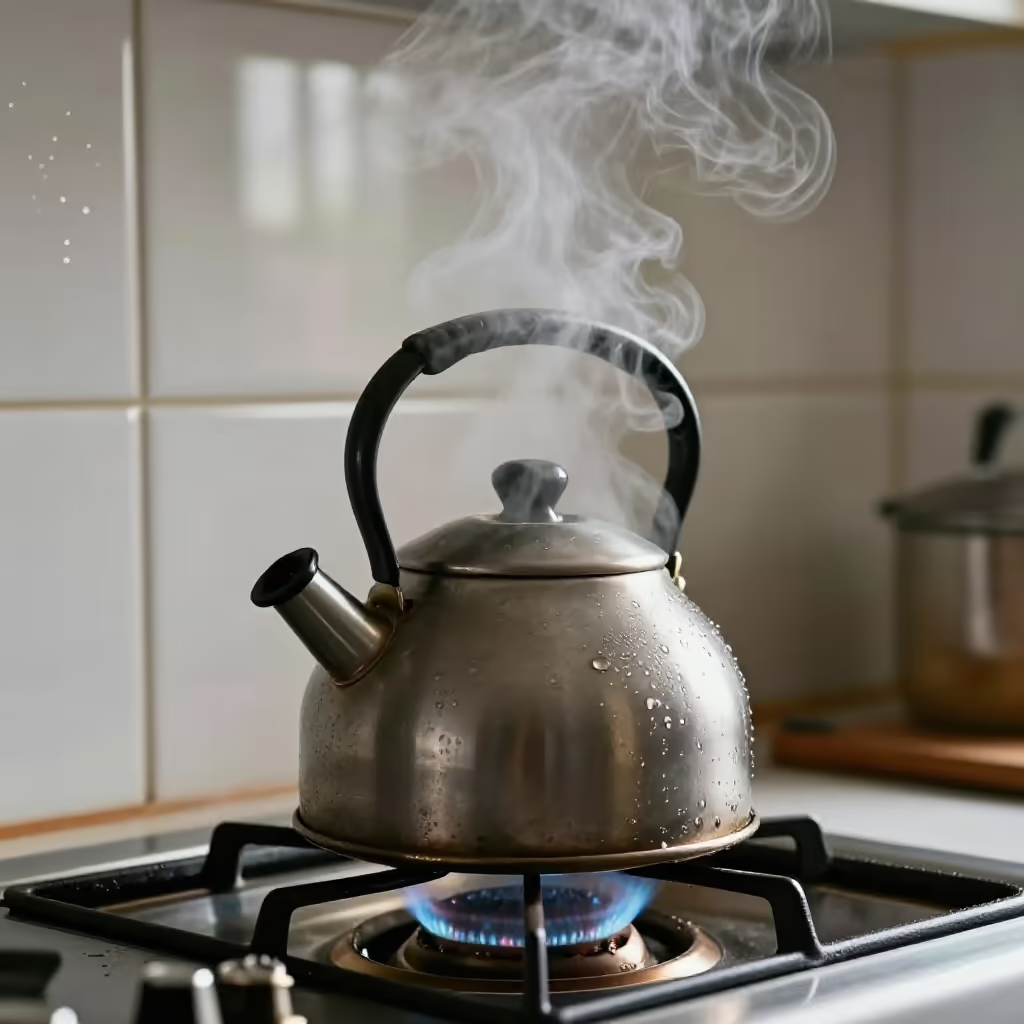
The word is made up simply and logically of 'das Wasser' (the water) and 'der Dampf' (the steam / vapor). So it describes vapor that comes from water.
EXAMPLE
Beim Kochen entsteht viel Wasserdampf in der Küche.
When cooking, a lot of steam forms in the kitchen.
Context clue
Although pure water vapor is an invisible gas, the word 'Wasserdampf' (water vapor / steam) is usually used in everyday language for the visible white cloud. This cloud consists of tiny water droplets that form when hot vapor meets colder air.
EXAMPLE
Der Spiegel im Bad war nach dem Duschen mit Wasserdampf beschlagen.
After the shower, the bathroom mirror was fogged up with steam.
Typical combinations
'Wasserdampf' (water vapor / steam) is often combined with the verb 'aufsteigen' (to rise). The typical adjective used to describe it is 'heiß' (hot).
EXAMPLE
Heißer Wasserdampf stieg aus dem Topf auf.
Hot steam rose from the pot.
Compare with
confusable
Wasserdampf vs Rauch
smoke
'Rauch' and 'Wasserdampf' can look similar because both can appear as a light or gray cloud in the air. The difference lies in how they are produced: 'Rauch' is produced by combustion and contains fine particles, for example from fire or cigarettes. 'Wasserdampf' forms when water gets hot, for example while cooking or showering. It is easy to confuse the words when you only see a cloud. If something is burning, 'Rauch' fits. If water is being heated, 'Wasserdampf' fits.
Wasserdampf
Beim Kochen steigt Wasserdampf aus dem Topf.
Steam rises from the pot while cooking.
Rauch
Im Büro roch es nach Rauch, deshalb suchten alle sofort nach der Ursache.
The office smelled of smoke, so everyone immediately looked for the cause.