

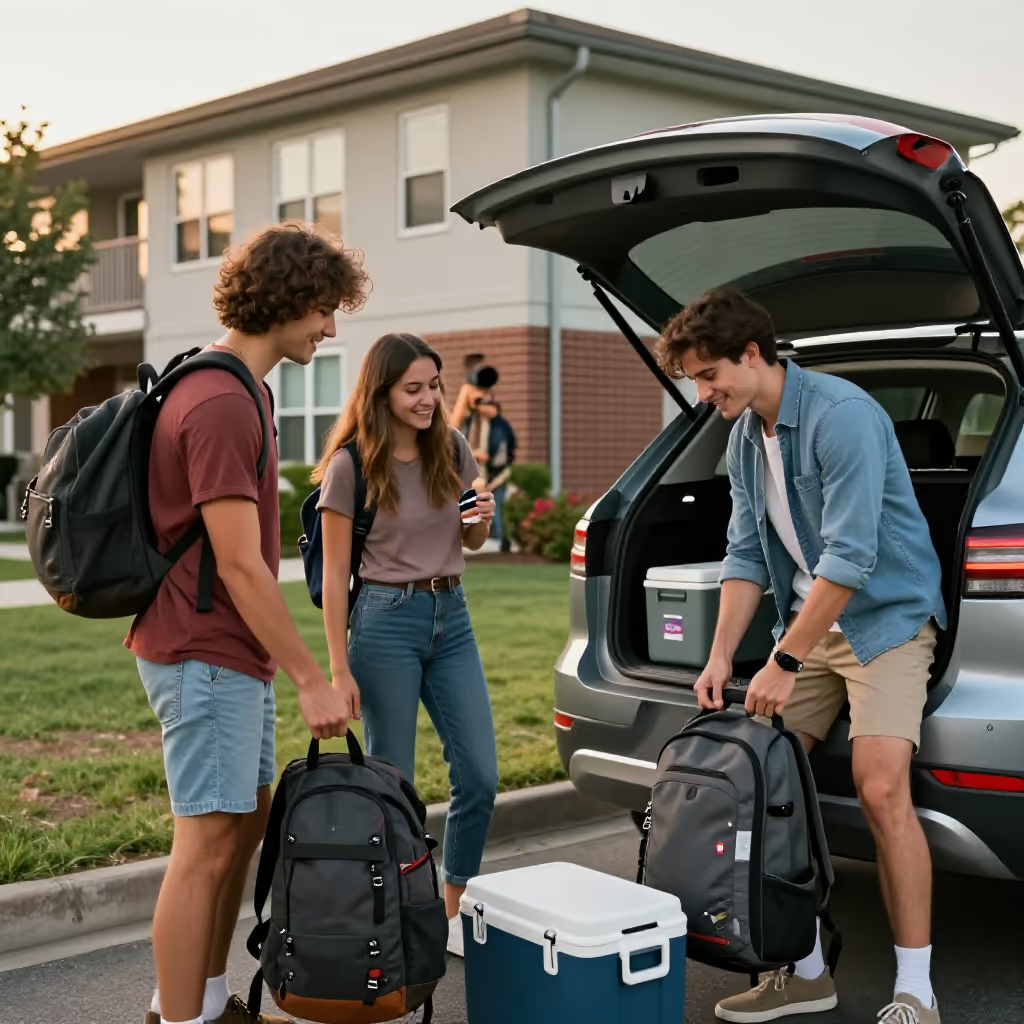
das Weekend
weekend
A colloquial word borrowed from English for 'Wochenende' (weekend). It is often used to sound modern or international.
EXAMPLE
Was hast du am Weekend so vor?
What are you up to this weekend?
weekend
Loading your saved state.
weekend
A colloquial word borrowed from English for 'Wochenende' (weekend). It is often used to sound modern or international.
Was hast du am Weekend so vor?
What are you up to this weekend?
'Weekend' (weekend) is a word borrowed directly from English, an Anglicism. In German, it is used with the neuter article 'das'.
Ich wünsche dir ein schönes Weekend!
Have a nice weekend!
The use of 'Weekend' (weekend) is colloquial and informal. It is often used to sound modern, young, or international, especially in spoken language or on social media.
Wir machen am Weekend einen Ausflug nach Berlin.
We're taking a trip to Berlin this weekend.
Just like with 'Wochenende' (weekend), the preposition 'an' with the dative is used to express that something takes place during this time. The usual form is 'am Weekend' (on the weekend / at the weekend).
Was hast du am Weekend vor?
What are you doing this weekend?
weekend
Wochenende and Weekend refer to the same free time at the end of the week. Wochenende is the neutral standard term, while Weekend is colloquial and deliberately sounds modern or international. Wochenende is suitable in official or generally appropriate texts; Weekend is also possible in casual conversation.

Für das Weekend haben wir einen Ausflug mit Freunden geplant.
We’ve planned a trip with friends for the weekend.
Am Wochenende treffen wir uns mit Freunden im Park.
We’re meeting friends in the park this weekend.