

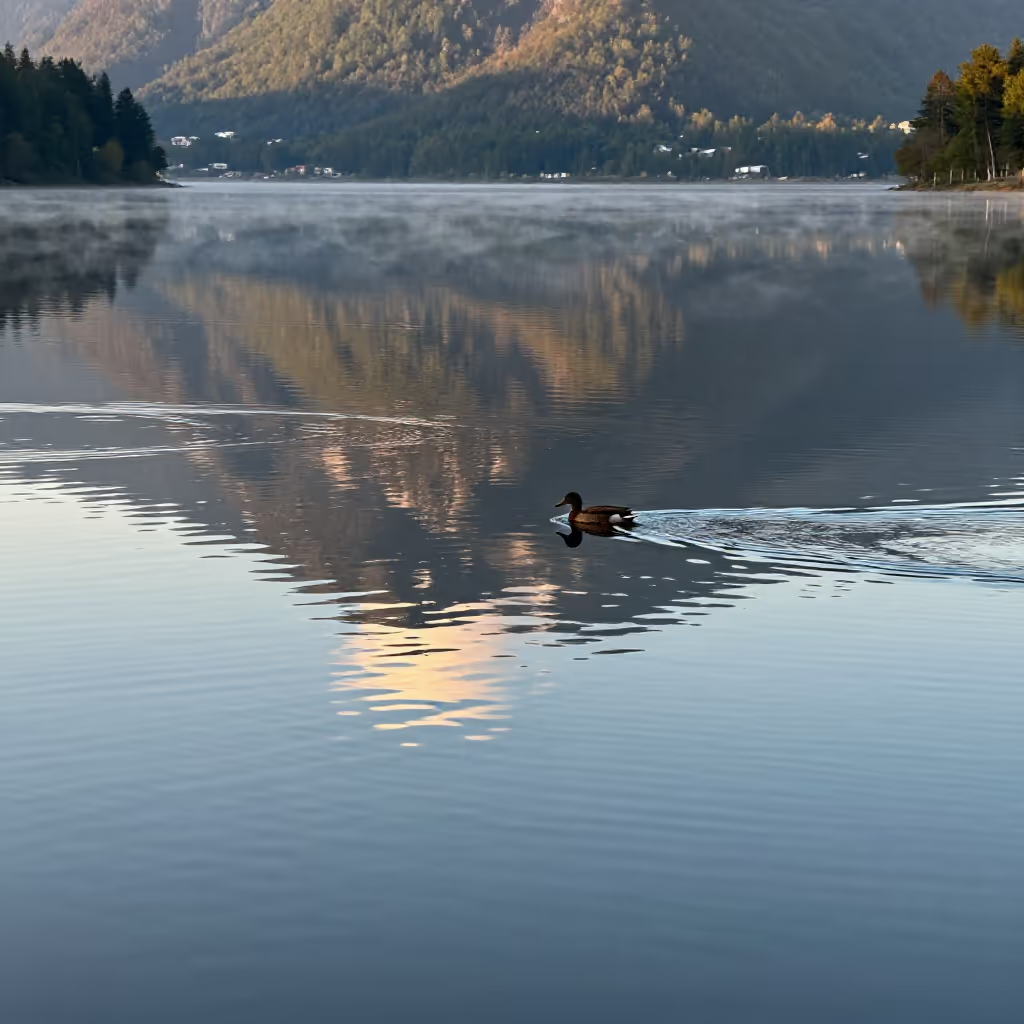
die Wasseroberfläche
water surface
The uppermost layer or outer boundary of a body of water such as a lake, river, or the sea.
Die Regentropfen bildeten kleine Kreise auf der Wasseroberfläche.
The raindrops formed small circles on the water surface.
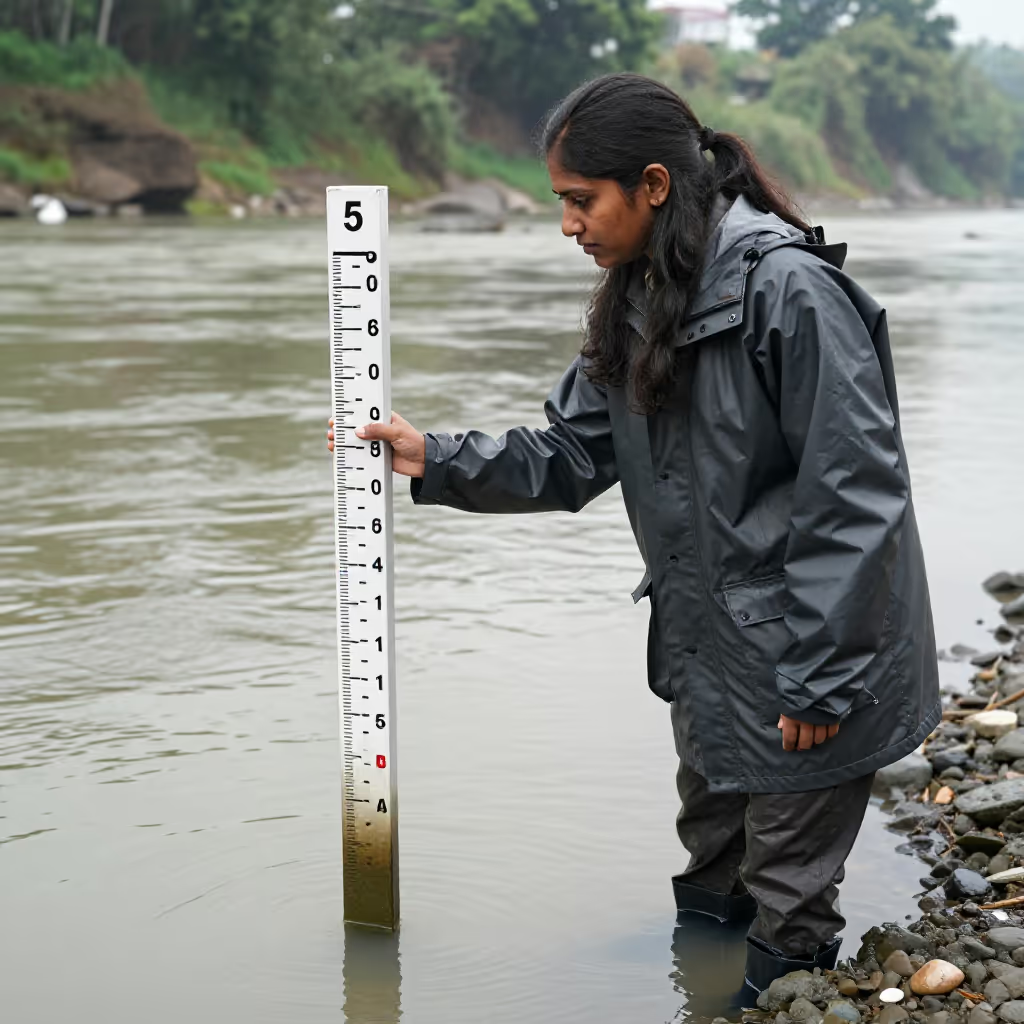
water surface
Loading your saved state.
water surface
The uppermost layer or outer boundary of a body of water such as a lake, river, or the sea.
Die Regentropfen bildeten kleine Kreise auf der Wasseroberfläche.
The raindrops formed small circles on the water surface.

This word is made up of 'das Wasser' (water) and 'die Oberfläche' (surface). The 's' in the middle is a linking sound that connects the two parts. The meaning is literally 'the surface of the water.'
Die Sonne spiegelte sich auf der Wasseroberfläche des Sees.
The sun was reflected on the water surface of the lake.
Pay attention to the prepositions: Something is located 'auf der Wasseroberfläche' (on the water surface; dative). Something moves there 'an die Wasseroberfläche' (to the water surface; accusative). Something is located beneath it 'unter der Wasseroberfläche' (below the water surface; dative/accusative).
Ein Blatt schwimmt auf der Wasseroberfläche.
A leaf is floating on the water surface.
The water surface is often described with adjectives that express its condition. Common combinations are 'glatte' (smooth), 'ruhige' (calm), 'bewegte' (moving/choppy), or 'spiegelglatte Wasseroberfläche' (mirror-smooth water surface).
Am frühen Morgen war die Wasseroberfläche vollkommen glatt.
In the early morning, the water surface was completely smooth.
mirror
'der Spiegel' and 'die Wasseroberfläche' can both refer to the upper surface of a body of water. 'Die Wasseroberfläche' is the neutral and precise word for the top layer of water. 'Der Spiegel' fits better when the water surface seems calm and smooth, especially in expressions like 'der Spiegel des Sees' (the surface of the lake) or 'Wasserspiegel' (water level/surface). 'Wasseroberfläche' is used in many normal or factual situations, even when the water is rough. 'Spiegel' sounds more figurative and emphasizes smoothness or reflectiveness.

Ein leichter Wind bewegte die Wasseroberfläche im Hafen.
A light wind moved the water surface in the harbor.
Bei Sonnenuntergang glänzte der Spiegel des Sees wie Glas.
At sunset, the surface of the lake shone like glass.