

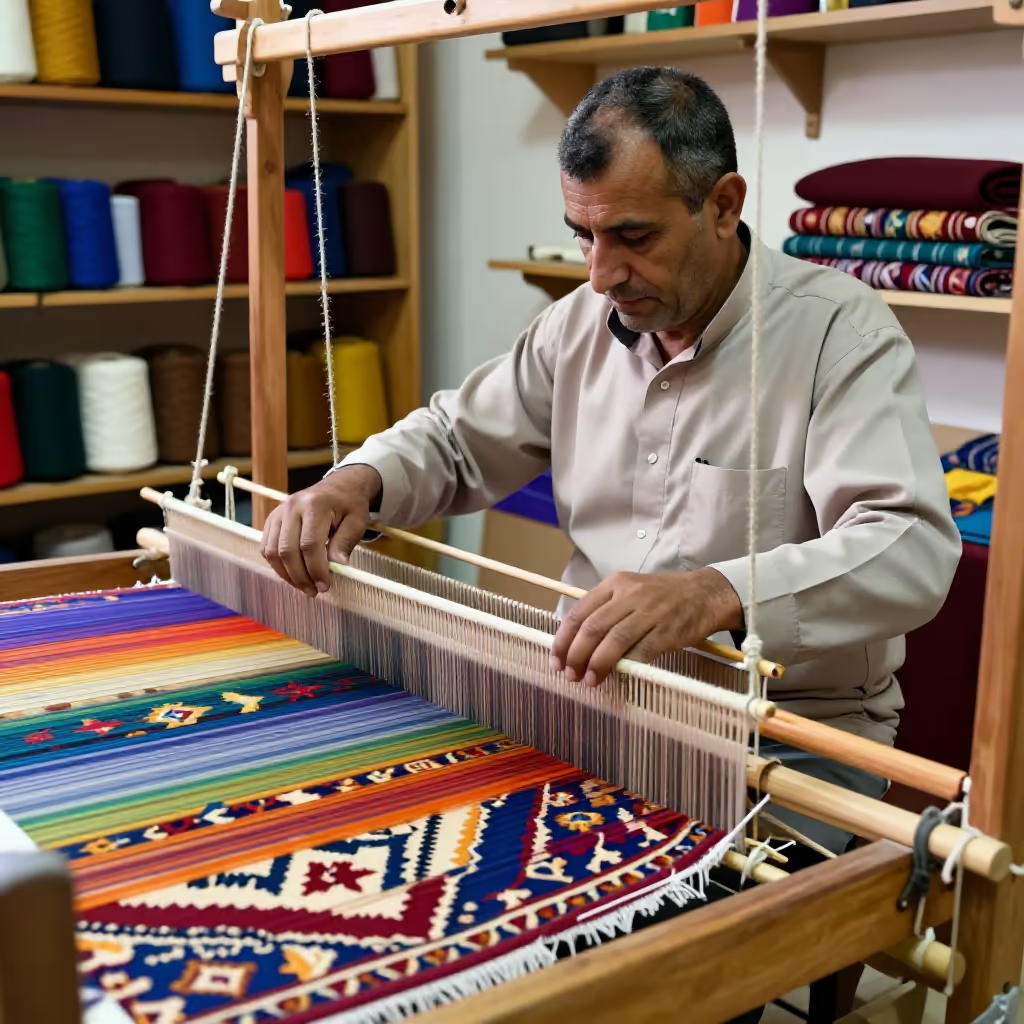
der Weber
weaver
A person whose job is to make fabrics or carpets on a loom.
EXAMPLE
Früher war der Beruf des Webers in dieser Region sehr verbreitet.
In the past, the profession of weaver was very common in this region.
weaver / harvestman
Loading your saved state.
weaver
A person whose job is to make fabrics or carpets on a loom.
Früher war der Beruf des Webers in dieser Region sehr verbreitet.
In the past, the profession of weaver was very common in this region.
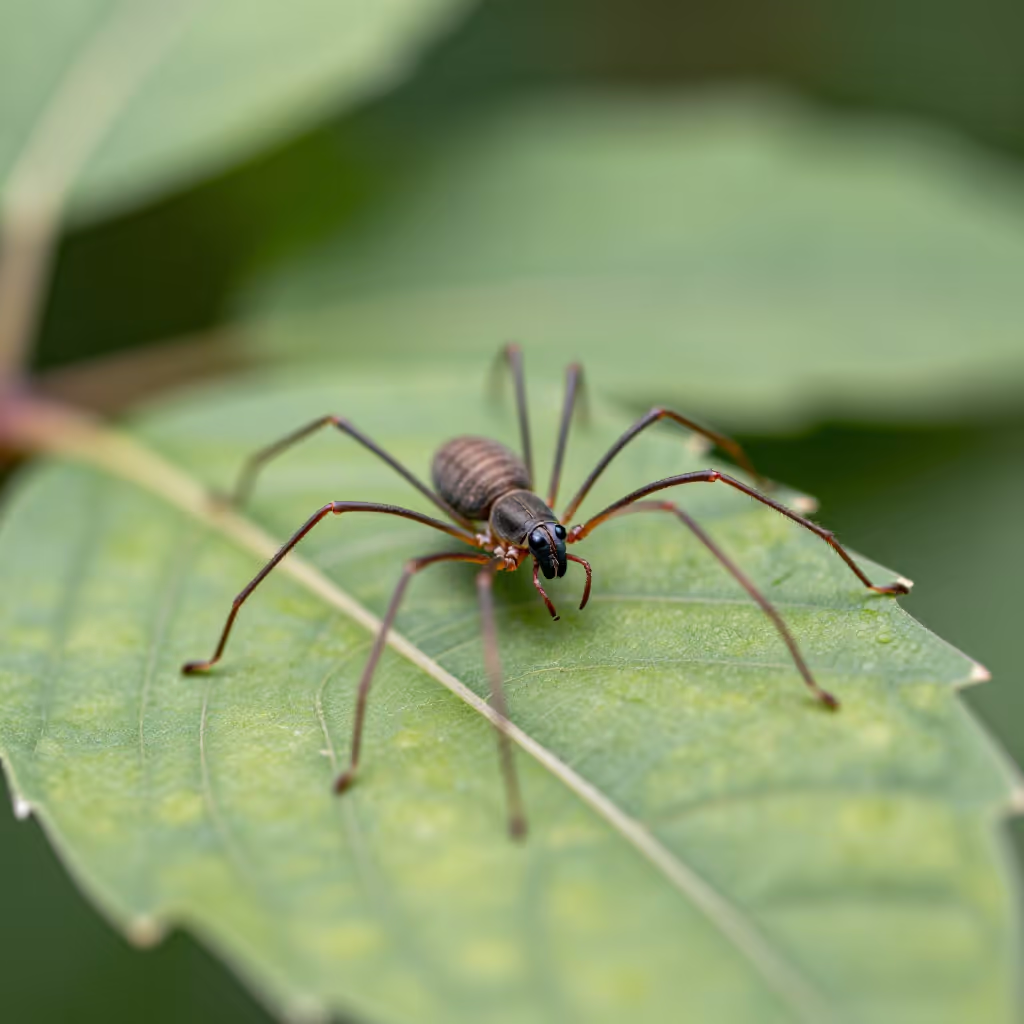
harvestman
A colloquial, shortened term for a Weberknecht, a long-legged arachnid.
Schau mal, da an der Wand krabbelt ein Weber.
Look, there's a harvestman crawling on the wall.
'Der Weber' (the weaver) is derived from the verb 'weben' (to weave). The ending '-er' is often added to verbs to refer to the person who performs that activity.
Ein guter Weber braucht viel Geduld und Geschick.
A good weaver needs a lot of patience and skill.
You can tell from context whether the person or the animal is meant. If it is about professions, history, or crafts, it is the person. If something is crawling on the wall or in the basement, it is the animal.
Im Museum wurde gezeigt, wie ein Weber früher gearbeitet hat.
The museum showed how a weaver used to work.
The term 'Weber' (harvestman) for the arachnid is colloquial. The full and biologically more correct name is 'Weberknecht' (harvestman).
Hilfe, da ist ein Weber mit langen Beinen an der Decke!
Help, there's a harvestman with long legs on the ceiling!