

weich
soft
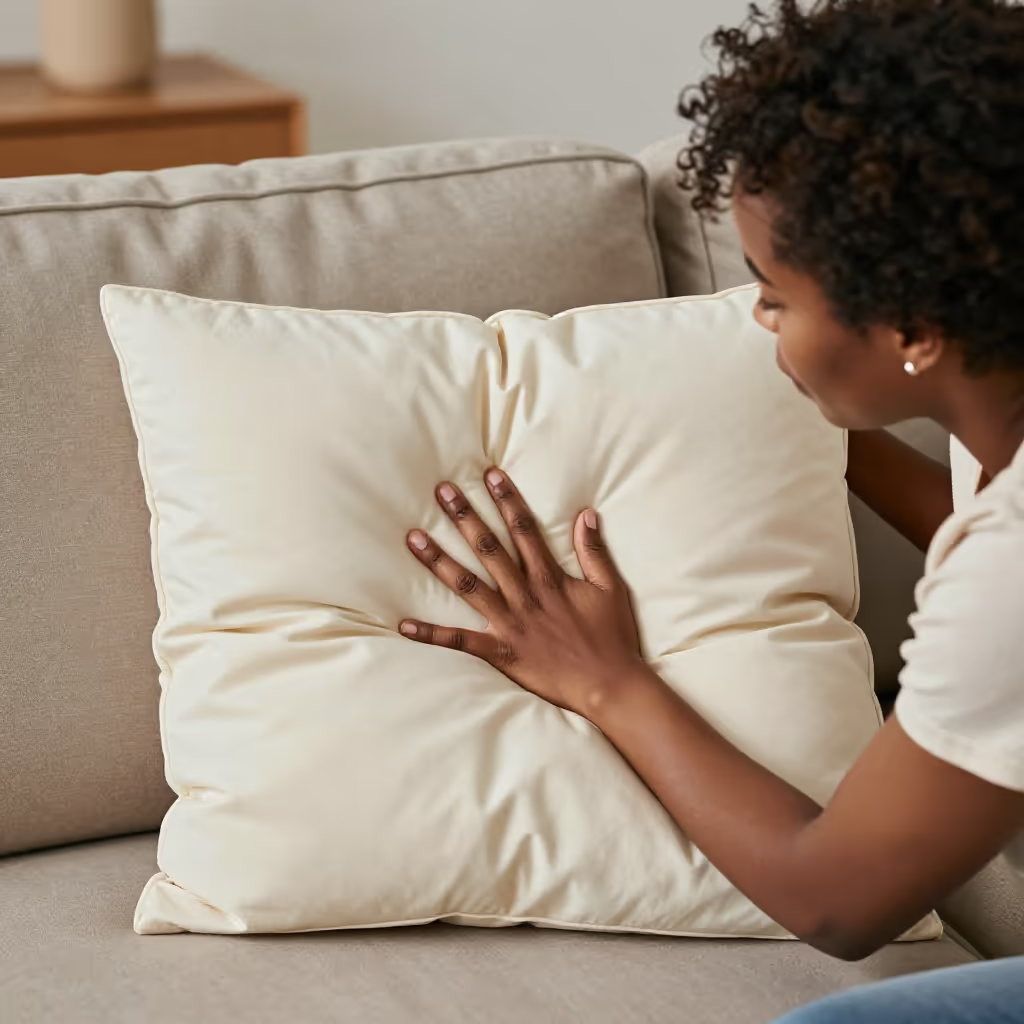
A property of materials that give way under pressure and feel pleasant. The opposite of hard.
EXAMPLE
Das Kissen ist sehr weich und bequem.
The pillow is very soft and comfortable.
soft
Loading your saved state.
soft
A property of materials that give way under pressure and feel pleasant. The opposite of hard.
Das Kissen ist sehr weich und bequem.
The pillow is very soft and comfortable.
soft
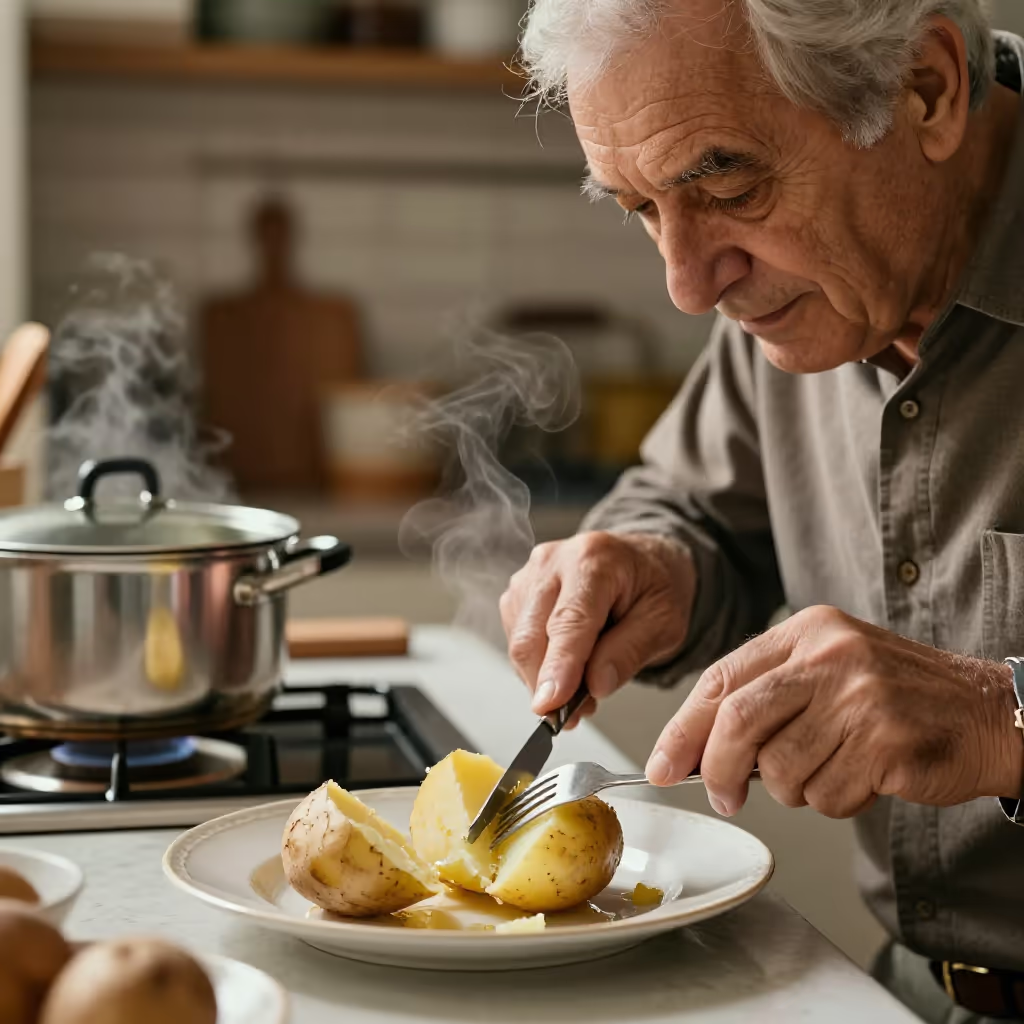
Refers to foods that have become tender and are no longer hard through cooking or ripening.
Die Kartoffeln sind nach 20 Minuten kochen weich.
The potatoes are soft after 20 minutes of cooking.

soft
Describes a gentle, indulgent, or emotional character in a person.
Er hat ein weiches Herz und kann niemandem einen Wunsch abschlagen.
He has a soft heart and can't refuse anyone a wish.

soft
Describes a sound or voice that is pleasant, gentle, and not shrill.
Sie hat eine sehr weiche und beruhigende Stimme.
She has a very soft and calming voice.
soft
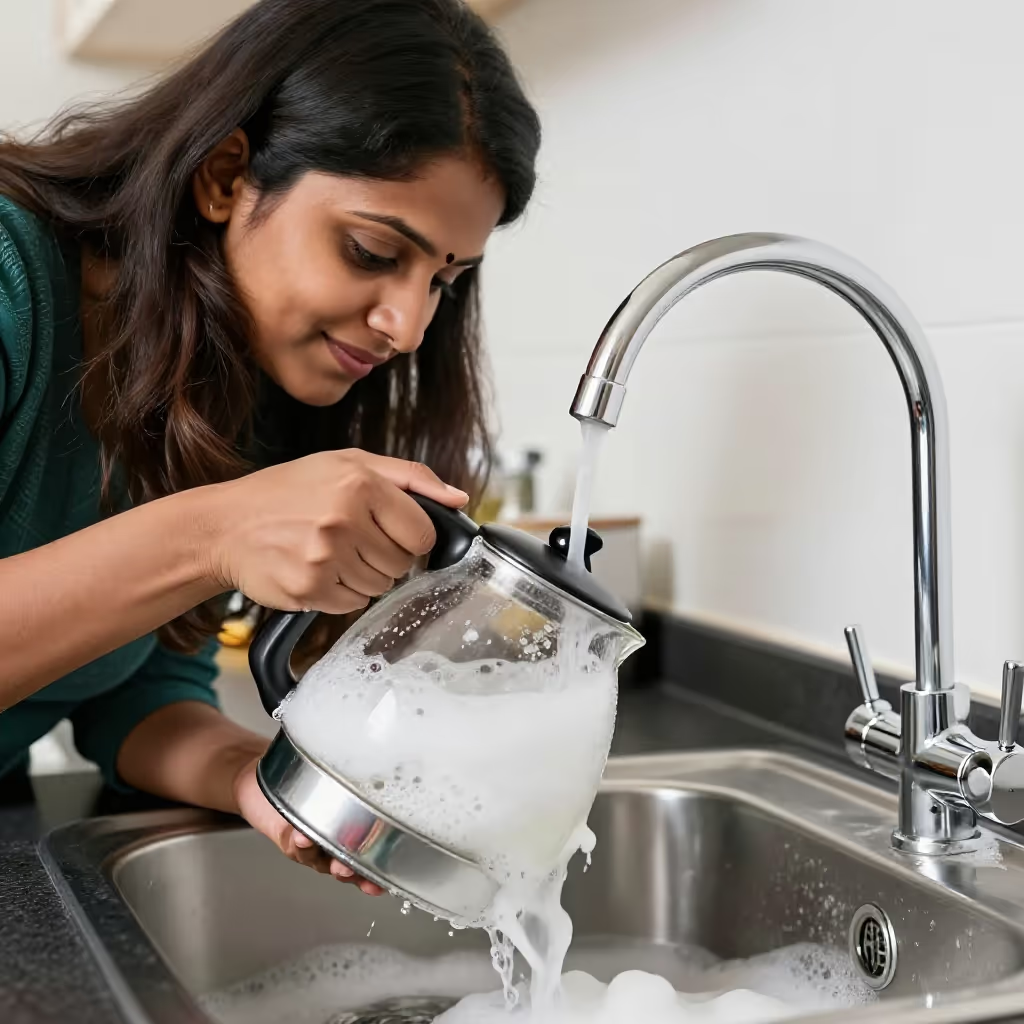
Refers to water with a low lime content.
Weiches Wasser ist besser für die Waschmaschine und die Haut.
Soft water is better for the washing machine and the skin.
soft drugs
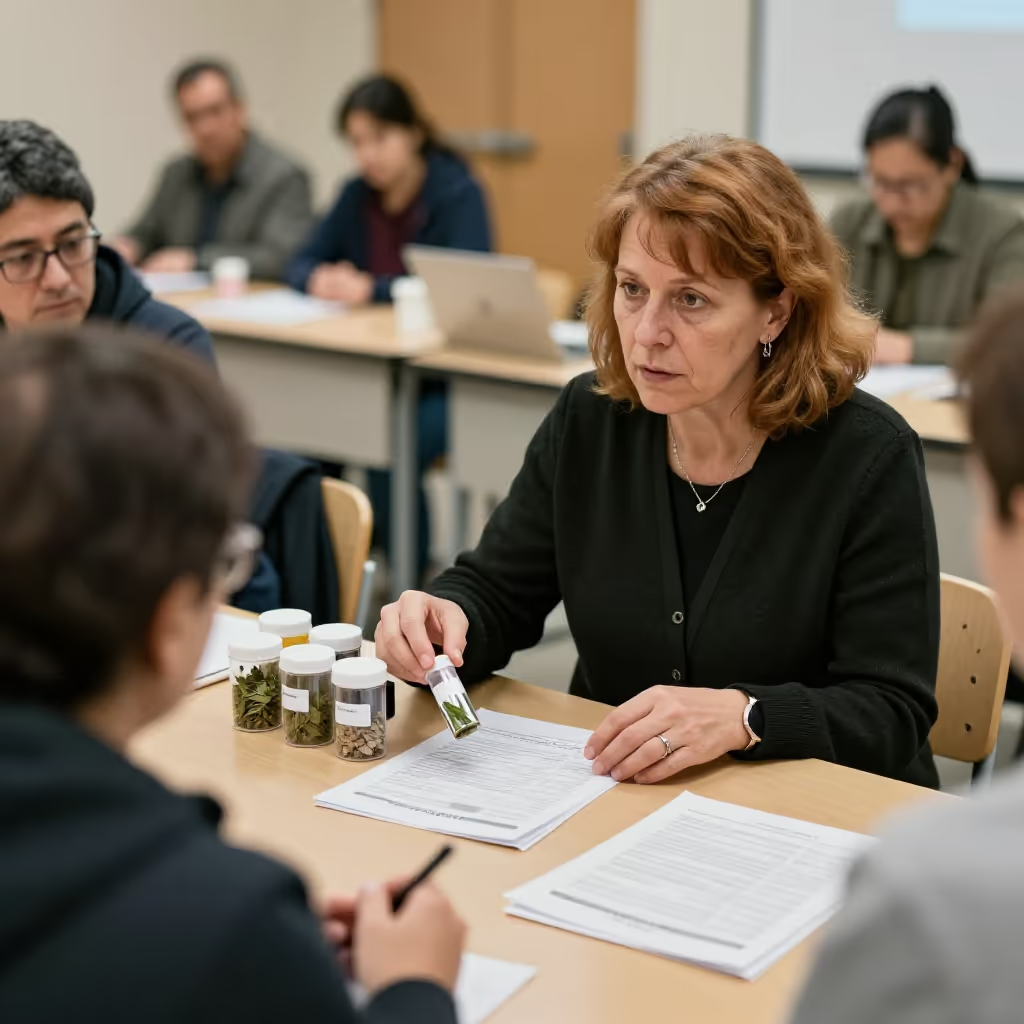
A classification for drugs that are considered less harmful to health and to have a lower potential for addiction than 'harte Drogen' (hard drugs).
Die Debatte über die Legalisierung sogenannter weicher Drogen wie Cannabis hält an.
The debate about the legalization of so-called soft drugs like cannabis continues.
You can recognize the meaning of 'weich' (soft) from the noun it describes. A 'weiches Kissen' (soft pillow) feels pleasant, 'weiche Kartoffeln' (soft potatoes) are cooked, and a 'weiches Herz' (soft heart) describes an emotional character.
Diese Decke ist unglaublich weich.
This blanket is incredibly soft.
'Weich' (soft) is often used as the second part of compound adjectives to describe extreme softness. These new words are often very vivid.
Nach dem Kochen war das Fleisch butterweich.
After cooking, the meat was as soft as butter.
In connection with food, the combination 'weich kochen' (to cook until soft) is very common. It means to cook something until it is tender.
Für das Püree musst du die Kartoffeln ganz weich kochen.
For the purée, you have to cook the potatoes until they are very soft.
The idiom 'ein weiches Herz haben' (to have a soft heart) is a fixed expression. It describes a person who is very compassionate and indulgent.
Mein Opa hat ein weiches Herz und hilft jedem Tier in Not.
My grandpa has a soft heart and helps every animal in need.
Alongside a 'weiche Stimme' (soft voice), the adjective is also used for music and sounds that are perceived as gentle and pleasant. Typical examples are 'weiche Klänge' (soft sounds) or 'weiche Melodien' (soft melodies).
Zum Entspannen hört er am liebsten weiche Klaviermusik.
To relax, he prefers listening to soft piano music.
In this context, 'weich' (soft) is almost always part of the fixed term 'weiche Drogen' (soft drugs). Here it functions as a classification word in social and legal discussions.
In der Politik wird über den Umgang mit weichen Drogen diskutiert.
In politics, people are discussing how to deal with soft drugs.
gentle / soft
For a pleasant surface, weich and sanft can both be appropriate. Weich emphasizes that the material is not hard and yields under pressure. Sanft places more emphasis on the contact feeling pleasant, smooth, and not rough.

Der Stoff fühlt sich weich an und gibt unter leichtem Druck nach.
The fabric feels soft and yields under slight pressure.
Der Stoff fühlt sich sanft auf der Haut an und reizt sie nicht.
The fabric feels gentle against the skin and does not irritate it.