

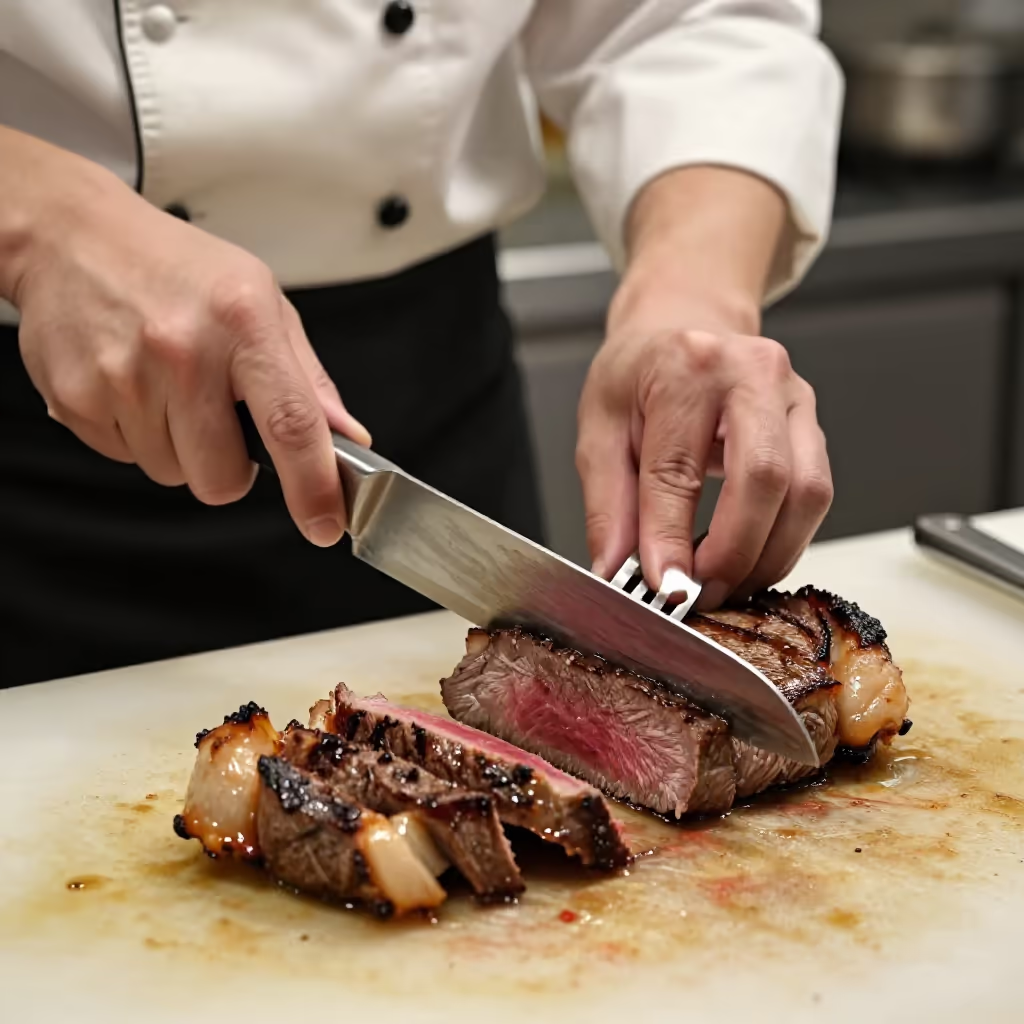
zart
tender
Soft and easy to chew or cut, especially with foods such as meat.
EXAMPLE
Das Steak war unglaublich zart und saftig.
The steak was incredibly tender and juicy.
tender / delicate
Loading your saved state.
tender
Soft and easy to chew or cut, especially with foods such as meat.
Das Steak war unglaublich zart und saftig.
The steak was incredibly tender and juicy.
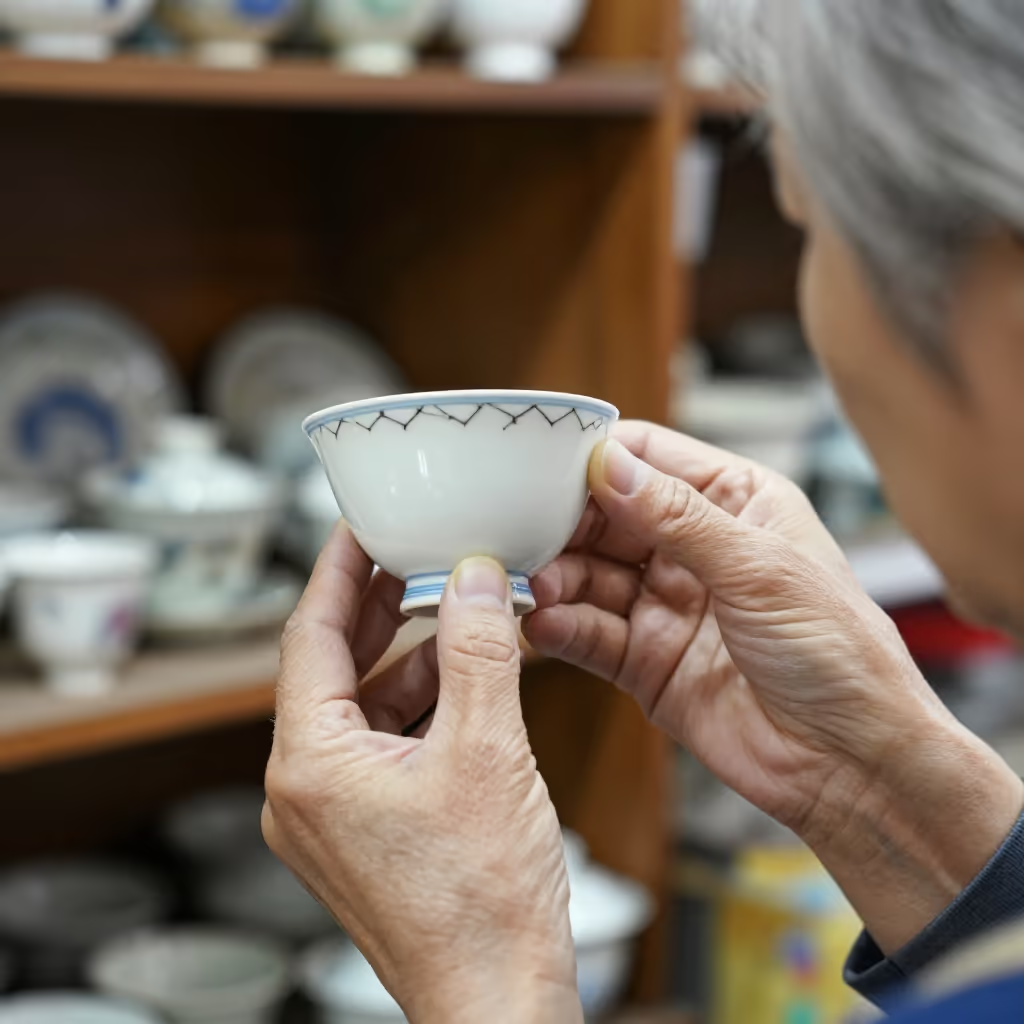
delicate
Fine, fragile, and sensitive.
Die zarten Blüten des Kirschbaums fielen bei dem starken Wind ab.
The delicate blossoms of the cherry tree fell off in the strong wind.

gentle
Soft and loving in touch or in nature.
Er gab ihr einen zarten Kuss auf die Stirn.
He gave her a gentle kiss on the forehead.

soft
Describing a light, unobtrusive, and gentle color.
Die Wände waren in einem zarten Rosa gestrichen.
The walls were painted a soft pink.
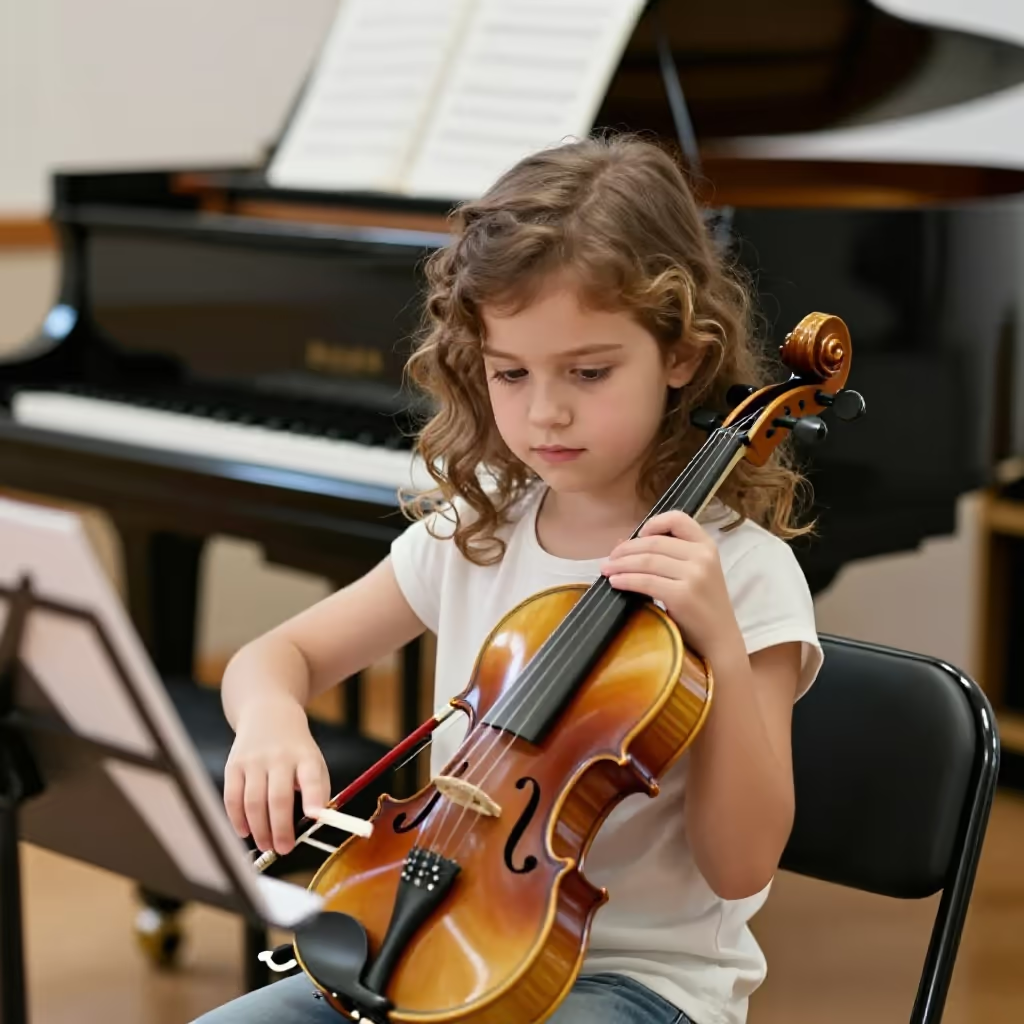
tender
Describing a young age that is not yet fully developed. Often used in a slightly poetic or elevated way.
Schon in zartem Alter von fünf Jahren zeigte sie ihr musikalisches Talent.
Already at the tender age of five, she showed her musical talent.
You can recognize the exact meaning of 'zart' (tender/delicate) from the noun it describes. Depending on whether it refers to food, a color, a person, or an object, the meaning changes.
Das zarte Gemüse war schnell gar.
The tender vegetables were cooked quickly.
When referring to food, 'zart' (tender) is often used to describe soft meat or vegetables. Typical combinations are 'zartes Fleisch' (tender meat), 'zartes Gemüse' (tender vegetables), or 'zarter Fisch' (tender fish).
Das Lammfilet war so zart, dass es auf der Zunge zerging.
The lamb fillet was so tender that it melted on the tongue.
When something is described as 'zart' (delicate) in the sense of fragile, typical nouns are 'Pflanze' (plant), 'Haut' (skin), 'Seele' (soul), or 'Glas' (glass).
Die zarte Haut eines Babys braucht besonderen Schutz.
A baby's delicate skin needs special protection.
To describe a gentle or loving action, 'zart' (gentle) is often combined with words such as 'Berührung' (touch), 'Kuss' (kiss), or 'Stimme' (voice).
Mit einer zarten Bewegung strich er ihr eine Haarsträhne aus dem Gesicht.
With a gentle movement, he brushed a strand of hair out of her face.
In combination with a color, 'zart' (soft) describes a light, unobtrusive pastel shade. For example, people say 'ein zartes Grün' (a soft green) or 'ein zartes Gelb' (a soft yellow).
Für das Kinderzimmer wählten sie zarte Pastellfarben.
For the children's room, they chose soft pastel colors.
Describing a young age with 'zart' (tender) is rather elevated or poetic. It is almost always used in the fixed expression 'in zartem Alter' (at a tender age).
Er lernte schon in zartem Alter das Klavierspielen.
He learned to play the piano at a tender age.
fine
Fein and zart can both describe something delicate or finely made. Fein emphasizes high quality or careful workmanship, while zart emphasizes a fragile and easily breakable nature. Fein is suitable for evaluating the workmanship, whereas zart points to sensitivity.
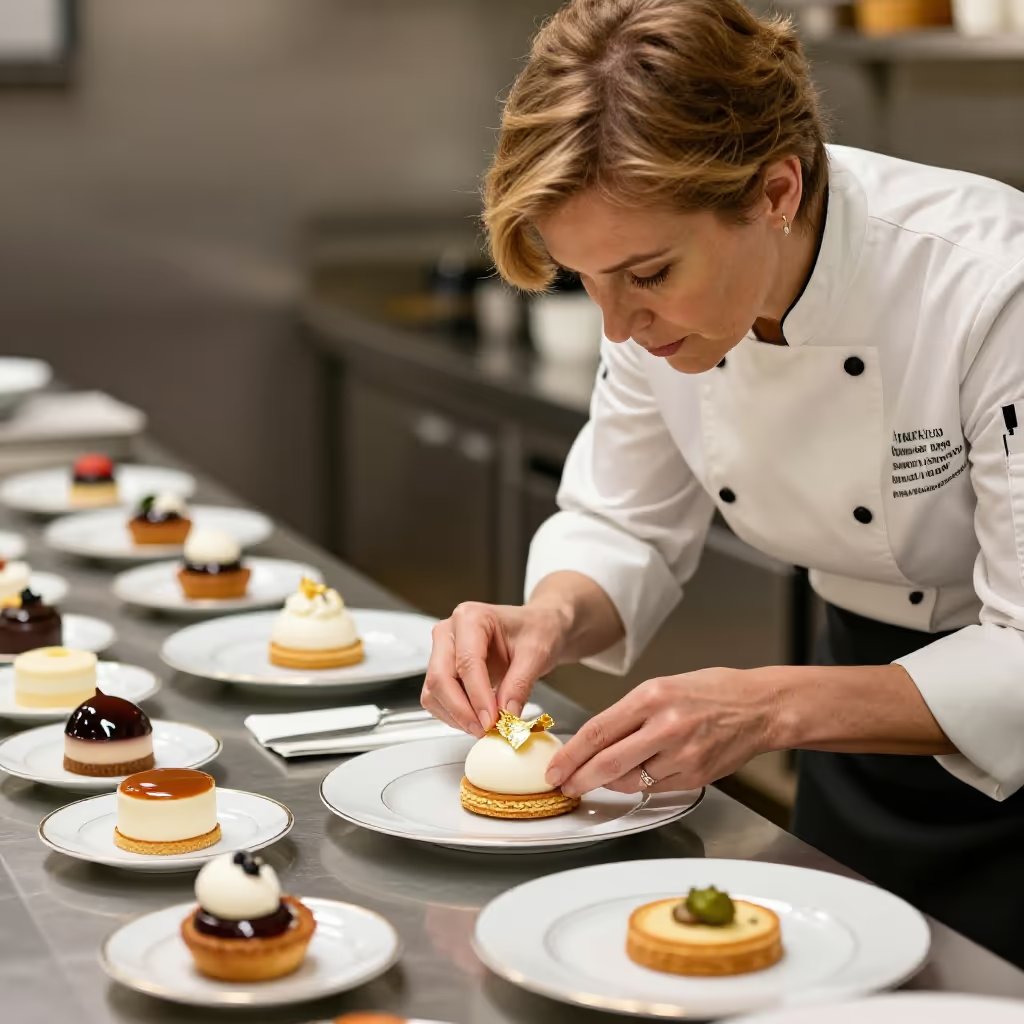
Die zarte Kette muss vorsichtig verpackt werden, damit sie nicht beschädigt wird.
The delicate chain must be packaged carefully so that it does not get damaged.
Die feine Kette ist hochwertig und bis ins kleinste Detail sorgfältig gearbeitet.
The fine chain is high-quality and carefully crafted down to the smallest detail.