


weitaus
far
Used to intensify a comparison and means 'much' or 'significantly'.
EXAMPLE
Diese neue Methode ist weitaus effizienter als die alte.
This new method is far more efficient than the old one.
far
Loading your saved state.
far
Used to intensify a comparison and means 'much' or 'significantly'.
Diese neue Methode ist weitaus effizienter als die alte.
This new method is far more efficient than the old one.
'Weitaus' (far) is almost always used to intensify an adjective or adverb in the comparative form. It stands directly before the comparative word.
Ein Elektroauto ist weitaus leiser als ein Benziner.
An electric car is far quieter than a gasoline-powered car.
Do not use 'weitaus' (far) with the basic form of an adjective. A sentence like 'Das ist weitaus gut' (That is far good) is wrong. There must always be a comparison, so: 'Das ist weitaus besser' (That is far better).
Die zweite Version der Software ist weitaus stabiler als die erste.
The second version of the software is far more stable than the first.
'Weitaus' (far) is somewhat more elevated stylistically and expresses stronger emphasis. It is frequently used in written language and in more formal contexts to indicate a large difference.
Die tatsächlichen Kosten waren weitaus höher als erwartet.
The actual costs were far higher than expected.
far / wide
Weit and weitaus can both strongly intensify a comparison. Weit is more versatile: in addition to its spatial meaning, it can also come before a comparative, while weitaus is specifically used as an intensifying adverb. Both are often suitable when a difference seems particularly large.
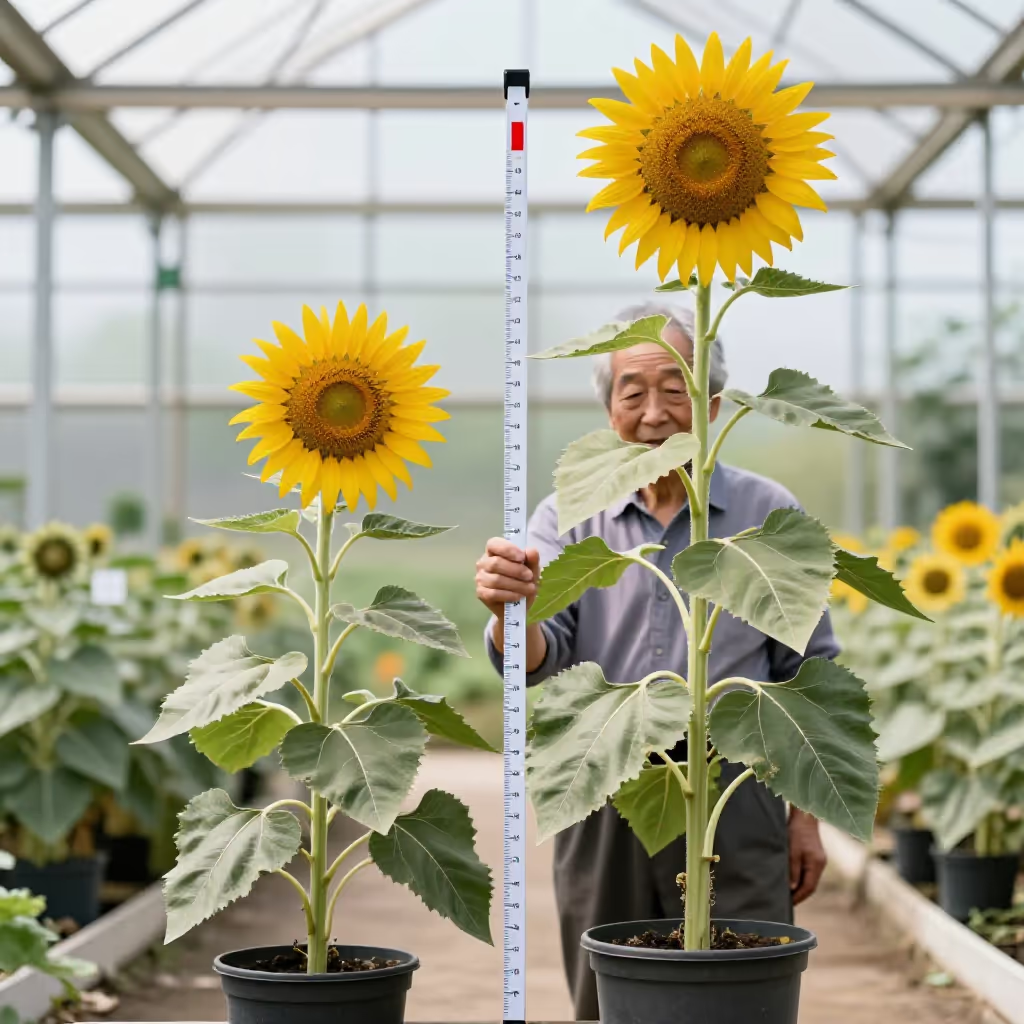
Der neue Weg ist weitaus kürzer als der alte.
The new route is far shorter than the old one.
Der neue Weg ist weit kürzer als der alte.
The new route is far shorter than the old one.