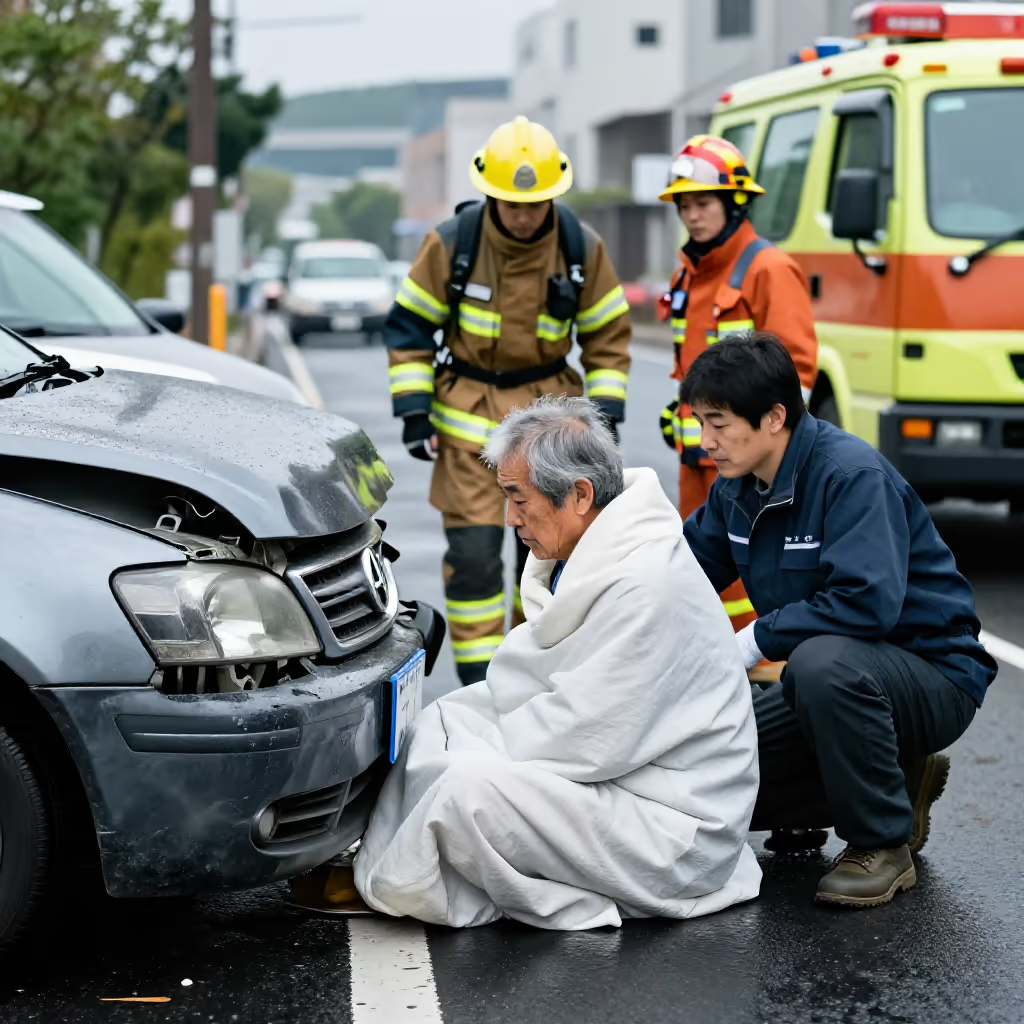
To stay alive and continue one's life, especially after a serious illness, an accident, or another life-changing event.
example
Trotz des schweren Schicksalsschlags fand sie die Kraft, für ihre Kinder weiterzuleben.
Despite the severe blow of fate, she found the strength to live on for her children.

Usage tips
Separable verb
'Weiterleben' (to live on) is a separable verb with the prefix 'weiter-'. In a main clause, the prefix goes at the end of the sentence. In a subordinate clause or infinitive, the verb stays together.
EXAMPLE
Sein Geist lebt in seinen Büchern weiter.
His spirit lives on in his books.
Auxiliary verb in the perfect tense
Unlike verbs of movement, the perfect tense of 'weiterleben' (to live on) is formed with the auxiliary verb 'haben' (to have). So it is 'er hat weitergelebt' (he lived on / he has lived on).
EXAMPLE
Nach dem Unfall hat er noch viele Jahre glücklich weitergelebt.
After the accident, he lived on happily for many more years.
Typical collocations
In the figurative meaning, 'weiterleben' (to live on) is often combined with prepositional phrases such as 'in der Erinnerung' (in memory), 'in den Herzen der Menschen' (in people's hearts), or 'in seinen Werken' (in his works).
EXAMPLE
In der Erinnerung seiner Freunde wird er für immer weiterleben.
In the memory of his friends, he will live on forever.
Context clue
The literal meaning refers to a person's physical survival. The figurative meaning describes how a person, an idea, or a work continues to exist in memory or culture after death.
EXAMPLE
Die Ärzte gaben ihm nur noch wenige Monate, aber er kämpfte und lebte weiter.
The doctors gave him only a few months, but he fought and lived on.
Compare with
near_synonym · confusable
weiterleben vs leben
to live
'leben' and 'weiterleben' both have to do with the life or continued existence of a person or thing. 'leben' simply describes that someone is alive or exists. 'weiterleben' emphasizes that life continues after a serious event or danger, or that someone lives on in memory after death. The words can be confused because both talk about life. The important difference is: 'leben' describes the state, while 'weiterleben' describes continuation after a turning point.
weiterleben
Die Erinnerung an ihre Großmutter lebt in der Familie weiter.
The memory of her grandmother lives on in the family.
leben
Nach der Operation lebt der Patient wieder ohne starke Schmerzen.
After the operation, the patient is living again without severe pain.