

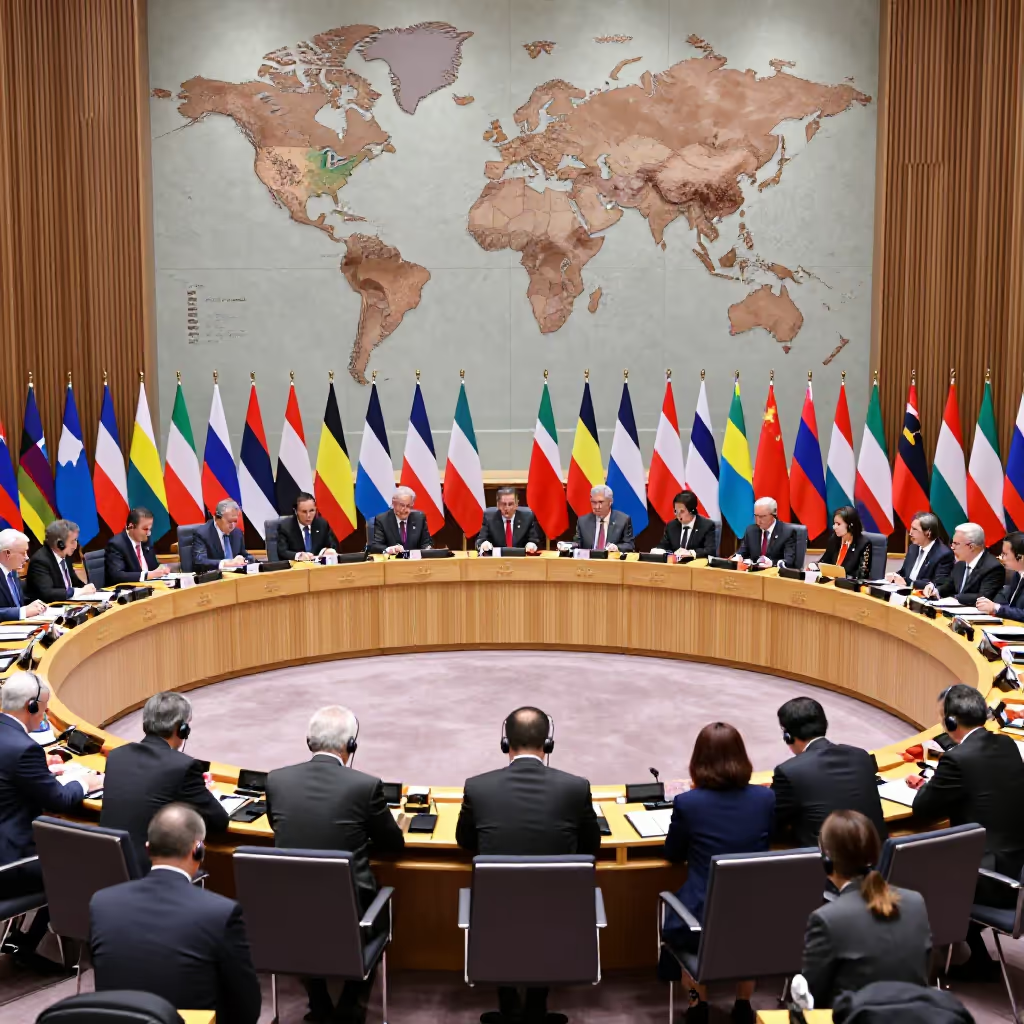
The entirety of the political, economic, and legal relationships between the countries of the world, which determines the global balance of power and international rules.
example
Nach dem Ende des Kalten Krieges etablierte sich eine neue Weltordnung.
After the end of the Cold War, a new world order became established.
Usage tips
Word composition
The word is made up of 'Welt' (world), the linking -s, and 'Ordnung' (order). So it literally describes the order or structure of the entire world.
EXAMPLE
Die Konferenz diskutierte die Zukunft der globalen Weltordnung.
The conference discussed the future of the global world order.
Register
'Weltordnung' (world order) is a term used mainly in politics, history and the social sciences, as well as in journalism. It is rather rare in everyday conversation.
EXAMPLE
In seiner Analyse beschreibt der Historiker die sich wandelnde Weltordnung des 21. Jahrhunderts.
In his analysis, the historian describes the changing world order of the 21st century.
Typical collocations
Common verbs used in connection with 'Weltordnung' (world order) are 'schaffen' (to create), 'verändern' (to change), 'stabilisieren' (to stabilize), or 'in Frage stellen' (to call into question). It is often described with adjectives such as 'neu' (new), 'bestehend' (existing), or 'multipolar' (multipolar).
EXAMPLE
Einige Staaten versuchen, die bestehende Weltordnung herauszufordern.
Some states are trying to challenge the existing world order.