

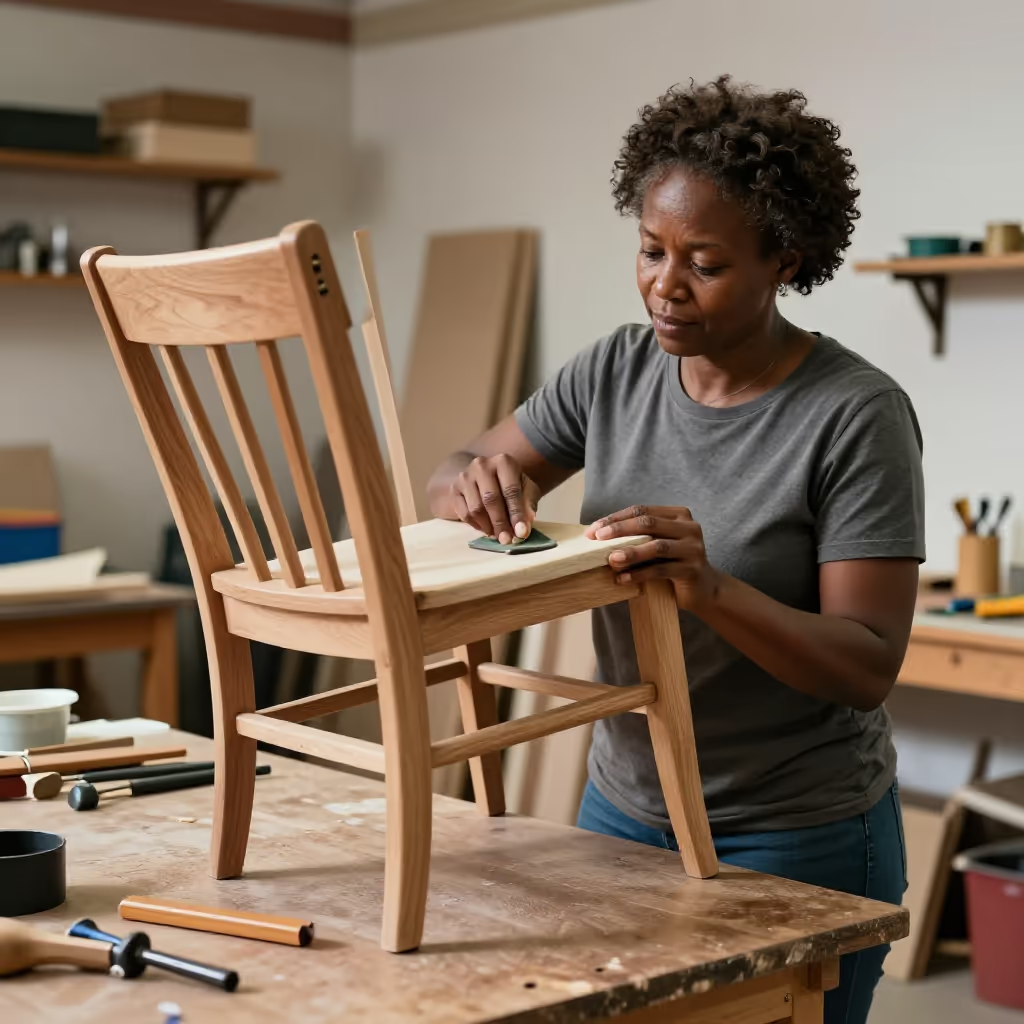
To continue the work or an activity that has been started and not interrupt or end it.
example
Obwohl es schon spät war, mussten wir weiterarbeiten, um die Frist einzuhalten.
Although it was already late, we had to continue working to meet the deadline.

Usage tips
Word structure with 'weiter-'
The verb is made up of 'weiter' (further/on) and 'arbeiten' (to work). The prefix 'weiter-' means 'to continue' and can be combined with many other verbs to express the continuation of an action, e.g. 'weiterlesen' (to continue reading), 'weiterschlafen' (to keep sleeping).
EXAMPLE
Nach der Kaffeepause müssen wir konzentriert weiterarbeiten.
After the coffee break, we have to continue working with focus.
Separable verb
'Weiterarbeiten' (to continue working) is a separable verb. In a main clause, the prefix 'weiter' goes at the end. In subordinate clauses and in the infinitive with 'zu', the verb stays together.
EXAMPLE
Ich arbeite heute Abend noch etwas weiter.
I'm going to continue working a bit this evening.
Use with 'an'
If you want to say exactly what you are working on, you use the preposition 'an' followed by the dative. This construction is very common.
EXAMPLE
Sie arbeitet an ihrer Doktorarbeit weiter.
She is continuing to work on her doctoral thesis.
Compare with
antonym
weiterarbeiten vs beenden
to end
'beenden' and 'weiterarbeiten' are clear opposites. With 'beenden', you bring an activity or process to a conclusion. After that, you do not continue with it. With 'weiterarbeiten', you continue work that has already begun, even though you might take a break or stop. So the difference is simple: 'beenden' means to stop or finish, while 'weiterarbeiten' means not to stop.
weiterarbeiten
Nach einer kurzen Pause arbeitet meine Kollegin weiter.
After a short break, my colleague continues working.