

werden
will
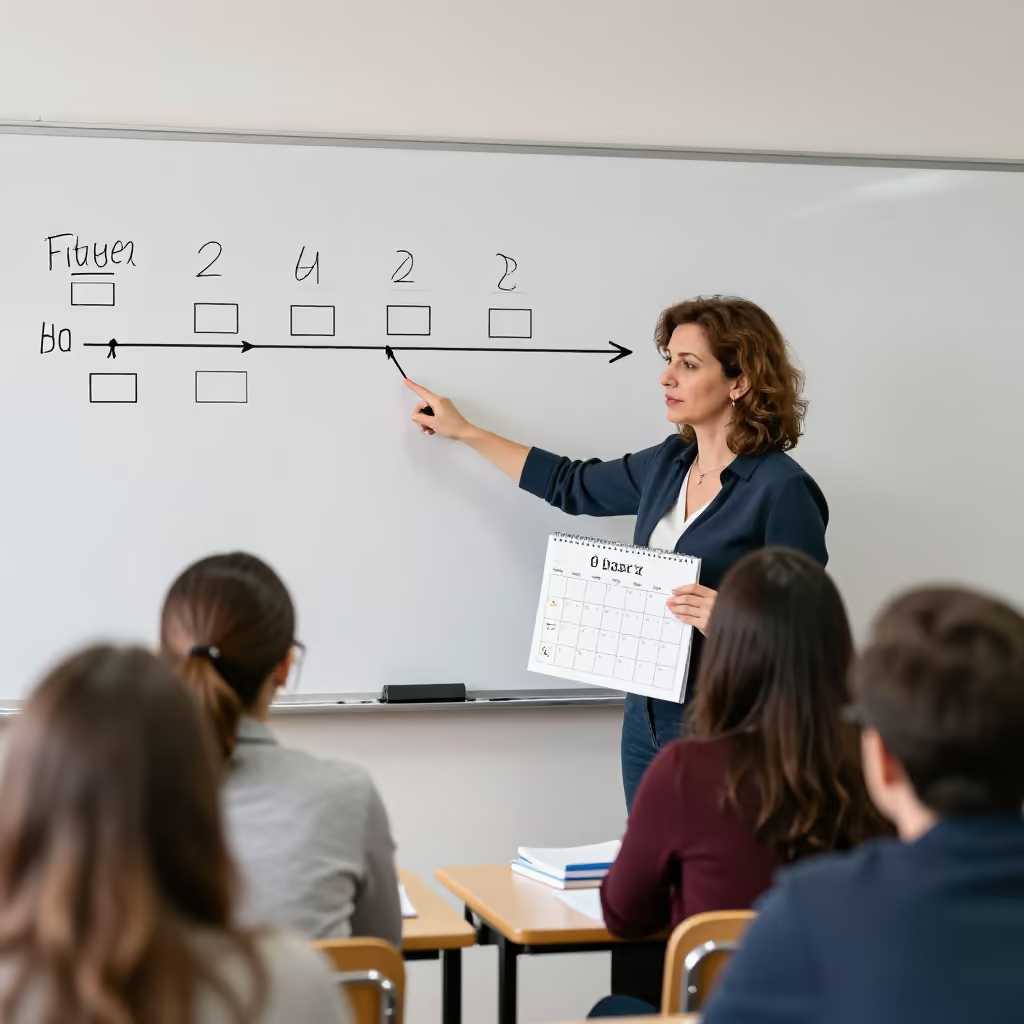
Serves as an auxiliary verb to form the future tense (Futur I).
EXAMPLE
Ich werde dich morgen anrufen.
I will call you tomorrow.
to become / will
Loading your saved state.
will
Serves as an auxiliary verb to form the future tense (Futur I).
Ich werde dich morgen anrufen.
I will call you tomorrow.
to be
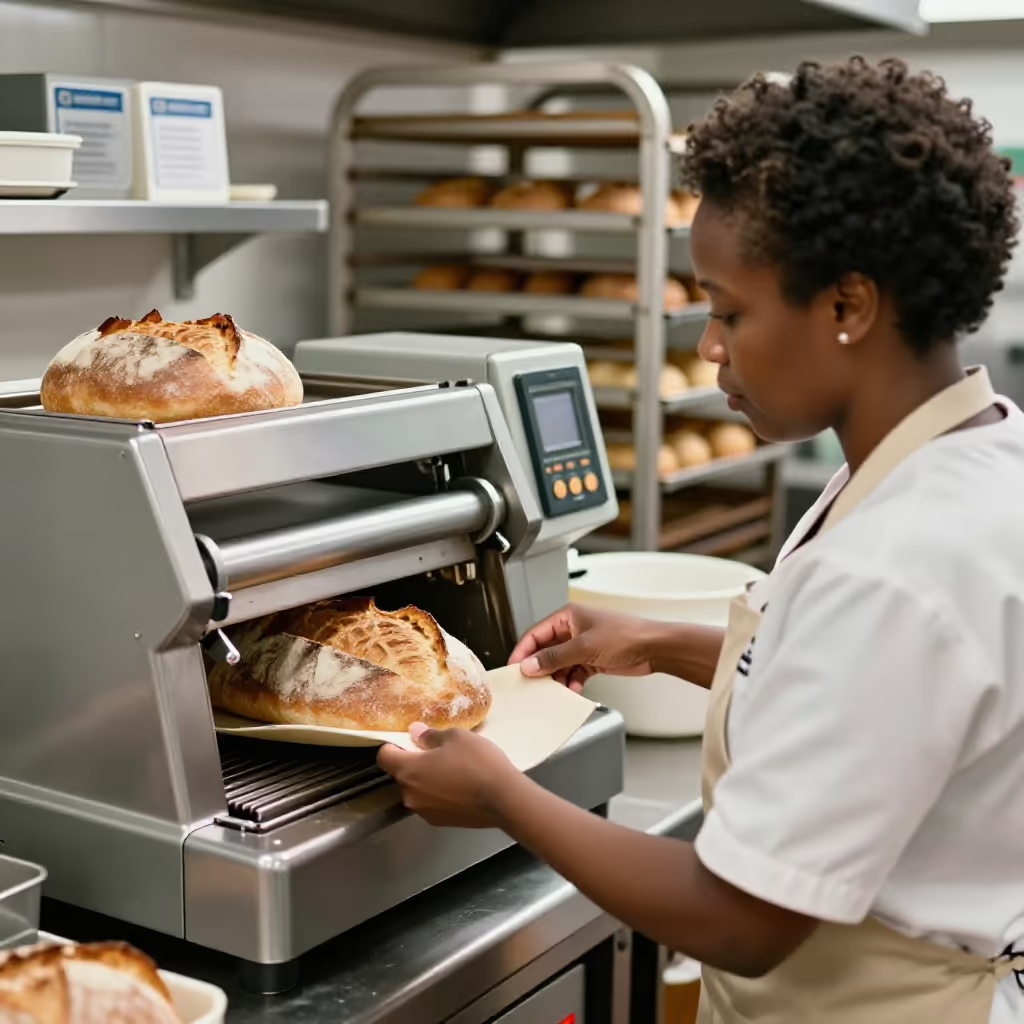
Serves as an auxiliary verb to form the passive. It describes that an action is happening to someone or something.
Das Auto wird gerade repariert.
The car is being repaired right now.
to become
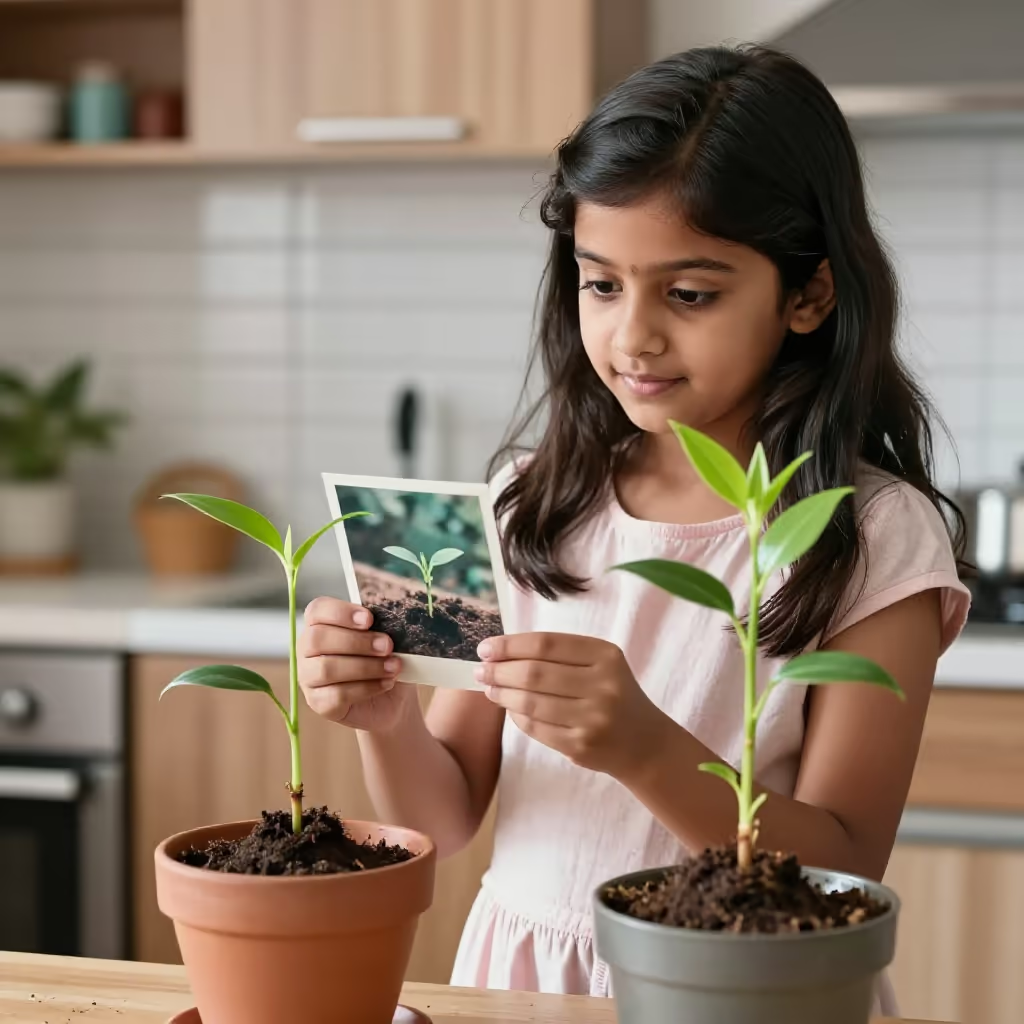
As a main verb, it describes a change or development into a new state or a new quality.
Mein Bruder möchte Arzt werden.
My brother wants to become a doctor.
would
Serves as an auxiliary verb in the form 'würde' to form the Konjunktiv II, in order to express wishes, hypothetical situations, or polite requests.
Ich würde jetzt gerne ein Eis essen.
I would like to eat some ice cream now.
'Werden' as a main verb means a change and corresponds to the English 'to become.' Don't confuse it with 'bekommen' (to get / to receive). This mistake is very common.
Im Herbst werden die Blätter bunt.
In autumn, the leaves become colorful.
To form the future tense (Futur I), the conjugated form of 'werden' is combined with the infinitive of another verb. The conjugated 'werden' stands in position 2 in the main clause, and the infinitive stands at the end of the sentence.
Nächstes Jahr werde ich nach Spanien reisen.
Next year I will travel to Spain.
The passive is formed with the conjugated form of 'werden' and the past participle (Partizip II). 'Werden' stands in position 2 in the main clause, and the past participle stands at the end.
Das Paket wird morgen geliefert.
The package will be delivered tomorrow.
When 'werden' as a main verb describes a change, it is usually followed by an adjective or a noun in the nominative. It describes the new state or the new identity.
Es wird langsam dunkel.
It's slowly getting dark.
The form 'würde' (Konjunktiv II of 'werden') is used together with an infinitive to form a polite, hypothetical, or unreal statement. 'Würde' stands in position 2, and the infinitive stands at the end.
Ich würde dir gerne helfen, aber ich habe keine Zeit.
I would like to help you, but I don't have time.
to be
Using sein with a participle describes the state after a completed action. Werden with a participle, by contrast, focuses on the action or process itself. That is why sein fits the finished result, while werden is used for the repair in progress.
Das Auto wird gerade repariert und ist bald wieder fahrbereit.
The car is being repaired right now and will soon be ready to drive again.
Das Auto ist repariert und wieder fahrbereit.
The car is repaired and ready to drive again.