

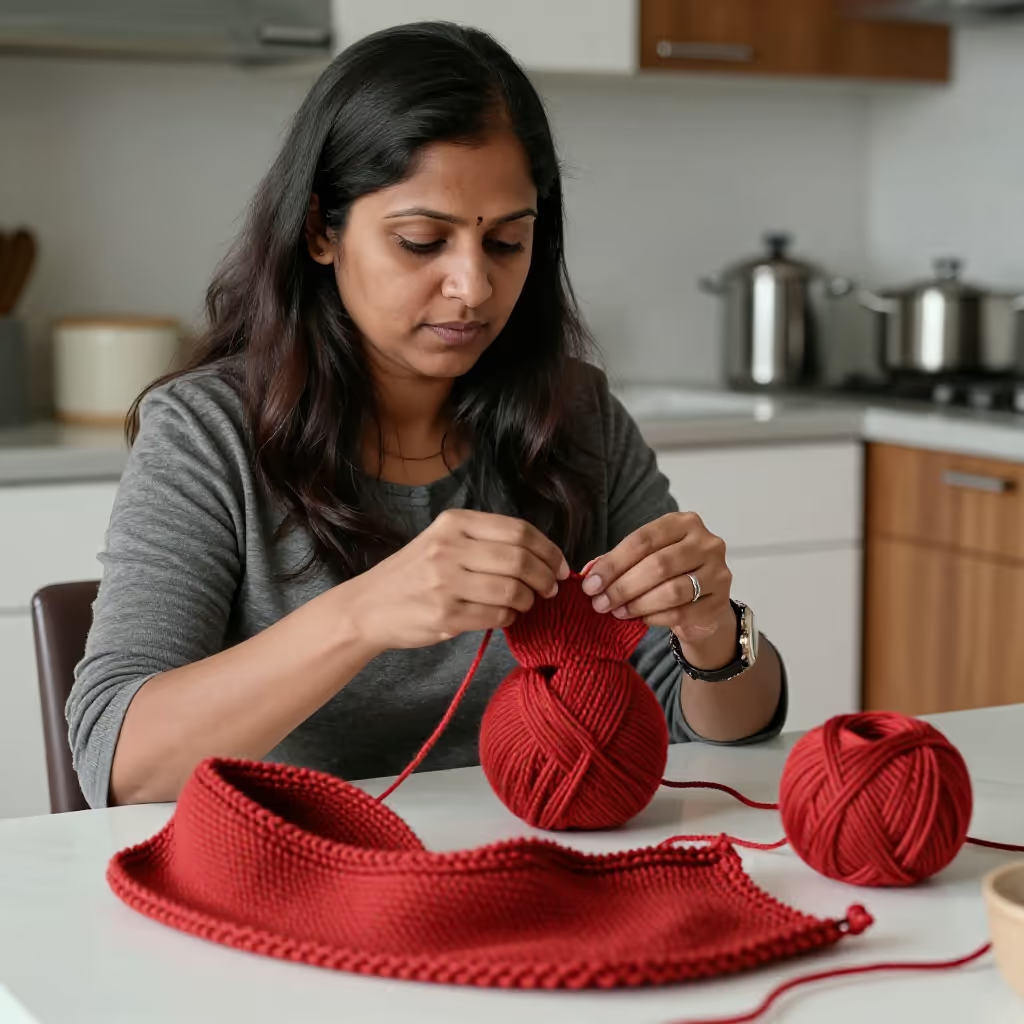
wickeln
to wrap
To wind something, e.g. a scarf, thread, or bandage, around something else, or to roll it up into a roll or ball.
EXAMPLE
Er wickelte sich einen warmen Schal um den Hals.
He wrapped a warm scarf around his neck.
to wrap / change
Loading your saved state.
to wrap
To wind something, e.g. a scarf, thread, or bandage, around something else, or to roll it up into a roll or ball.
Er wickelte sich einen warmen Schal um den Hals.
He wrapped a warm scarf around his neck.
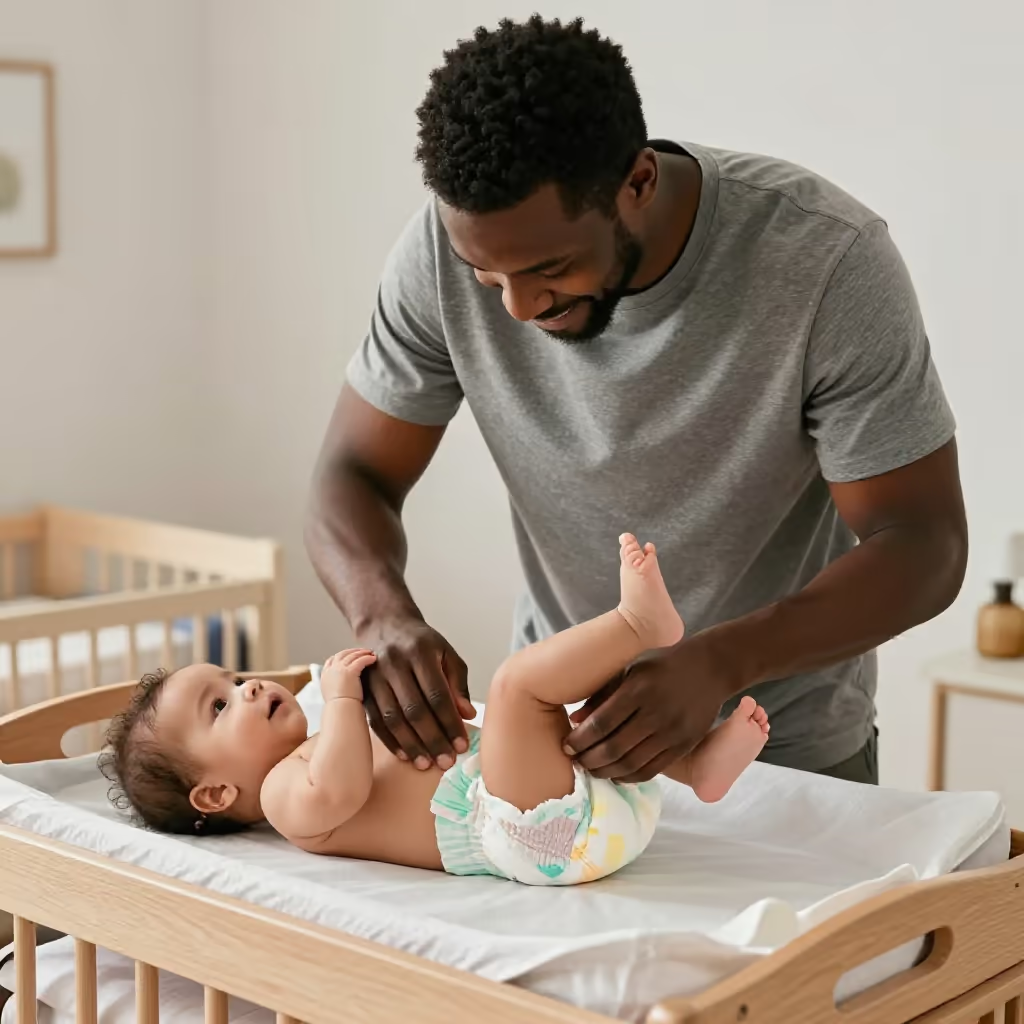
to change
To put a fresh diaper on a baby or small child.
Nach dem Füttern muss ich das Baby noch wickeln.
After feeding, I still have to change the baby.

to wrap someone around one’s finger
To easily get someone to do what you want through charm or persuasion.
Mit ihrem Lächeln und ihrer freundlichen Art wickelt sie jeden um den Finger.
With her smile and friendly manner, she wraps everyone around her finger.
You can recognize the meaning of “wickeln” (to wrap/change) from the object and the prepositions. If “um” (around) appears with it, it is usually about wrapping something around something. If the object is a baby, it means changing a diaper. The expression “um den Finger wickeln” (to wrap around one’s finger) is a fixed idiom.
Sie wickelte das Geschenk in buntes Papier.
She wrapped the gift in colorful paper.
In the meaning “to wind around something,” “wickeln” (to wrap) usually needs either two accusative objects or one accusative object and a prepositional phrase with “um” (around). The structure is: “etwas (Akk.) um etwas (Akk.) wickeln” (to wrap something around something).
Die Mutter wickelte eine Decke um das schlafende Kind.
The mother wrapped a blanket around the sleeping child.
When you say “Ich muss das Baby wickeln” (I have to change the baby), it always means changing the diaper. You do not need to add the word “Windel” (diaper); it is clear from the context.
Das Baby schreit, vielleicht muss man es wickeln.
The baby is crying; maybe it needs to be changed.
The expression “jemanden um den Finger wickeln” (to wrap someone around one’s finger) is a fixed idiom. It means that you influence a person with charm so that they do everything you want.
Die kleine Tochter wickelt ihren Vater mühelos um den Finger.
The little daughter effortlessly wraps her father around her finger.
to tie / bind
When applying a bandage, both binden and wickeln can be appropriate. wickeln emphasizes that the bandage is wrapped around the body part several times. binden, on the other hand, emphasizes fastening or securing it, for example at the end of the bandage.

Sie wickelt den Verband mehrmals um den verletzten Arm.
She wraps the bandage around the injured arm several times.
Sie bindet den Verband am Ende mit einem Knoten fest.
She secures the bandage with a knot at the end.