


A person who actively fights or works against someone or something; an opponent or enemy. The term often has a strong, sometimes literary or biblical connotation.
example
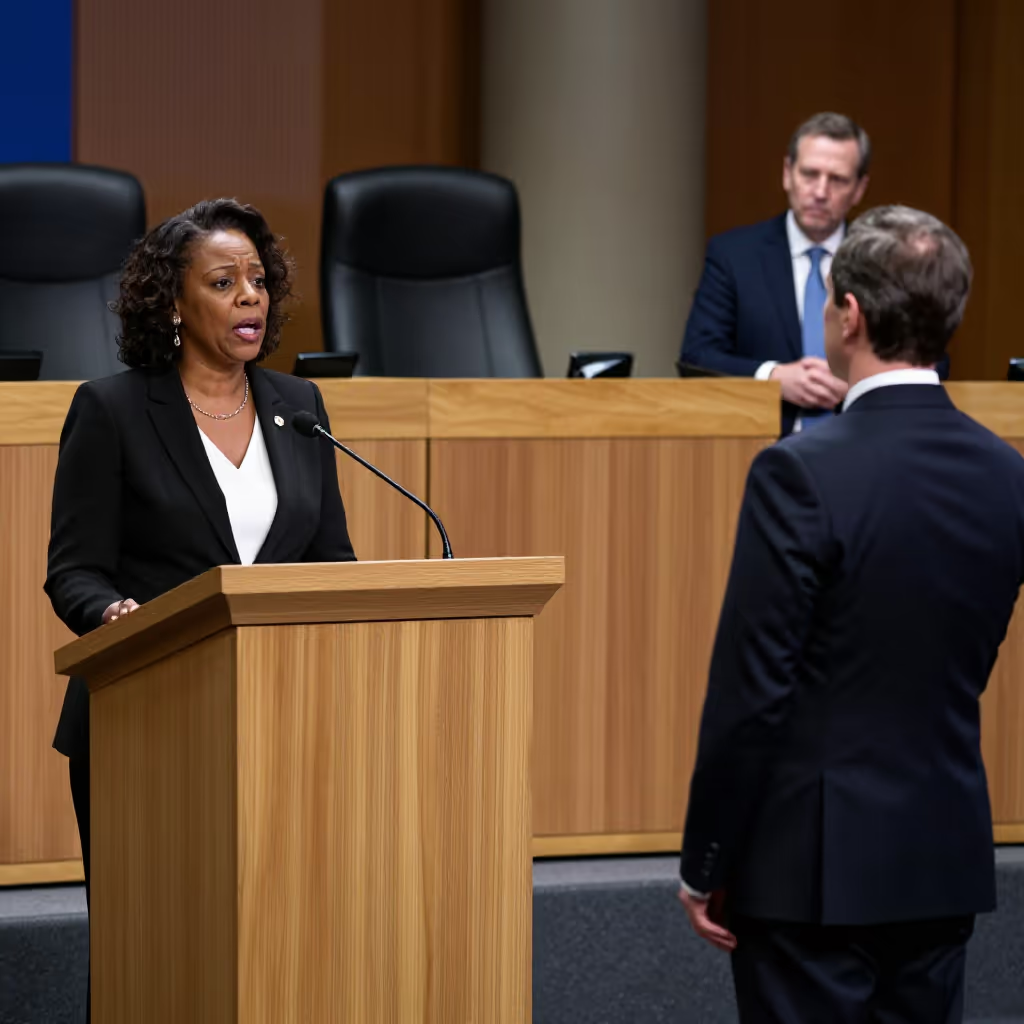
In der Debatte trafen die beiden alten Widersacher erneut aufeinander.
In the debate, the two old adversaries faced each other once again.
Usage tips
Word structure
The word is made up of the prefix 'wider' (against) and the old word 'Sache' in the sense of 'matter in dispute.' A 'Widersacher' (adversary) is therefore someone who stands against another person in a matter.
EXAMPLE
Die beiden Politiker waren seit Jahren erbitterte Widersacher.
The two politicians had been bitter adversaries for years.
Word family with 'wider-'
The prefix 'wider-' always means 'against.' If you recognize this prefix, you can also understand other words, such as 'widersprechen' (to speak against/contradict) or 'Widerstand' (resistance, literally standing against).
EXAMPLE
Er wagte es, dem König zu widersprechen.
He dared to contradict the king.
Register and style
'Widersacher' (adversary) is an elevated, rather literary or formal word. It describes a serious, often long-standing opponent and is not used for a simple competitor in sports or a game.
EXAMPLE
In der Legende kämpft der Held gegen einen mächtigen Widersacher.
In the legend, the hero fights against a powerful adversary.
Typical adjectives
The word is often combined with strong adjectives that emphasize the intensity of the hostility. Common phrases are 'ein erbitterter Widersacher' (a bitter adversary), 'ein politischer Widersacher' (a political adversary), or 'sein größter Widersacher' (his greatest adversary).
EXAMPLE
Sein einstiger Freund wurde zu seinem größten Widersacher.
His former friend became his greatest adversary.
Compare with
near_synonym
Widersacher vs Gegner
opponent
'der Gegner' and 'der Widersacher' can both mean a person who works against someone or against a cause. 'Gegner' is the normal, broad word and fits many situations, including objective discussions. 'Widersacher' is stronger and often sounds serious, literary, or dramatic. It does not just mean someone with a different opinion, but someone who actively stands in the way or fights. In everyday language, people usually say 'Gegner'; 'Widersacher' is more suitable in stories, reports, or very intense conflicts.
Widersacher
Im Roman kämpfte der Held jahrelang gegen seinen gefährlichen Widersacher.
In the novel, the hero fought for years against his dangerous adversary.
Gegner
Der Arzt ist ein Gegner von zu viel Zucker in Getränken.
The doctor is an opponent of too much sugar in drinks.