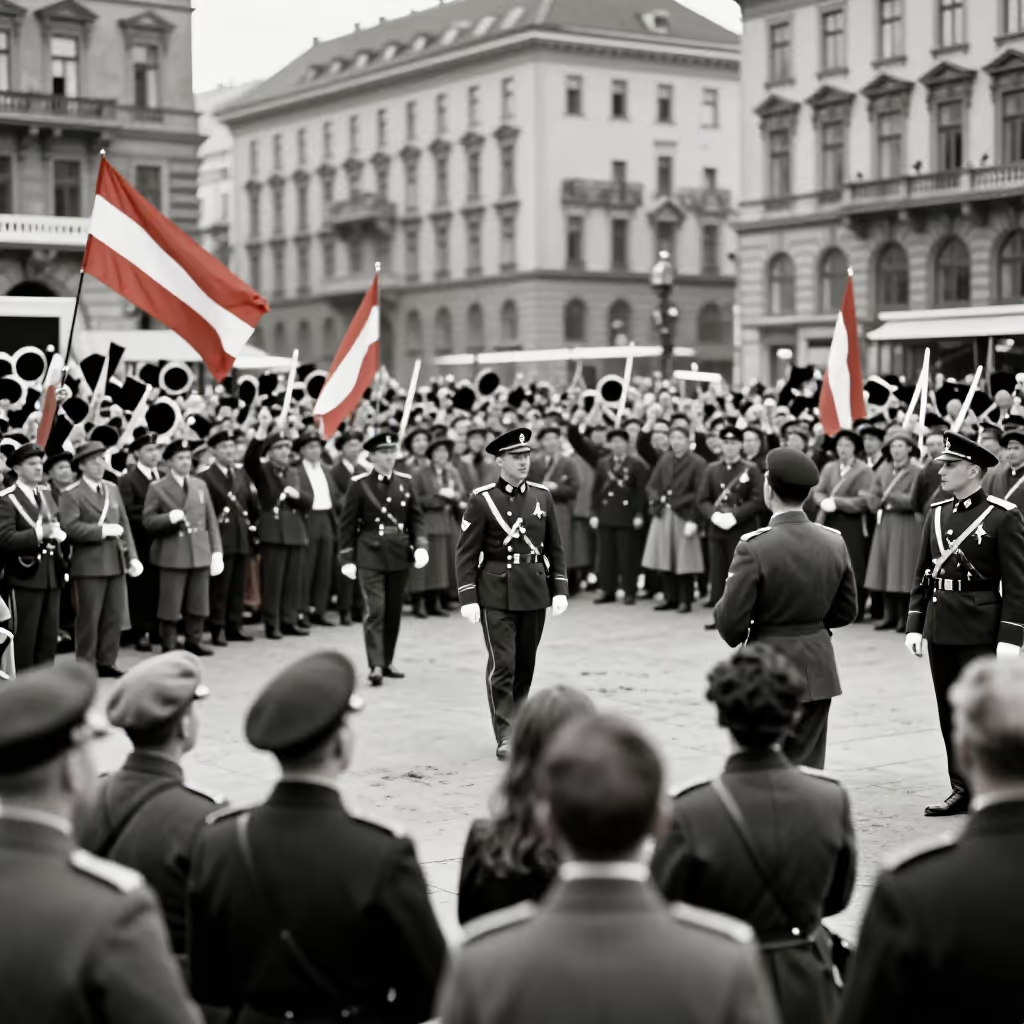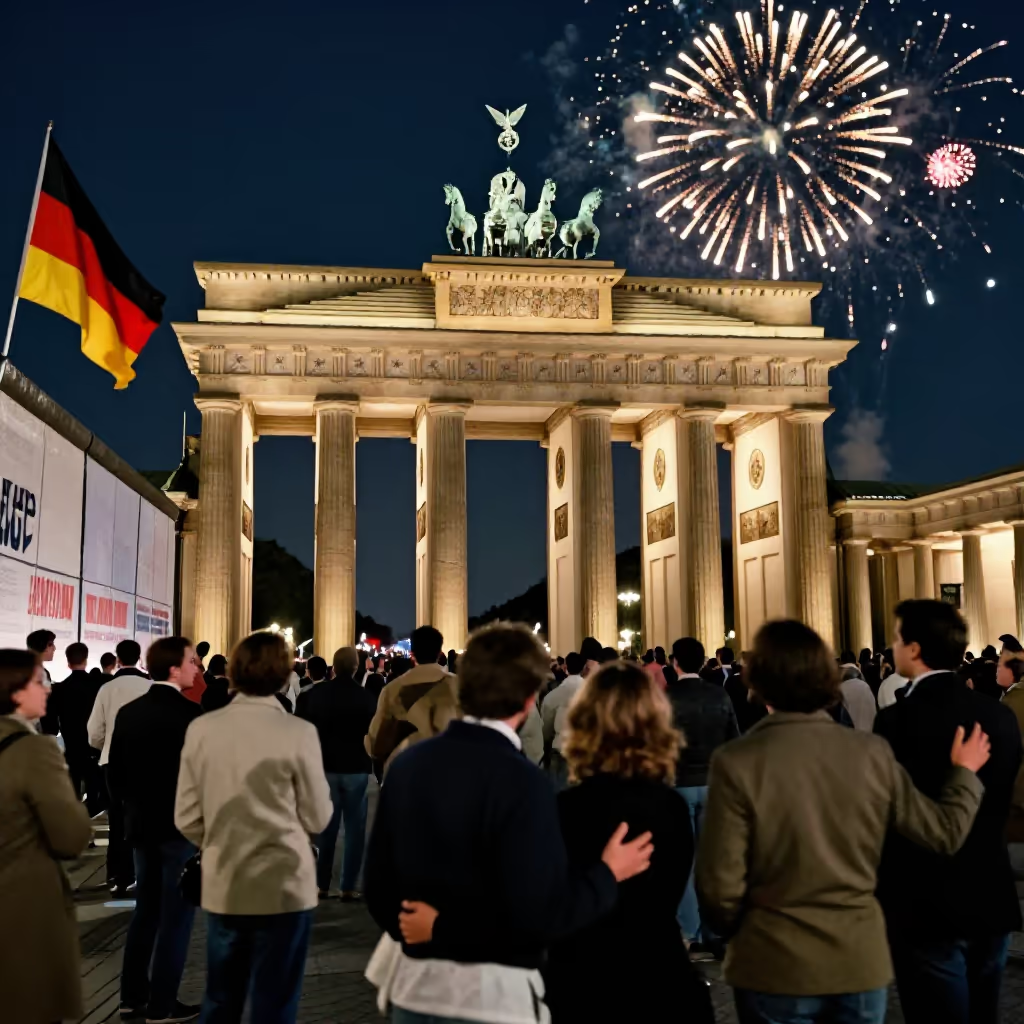
The process in which the German Democratic Republic (GDR) joined the Federal Republic of Germany on October 3, 1990, and Germany became one state again after more than 40 years of division.
example
Die Wiedervereinigung Deutschlands ist ein zentrales Ereignis der jüngeren europäischen Geschichte.
The reunification of Germany is a central event in recent European history.

Usage tips
Word composition
The word is made up of the prefix 'wieder-' (again) and the noun 'Vereinigung' (union/unification). So it literally means a renewed unification of something that was previously separated.
EXAMPLE
Die Wiedervereinigung der beiden Koreas ist ein politisches Ziel.
The reunification of the two Koreas is a political goal.
Historical context
When 'die Wiedervereinigung' (reunification) is used without any further addition in a German context, it almost always refers to German reunification in 1990. The word is then treated like a historical proper name.
EXAMPLE
Mein Vater erzählt oft Geschichten aus der Zeit vor der Wiedervereinigung.
My father often tells stories from the time before reunification.
Cultural significance
German reunification is celebrated every year on October 3. This day is a national holiday and is called 'Tag der Deutschen Einheit' (German Unity Day).
EXAMPLE
Am Tag der Deutschen Einheit wird an die Wiedervereinigung erinnert.
On German Unity Day, people remember reunification.
General use
In its general meaning, the word is often used for personal or social groups. Typical combinations are 'die Wiedervereinigung der Familie' (the reunification of the family), 'einer Band' (of a band), or 'einer Gruppe' (of a group).
EXAMPLE
Nach zwanzig Jahren gab es eine emotionale Wiedervereinigung der alten Schulfreunde.
After twenty years, there was an emotional reunion of the old school friends.
Compare with
antonym
Wiedervereinigung vs Trennung
separation
'die Trennung' and 'die Wiedervereinigung' are clear opposites. In a 'Trennung', parts, groups, or people are separated from one another or remain separate. In a 'Wiedervereinigung', separated parts come back together and form a unit again. German reunification is especially well known, but the word can also be used more generally. In short: 'Trennung' moves apart, while 'Wiedervereinigung' brings back together.
Wiedervereinigung
In der Schule lernen wir heute über die Wiedervereinigung Deutschlands.
At school today, we are learning about the reunification of Germany.
Trennung
Die Trennung der beiden Abteilungen machte die Zusammenarbeit schwieriger.
The separation of the two departments made cooperation more difficult.