


wiegen
to weigh
To have a certain weight.
EXAMPLE
Der Koffer darf nicht mehr als 23 Kilogramm wiegen.
The suitcase must not weigh more than 23 kilograms.
to weigh
Loading your saved state.
to weigh
To have a certain weight.
Der Koffer darf nicht mehr als 23 Kilogramm wiegen.
The suitcase must not weigh more than 23 kilograms.
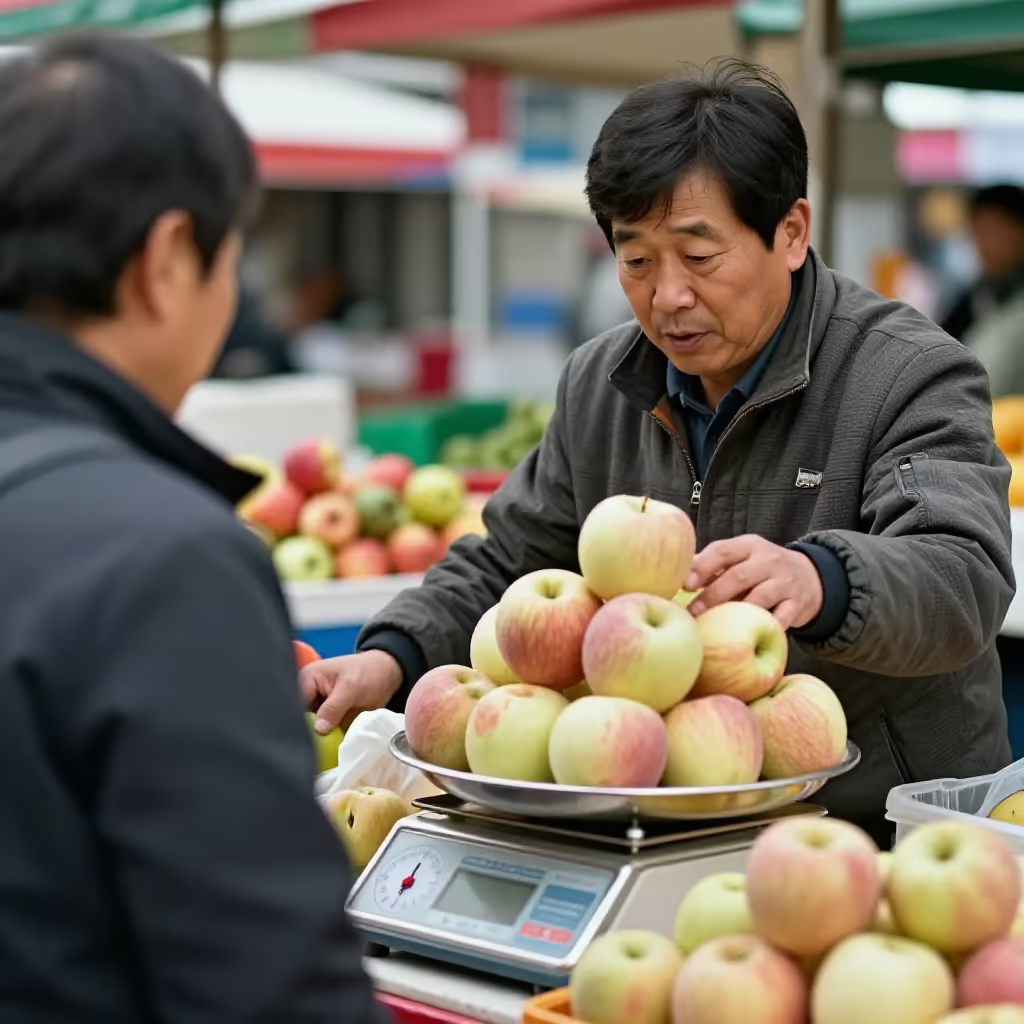
to weigh
To determine the weight of something or someone using a scale.
Die Hebamme wiegt das Neugeborene jeden Tag.
The midwife weighs the newborn every day.

to rock
To move someone or something gently and rhythmically back and forth.
Die Mutter wiegt ihr Baby in den Armen, um es zu beruhigen.
The mother rocks her baby in her arms to calm it down.

to sway
To move oneself—or, for things, to be moved by an external force—slowly and rhythmically back and forth.
Die Äste der alten Weide wiegen sich sanft im Wind.
The branches of the old willow sway gently in the wind.

to weigh
To mentally examine arguments, reasons, or possibilities and evaluate them against each other; to weigh up.
Bevor du eine Entscheidung triffst, musst du die Konsequenzen sorgfältig wiegen.
Before you make a decision, you need to weigh the consequences carefully.
This verb has either a strong or weak conjugation depending on its meaning. In the meaning 'sanft hin und her bewegen' (to move gently back and forth), it is weak (wiegte, gewiegt). In all other meanings (weight, weighing up), it is strong (wog, gewogen).
Sie wiegte das Baby sanft in ihren Armen.
She gently rocked the baby in her arms.
When 'wiegen' (to weigh) means to have a certain weight, it is used without an accusative object. The sentence follows the pattern: subject + wiegen + weight information.
Ich wiege ungefähr 70 Kilogramm.
I weigh about 70 kilograms.
When 'wiegen' (to weigh) means to determine the weight of something, it needs an accusative object. The sentence follows the pattern: subject + wiegen + object.
Kannst du bitte kurz den Koffer wiegen?
Could you quickly weigh the suitcase, please?
The reflexive form 'sich wiegen' always means 'to move slowly and rhythmically back and forth'. It is often used for things in nature, such as trees or grasses in the wind.
Die Palmen wiegten sich im leichten Wind.
The palm trees swayed in the light wind.
In a figurative, abstract meaning, 'wiegen' (to weigh) is used for mentally examining arguments or risks. Typical objects are 'Gründe' (reasons), 'Argumente' (arguments), and 'Vor- und Nachteile' (pros and cons).
Man muss die Risiken sorgfältig wiegen, bevor man investiert.
You have to weigh the risks carefully before investing.
to measure
Messen is the general expression for determining a property with a device. For weight, however, wiegen is used, especially with a scale. Other quantities, such as length or temperature, are measured instead.

Die Ärztin wiegt das Kind auf einer Waage.
The doctor weighs the child on a scale.
Die Ärztin misst die Körpergröße des Kindes.
The doctor measures the child's height.