

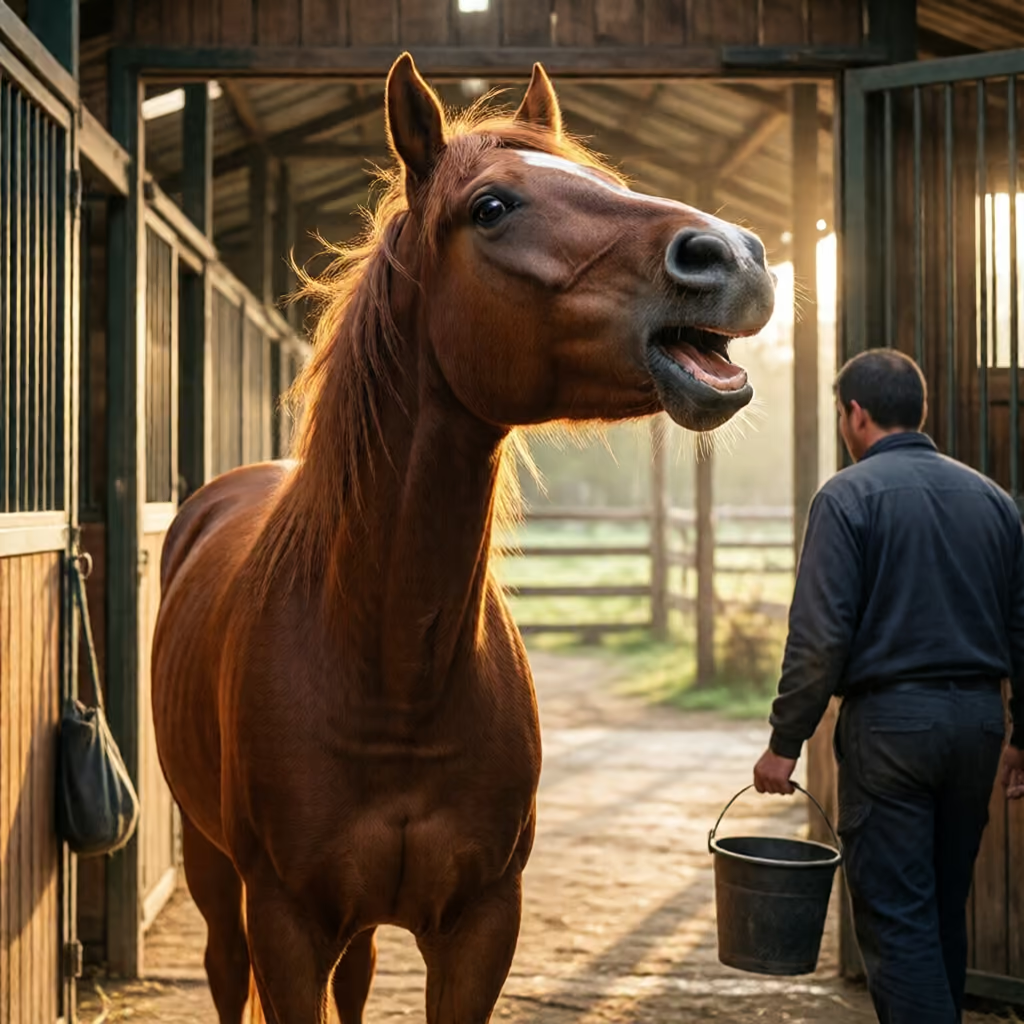
wiehern
to neigh
For a horse to make a loud, characteristic call.
EXAMPLE
Das Pferd wieherte ungeduldig vor dem Stall.
The horse neighed impatiently in front of the stable.
to neigh
wiehern – wieherte – hat gewiehert
Loading your saved state.
to neigh
For a horse to make a loud, characteristic call.
Das Pferd wieherte ungeduldig vor dem Stall.
The horse neighed impatiently in front of the stable.

to bray with laughter
Colloquially, to laugh loudly and often shrilly, usually at something silly or ridiculous.
Als er den Witz erzählte, wieherte die ganze Gruppe vor Lachen.
When he told the joke, the whole group brayed with laughter.
| ich | wiehere wiehre |
|---|---|
| du | wieherst |
| er/sie/es | wiehert |
| wir | wiehern |
| ihr | wiehert |
| sie | wiehern |
| ich | wieherte |
|---|---|
| du | wiehertest |
| er/sie/es | wieherte |
| wir | wieherten |
| ihr | wiehertet |
| sie | wieherten |
| ich | habe gewiehert |
|---|---|
| du | hast gewiehert |
| er/sie/es | hat gewiehert |
| wir | haben gewiehert |
| ihr | habt gewiehert |
| sie | haben gewiehert |
| du | wiehere! wieher!, wiehre! |
|---|---|
| ihr | wiehert! |
| Sie | wiehern Sie! |
| ich | hatte gewiehert |
|---|---|
| du | hattest gewiehert |
| er/sie/es | hatte gewiehert |
| wir | hatten gewiehert |
| ihr | hattet gewiehert |
| sie | hatten gewiehert |
| ich | werde wiehern |
|---|---|
| du | wirst wiehern |
| er/sie/es | wird wiehern |
| wir | werden wiehern |
| ihr | werdet wiehern |
| sie | werden wiehern |
| ich | wiehere wiehre |
|---|---|
| du | wieherst |
| er/sie/es | wiehere wiehre |
| wir | wiehern |
| ihr | wiehert |
| sie | wiehern |
Used for reported speech.
| ich | wieherte |
|---|---|
| du | wiehertest |
| er/sie/es | wieherte |
| wir | wieherten |
| ihr | wiehertet |
| sie | wieherten |
Used for wishes and “would”.
| infinitive | wiehern |
|---|---|
| with zu | zu wiehern |
| present participle | wiehernd |
| past participle | gewiehert |
'Wiehern' (to neigh) is normally used without an accusative object. The subject identifies the animal or person making the sound.
Auf der Koppel wieherte eine Stute und lief zum Zaun.
In the pasture, a mare neighed and ran to the fence.
Pay attention to who is neighing: with a horse, the actual animal sound is meant; with people, the usage is figurative. Words related to jokes and funny situations help you recognize the figurative meaning.
Als der Tierarzt den Stall betrat, wieherte der Hengst.
When the veterinarian entered the stable, the stallion neighed.
Über diese absurde Ausrede wieherten sogar die sonst so ernsten Kollegen.
Even the usually serious colleagues brayed with laughter at this absurd excuse.
A typical expression is 'vor Lachen wiehern' (to bray with laughter). Here, 'vor Lachen' gives the reason for the sound; 'vor' is used with the dative in this expression.
Bei der letzten Szene des Films haben wir vor Lachen gewiehert.
We brayed with laughter at the film's final scene.