

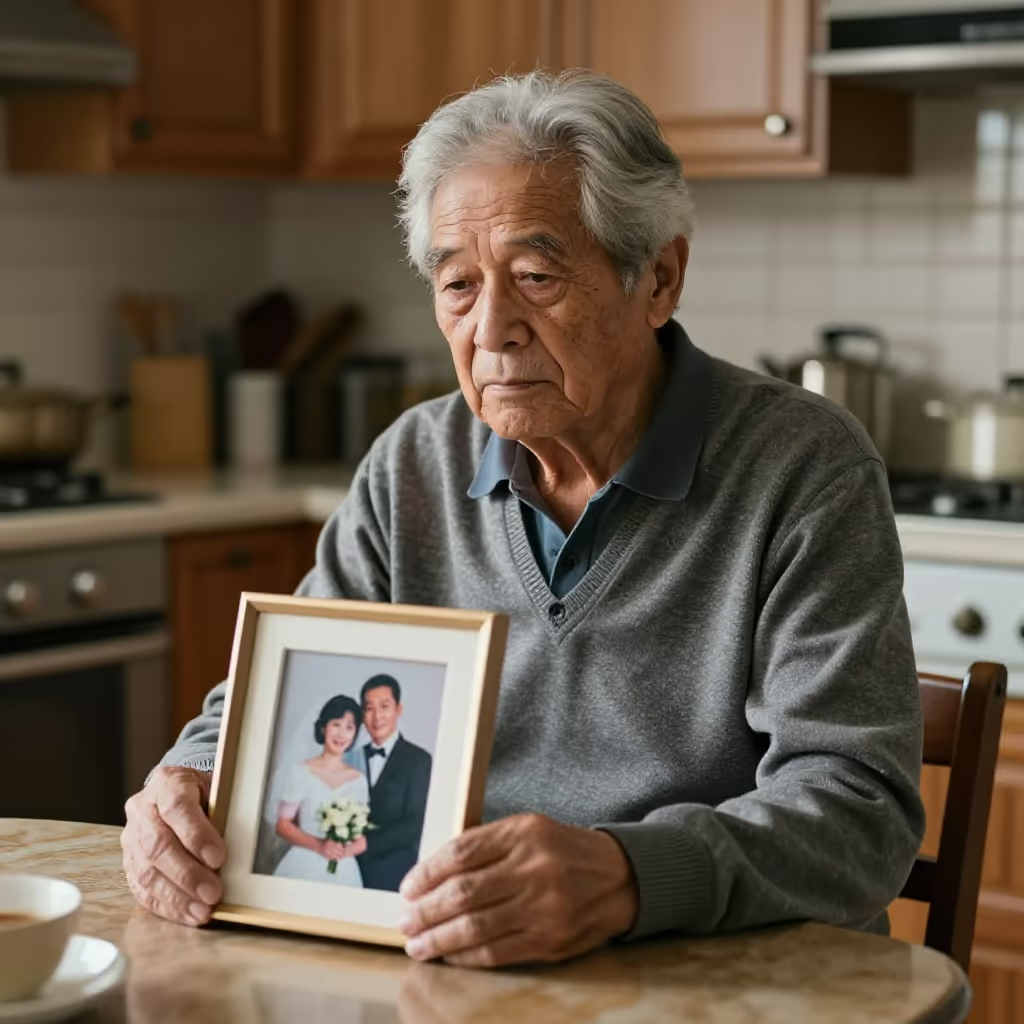
der Witwer
widower
A man whose wife has died and who has not remarried.
EXAMPLE
Seit dem Tod seiner Frau vor fünf Jahren ist er Witwer.
He has been a widower since his wife died five years ago.
widower
Loading your saved state.
widower
A man whose wife has died and who has not remarried.
Seit dem Tod seiner Frau vor fünf Jahren ist er Witwer.
He has been a widower since his wife died five years ago.
The word belongs to a small word family. The ending '-er' indicates the male person. The word is directly connected with the state of being widowed.
Er wurde schon in jungen Jahren zum Witwer.
He became a widower at a young age.
You use 'ist Witwer' (is a widower) to describe the current state. To describe the beginning of this state, you use the construction 'Witwer werden' (to become a widower).
Mein Nachbar ist seit kurzem Witwer.
My neighbor has recently become a widower.
'Witwer' (widower) is the formal and neutral term, also used in official documents. It describes a marital status.
Im Formular musste er seinen Familienstand als „Witwer“ angeben.
On the form, he had to state his marital status as 'Witwer' (widower).