

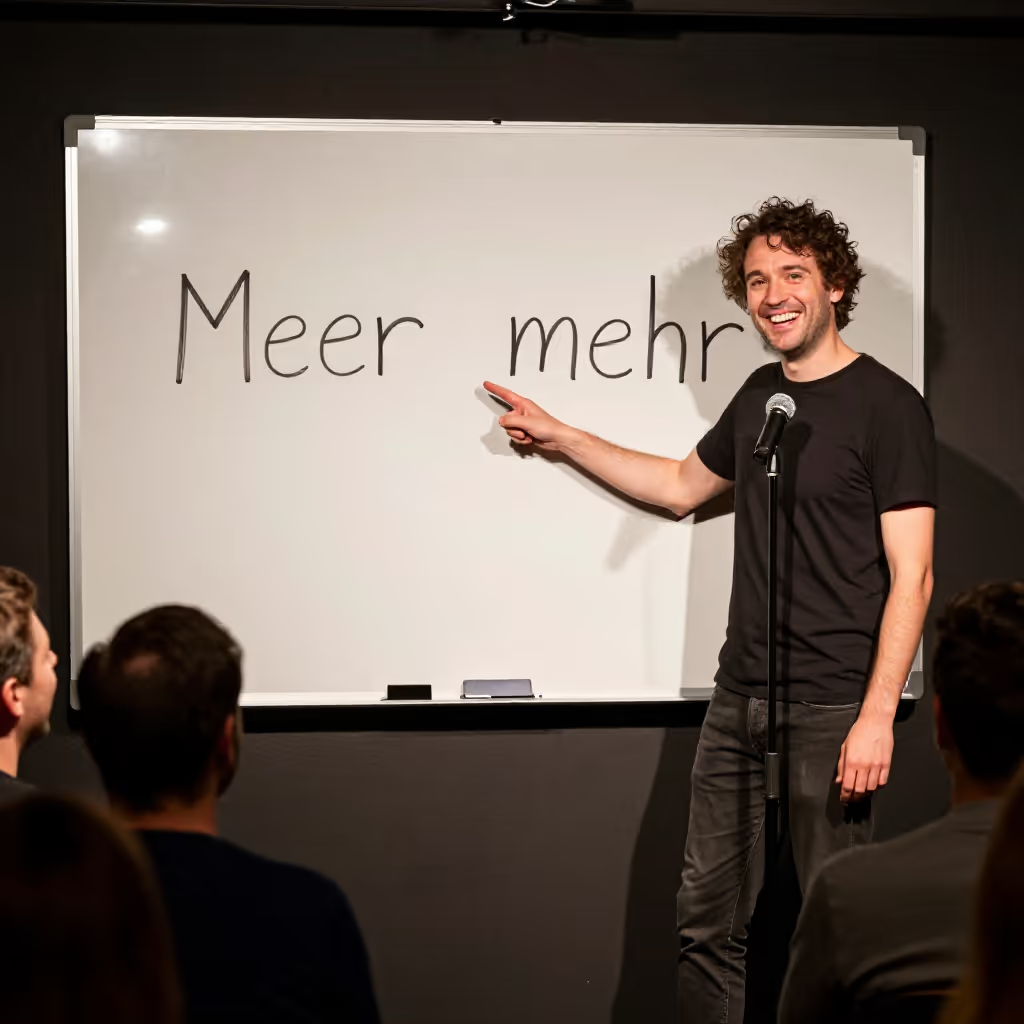
das Wortspiel
pun
A rhetorical figure in which the ambiguity or phonetic similarity of words is used in a clever or humorous way.
EXAMPLE
Der Komiker war bekannt für seine cleveren Wortspiele.
The comedian was known for his clever puns.
pun
Loading your saved state.
pun
A rhetorical figure in which the ambiguity or phonetic similarity of words is used in a clever or humorous way.
Der Komiker war bekannt für seine cleveren Wortspiele.
The comedian was known for his clever puns.
The word is made up of 'Wort' (word) and 'Spiel' (game/play). It therefore describes a playful way of dealing with words and their meanings.
Sein Text ist voller kreativer Wortspiele.
His text is full of creative puns.
Common verbs used with 'Wortspiel' (pun) are 'ein Wortspiel machen' (to make a pun), 'ein Wortspiel verstehen' (to understand a pun), or 'ein Wortspiel enthalten' (to contain a pun).
Er liebt es, in Gesprächen lustige Wortspiele zu machen.
He loves making funny puns in conversations.
A pun often works by exploiting the ambiguity of a word or its phonetic similarity to another word. To understand a pun, you often need to know both meanings.
Der Witz basiert auf einem einfachen Wortspiel mit dem Wort „Bank“.
The joke is based on a simple pun with the word 'Bank' (bank/bench).
joke
A Witz is the entire humorous story, including its punchline. A Wortspiel, by contrast, is a linguistic device that plays on similar sounds or multiple meanings. A Witz can contain a Wortspiel, but it does not have to.

Das Wortspiel mit „Arzt“ und „Arztrecht“ nutzt den ähnlichen Klang der Wörter.
The pun involving “Arzt” and “Arztrecht” plays on the similar sounds of the words.
Der Witz über den vergesslichen Arzt endete mit einer überraschenden Pointe.
The joke about the forgetful doctor ended with a surprising punchline.