


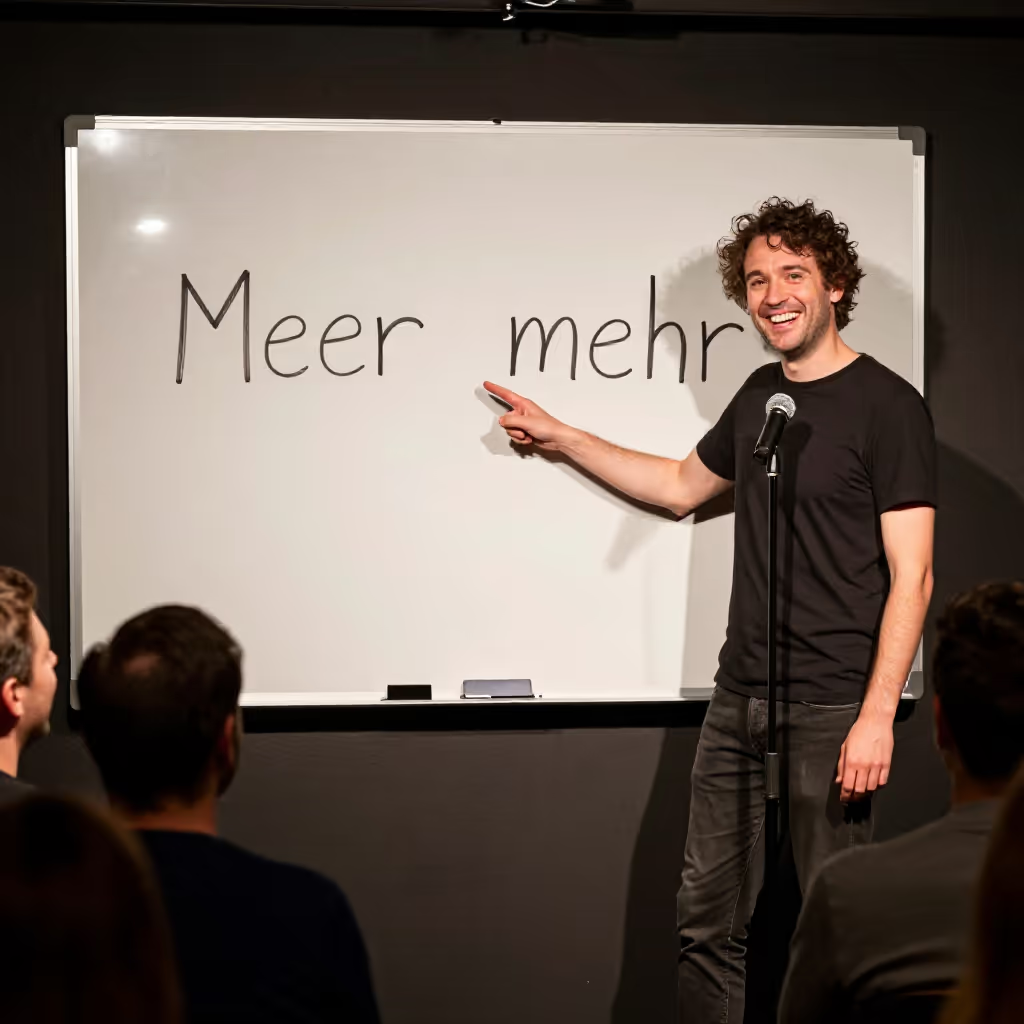
A joke based on the double meaning of a word or the sound similarity of words with different meanings. It plays with the sound or ambiguity of language.
example
Sein Vortrag war gespickt mit geistreichen Wortwitzen, die das Publikum zum Lachen brachten.
His lecture was packed with witty puns that made the audience laugh.
Usage tips
Word composition
This noun is simply composed of 'Wort' (word) and 'Witz' (joke). So it literally describes a joke that plays with words.
EXAMPLE
Er ist bekannt für seine lustigen Wortwitze.
He is known for his funny puns.
Typical verbs
To express that someone makes a pun, you typically use the verb 'machen' (to make). You can also say that someone 'einen Wortwitz reißt' (cracks a pun, colloquial).
EXAMPLE
Mein Onkel macht bei jeder Gelegenheit einen Wortwitz.
My uncle makes a pun at every opportunity.
Describing quality
The quality of a pun is often described with certain adjectives. A 'geistreicher' (witty) or 'cleverer Wortwitz' (clever pun) is intelligent, while a 'flacher Wortwitz' (corny pun) is considered simple or not especially funny.
EXAMPLE
Das war ein wirklich flacher Wortwitz, aber ich musste trotzdem lachen.
That was a really corny pun, but I still had to laugh.
Compare with
near_synonym · confusable
Wortwitz vs Witz
joke
'der Witz' and 'der Wortwitz' are closely related because a 'Wortwitz' is a kind of joke. 'Witz' is the more general term for something funny, for example a short story or a punchline. 'Wortwitz' is used when the humor comes from a word, a double meaning, or a similar sound. Learners may confuse the words because every pun can be a joke. But not every joke is a pun.
Wortwitz
Im Garten hat Max seinem Freund einen Wortwitz erklärt, weil dieser die Doppeldeutigkeit nicht verstanden hat.
In the garden, Max explained a pun to his friend because he had not understood the double meaning.
Witz
Sie erzählt immer denselben Witz, aber ihr Bruder lacht trotzdem.
She always tells the same joke, but her brother laughs anyway.