

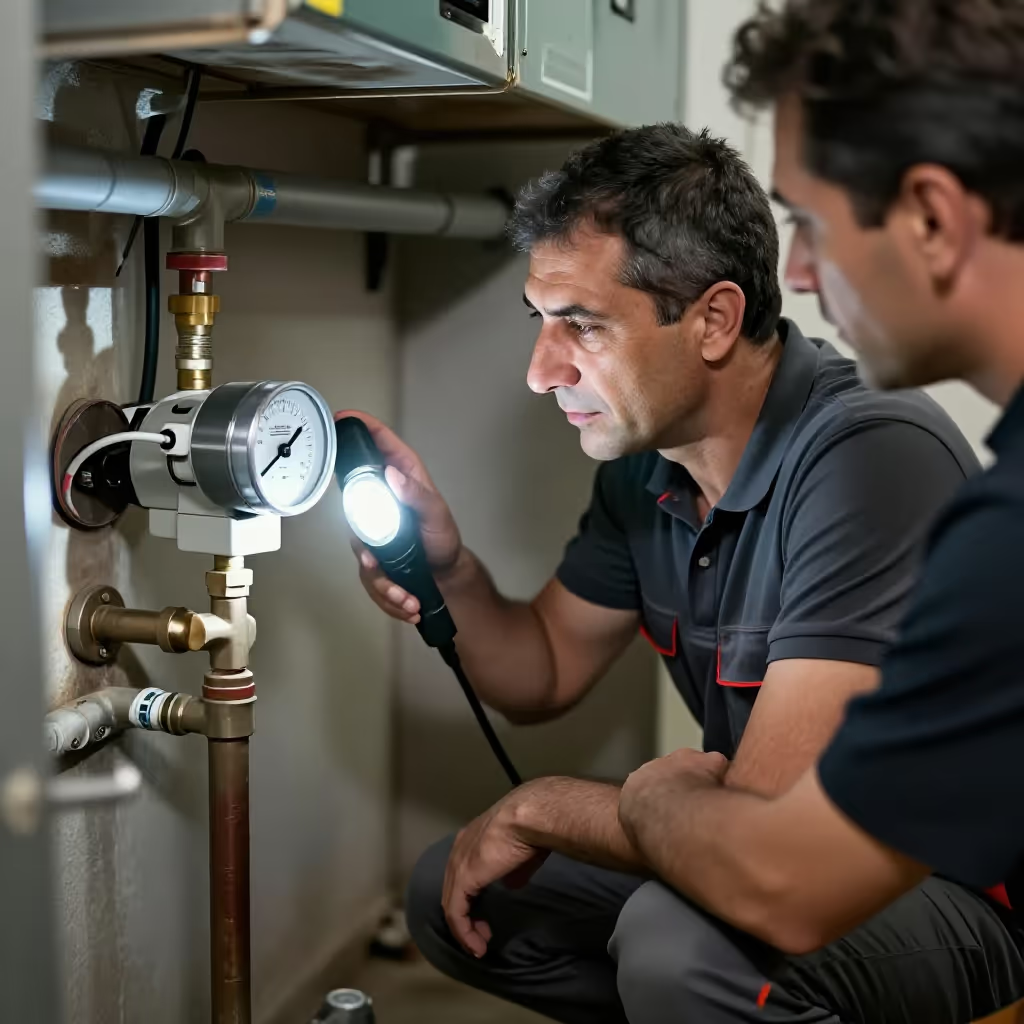
der Zähler
meter
A device that measures the consumption of something, for example electricity, water, or gas.
EXAMPLE
Einmal im Jahr muss der Zähler für den Strom abgelesen werden.
Once a year, the electricity meter has to be read.
meter / numerator / counter
Loading your saved state.
meter
A device that measures the consumption of something, for example electricity, water, or gas.
Einmal im Jahr muss der Zähler für den Strom abgelesen werden.
Once a year, the electricity meter has to be read.
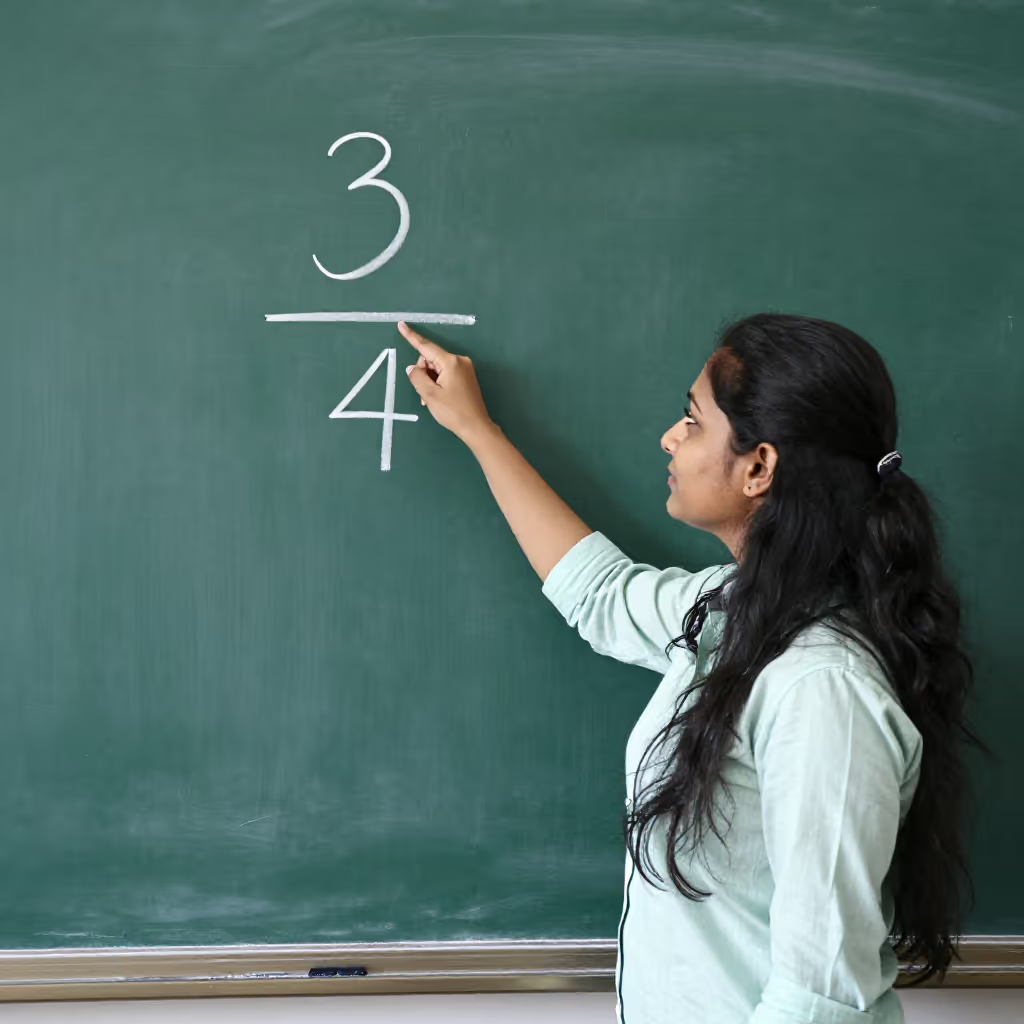
numerator
In mathematics, the part of a fraction that stands above the fraction bar and indicates how many parts of the whole are meant.
Bei dem Bruch drei Viertel ist die Drei der Zähler und die Vier der Nenner.
In the fraction three quarters, the three is the numerator and the four is the denominator.
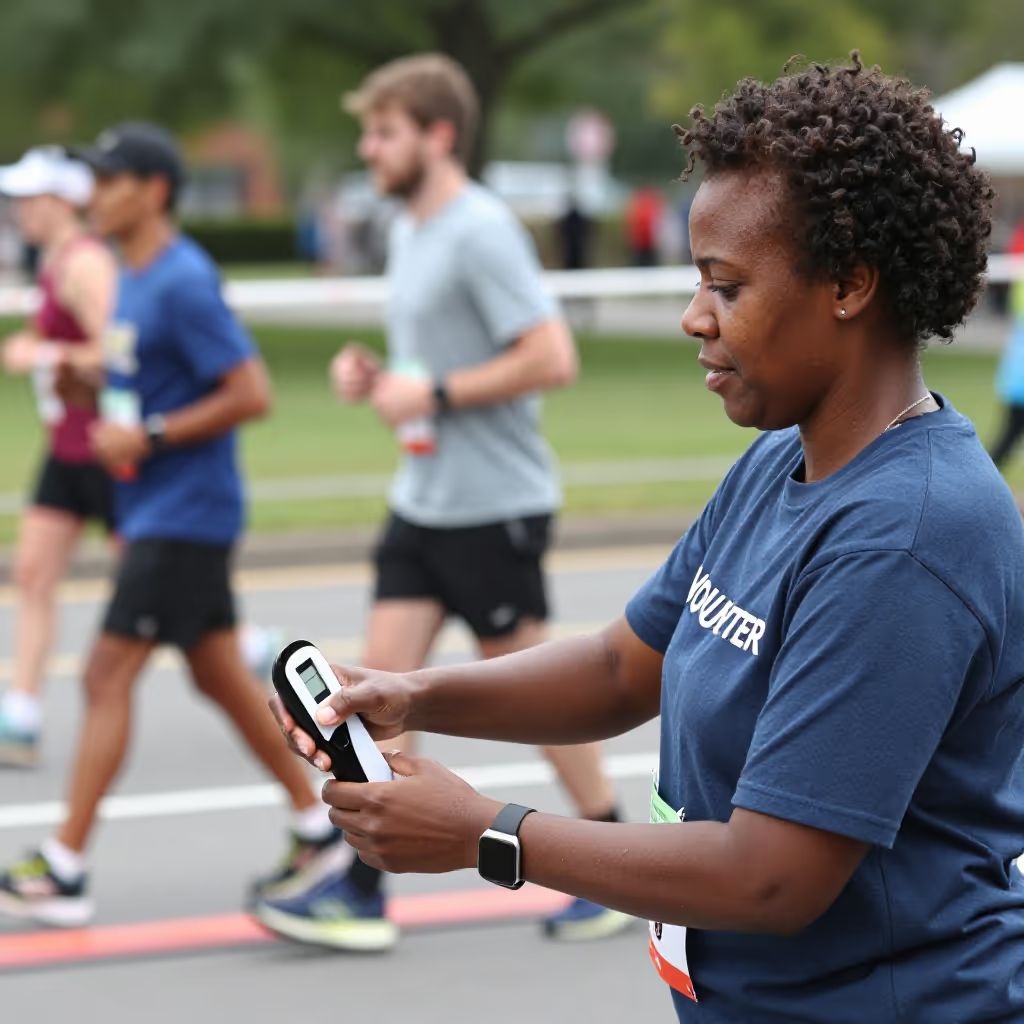
counter
A person or mechanism that counts a number of events or points, for example in a game or in a computer program.
Der Zähler in der For-Schleife erhöht sich bei jedem Durchlauf um eins.
The counter in the for loop increases by one with each iteration.
The noun 'der Zähler' (meter/numerator/counter) is derived from the verb 'zählen' (to count). The ending '-er' refers to a person or device that performs the action of counting. This principle applies to all meanings.
Bitte zähle, wie viele Stühle im Raum stehen.
Please count how many chairs are in the room.
You can recognize the meaning of 'Zähler' from the context. If it is about 'Strom' (electricity), 'Wasser' (water), or 'Gas' (gas), it means the measuring device. In the context of 'Bruch' (fraction) and 'Nenner' (denominator), it is about mathematics. With 'Punkten' (points) or 'Besuchern' (visitors), it means a counter.
Der Zähler im Keller misst unseren Wasserverbrauch.
The meter in the basement measures our water consumption.
When referring to the measuring device, the most common and important action is 'Ablesen' (reading) the meter. This usually happens in order to determine consumption.
Ein Mitarbeiter kommt einmal im Jahr, um den Gaszähler abzulesen.
An employee comes once a year to read the gas meter.
'Zähler' (meter/counter) is a very productive base word for compound nouns. Examples are 'Stromzähler' (electricity meter), 'Wasserzähler' (water meter), 'Gaszähler' (gas meter), 'Kilometerzähler' (odometer), or 'Besucherzähler' (visitor counter).
Der Kilometerzähler meines Autos ist kaputt.
The odometer in my car is broken.
counter
Zähler and Counter can both refer to a function that counts events or points. Zähler is the general German term. Counter is especially common as a technical register choice in digital, media-related, or gaming contexts.
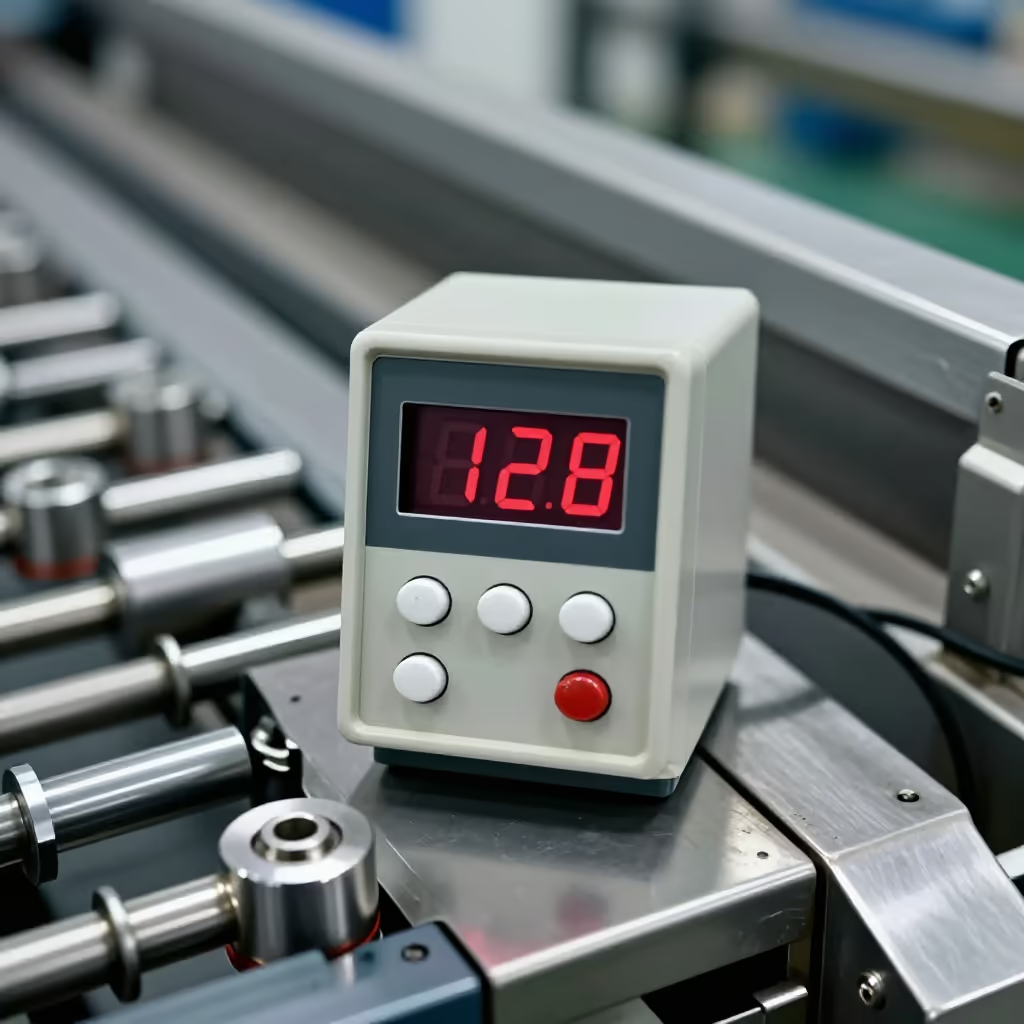
Das Spiel zeigt oben einen Zähler für die gesammelten Münzen.
The game displays a counter at the top for the coins collected.
Das Spiel zeigt oben einen Counter für die gesammelten Münzen.
The game displays a counter at the top for the coins collected.