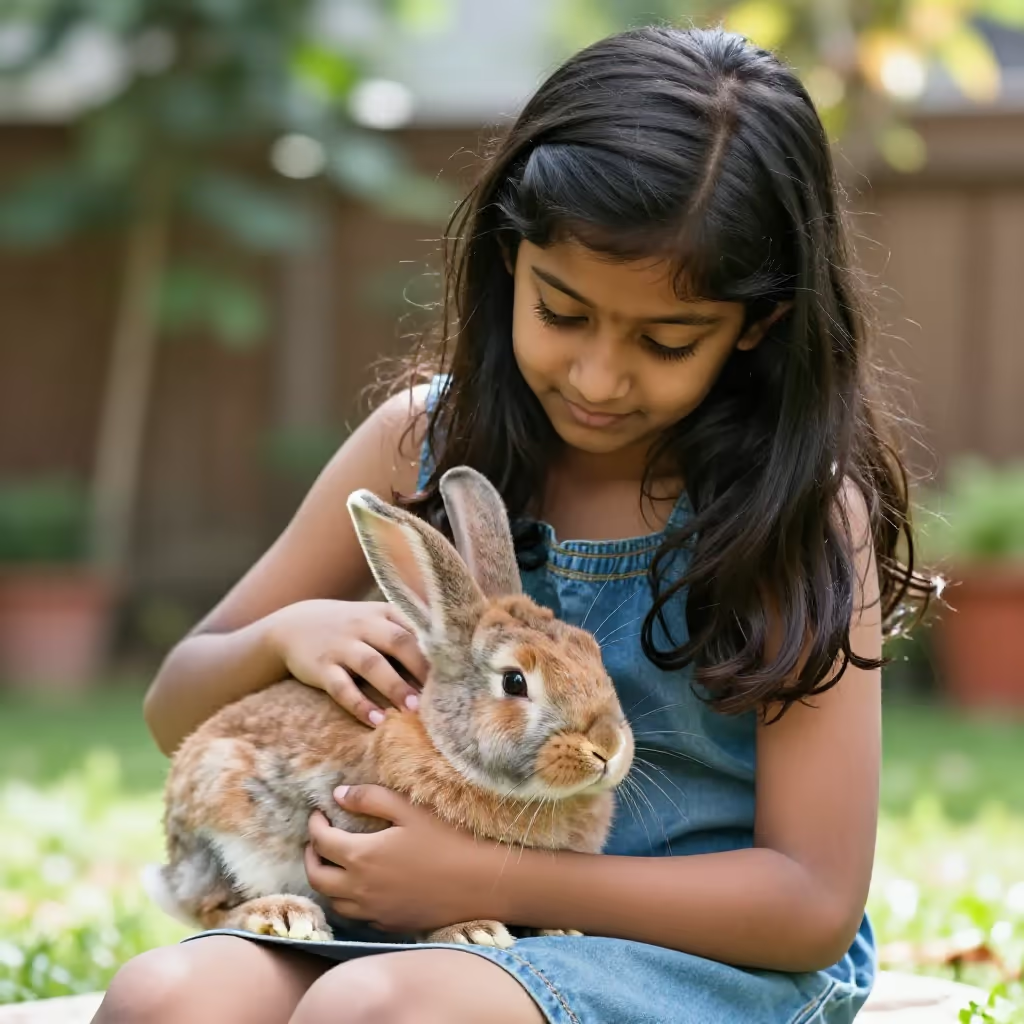
Describes an animal that is used to the presence of humans, is not wild or aggressive, and lets itself be touched.
example
Der Fuchs, der regelmäßig in unserem Garten ist, ist inzwischen erstaunlich zahm geworden.
The fox that regularly comes into our garden has become surprisingly tame by now.

Usage tips
Context clue
The context makes the meaning clear: if 'zahm' (tame) refers to an animal, it means 'not wild'. If it refers to a person, it means 'fügsam' (compliant) or 'sanft' (gentle).
EXAMPLE
Unsere Katze ist so zahm, dass sie sich von jedem streicheln lässt.
Our cat is so tame that it lets anyone pet it.
Typical collocations
In connection with animals, 'zahm' (tame) is often used with verbs like 'werden' (to become) or 'machen' (to make) to describe the process of taming.
EXAMPLE
Es dauert lange, einen wilden Vogel zahm zu machen.
It takes a long time to make a wild bird tame.
Slightly negative meaning
When a person is described as 'zahm' (meek/tame), it can have a slightly negative meaning. It can mean that the person shows no will of their own or gives in too quickly.
EXAMPLE
Er ist in Meetings immer ganz zahm und sagt nie seine ehrliche Meinung.
He is always completely meek in meetings and never says his honest opinion.
Compare with
antonym
zahm vs wild
wild
'wild' and 'zahm' often form a contrast. With animals, 'wild' means that an animal lives in nature and is not used to humans. 'zahm' means that an animal knows humans and usually stays calm. Figuratively, 'wild' can also mean uncontrolled or chaotic, while 'zahm' sounds more gentle, calm, or without resistance. With animals, the contrast is clearest: a wild animal keeps its distance; a tame animal lets people come closer.
zahm
Der Hund der Nachbarin ist so zahm, dass die Kinder ihn streicheln dürfen.
The neighbor's dog is so tame that the children are allowed to pet it.
wild
Im Wald sahen wir ein wildes Reh, das sofort weglief.
In the forest, we saw a wild deer that ran away immediately.