

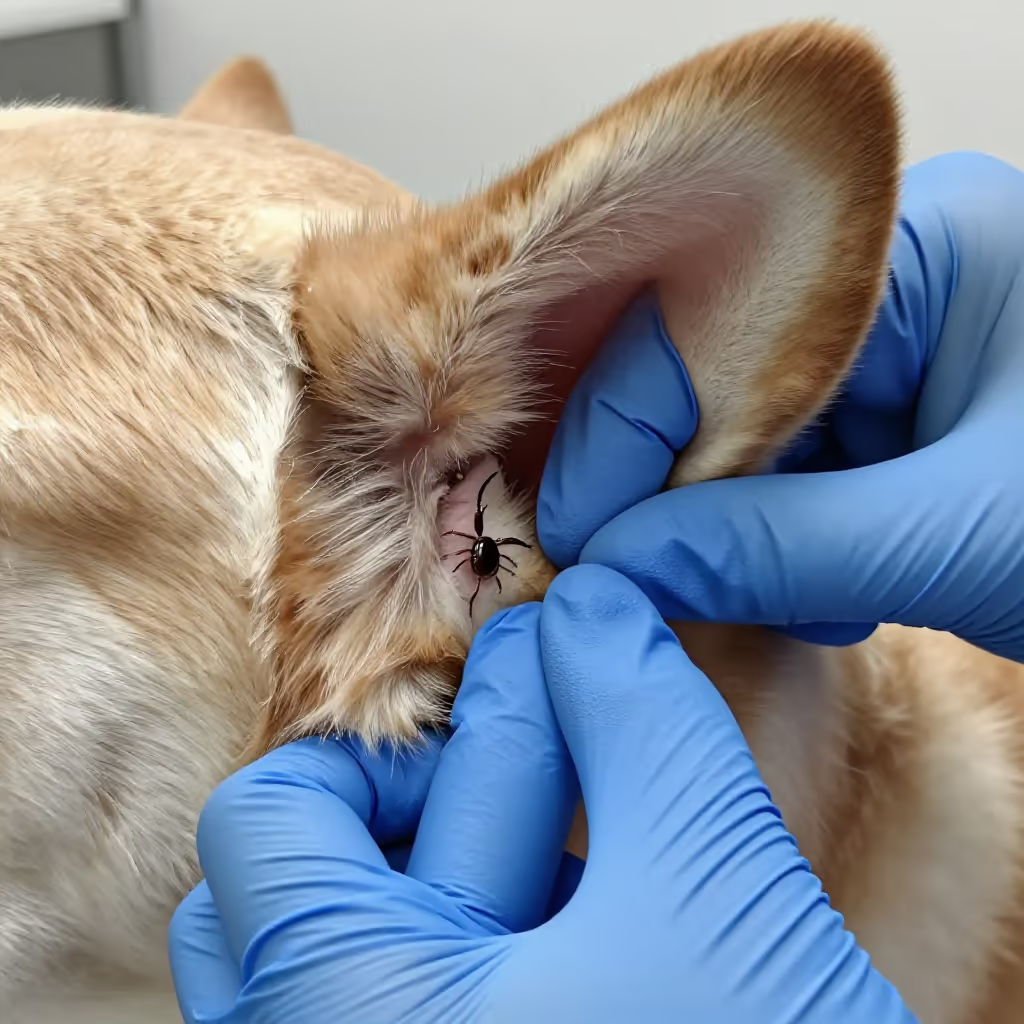
die Zecke
tick
A small, blood-sucking arachnid that feeds on humans and animals and can transmit diseases.
EXAMPLE
Nach dem Spaziergang im Wald hatte der Hund eine Zecke im Fell.
After the walk in the forest, the dog had a tick in its fur.
tick
Loading your saved state.
tick
A small, blood-sucking arachnid that feeds on humans and animals and can transmit diseases.
Nach dem Spaziergang im Wald hatte der Hund eine Zecke im Fell.
After the walk in the forest, the dog had a tick in its fur.

parasite
A derogatory, colloquial term for a person who is seen as a freeloader, that is, someone who lives at the expense of others.
Er benimmt sich wie eine Zecke und lässt sich von allen aushalten.
He behaves like a parasite and lets everyone support him.
You can easily recognize the meaning of the word from context. If people are talking about animals, nature, or diseases, the arachnid is meant. In a negative social context involving exploitation, the derogatory term for a person is meant.
Beim Wandern sollte man sich vor Zecken schützen.
When hiking, you should protect yourself from ticks.
In connection with the animal, the verbs 'haben' (to have), 'entfernen' (to remove), or 'sich festsaugen' (to attach itself and suck blood) are often used. People also speak of a 'Zeckenbiss' (tick bite).
Ich glaube, ich habe eine Zecke am Bein.
I think I have a tick on my leg.
This meaning is strongly colloquial and an insult. Use it only if you are aware of its negative and derogatory effect.
Er lebt auf Kosten seiner Eltern wie eine Zecke.
He lives at his parents' expense like a parasite.
parasite
For a person who lives at the expense of others, Parasit and Zecke are both derogatory terms that can fit. Parasit can sound more factual or formal, whereas Zecke is a crude, colloquial accusation. Parasit is more suitable in a neutral text, while Zecke fits a strong personal attack better.

Er nimmt ständig das Geld seiner Freunde und wird von ihnen als Zecke beschimpft.
He is constantly taking his friends' money, and they insult him by calling him a leech.
Er lebt seit Jahren auf Kosten seiner Familie und wird deshalb als Parasit bezeichnet.
He has been living at his family's expense for years, so he is called a parasite.