

der Zauber
charm
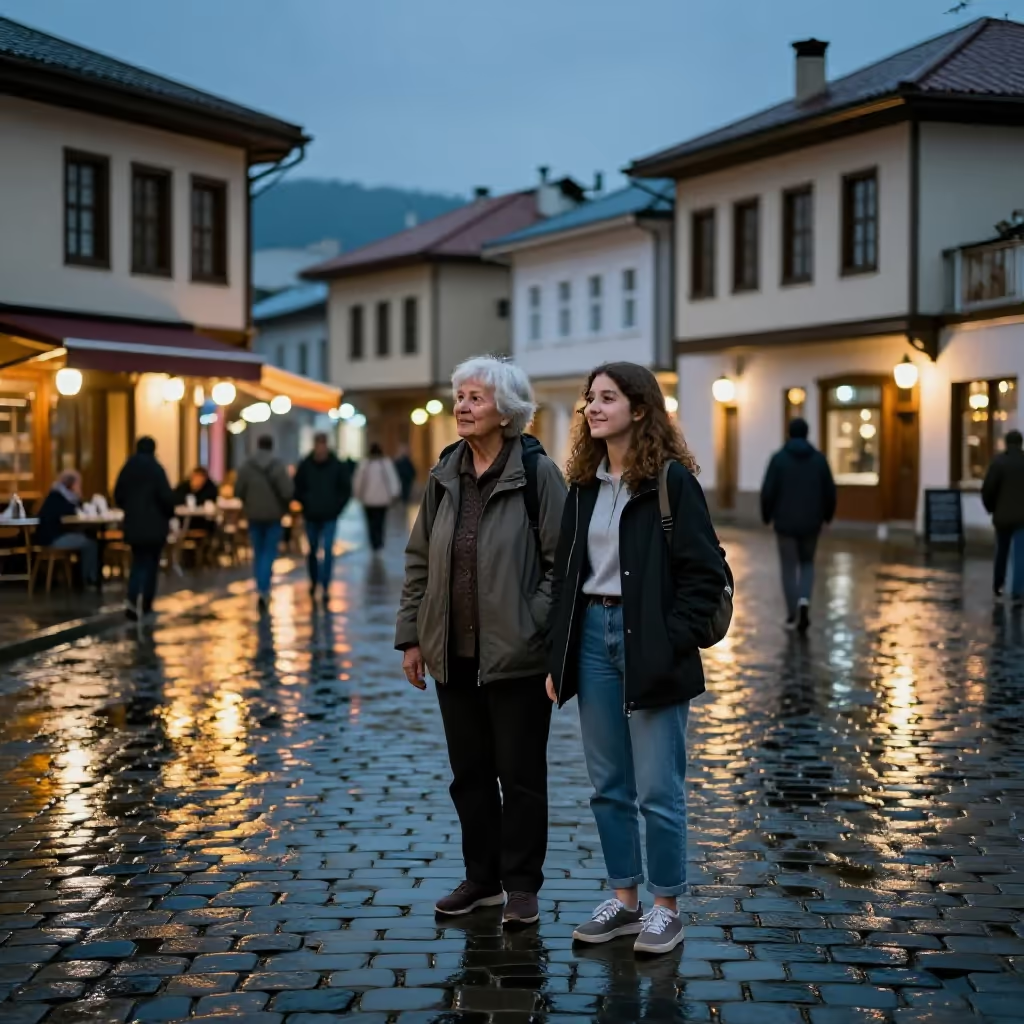
A special, fascinating aura or atmosphere that comes from a place, person, or moment.
EXAMPLE
Der Zauber der alten Ruinen bei Sonnenuntergang war unbeschreiblich.
The charm of the old ruins at sunset was indescribable.
magic / charm
Loading your saved state.
charm
A special, fascinating aura or atmosphere that comes from a place, person, or moment.
Der Zauber der alten Ruinen bei Sonnenuntergang war unbeschreiblich.
The charm of the old ruins at sunset was indescribable.
magic / spell
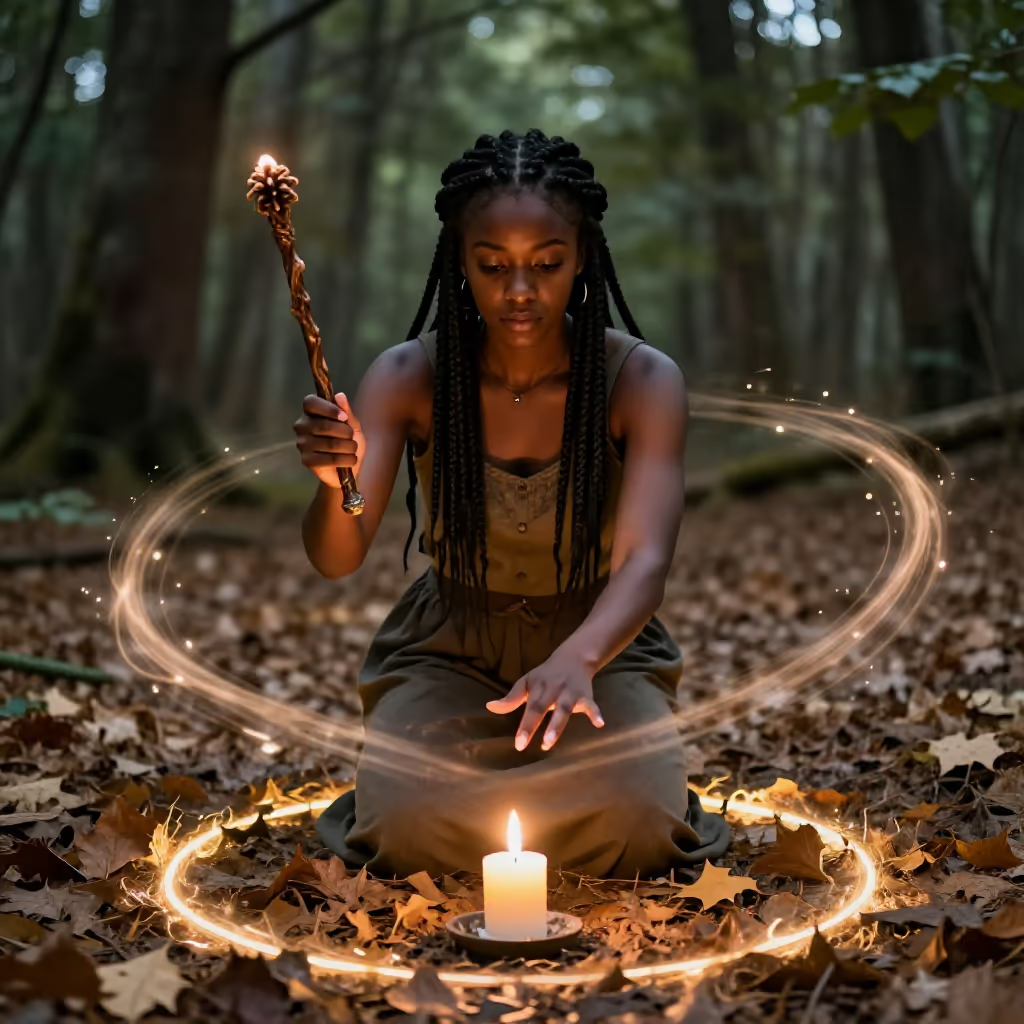
The act or art of influencing events with supernatural powers; a magical act or spell.
Die Hexe belegte den Prinzen mit einem bösen Zauber.
The witch put an evil spell on the prince.

all that fuss
Colloquial for a large, often unnecessary effort, a complicated procedure, or a lot of commotion.
Warum veranstaltest du so einen Zauber, nur weil wir Besuch bekommen?
Why are you making such a fuss just because we're having visitors?
The noun 'der Zauber' is closely related to the verb 'zaubern' (to do magic) and the adjective 'zauberhaft' (very beautiful, as if enchanted). All the words share the basic idea of something magical or fascinating.
Die Köchin kann aus einfachen Zutaten ein Festessen zaubern.
The cook can conjure up a feast from simple ingredients.
You can recognize the meaning of 'Zauber' from the context. If it is about a fascinating atmosphere, the figurative meaning is intended. If it is about witches or magicians, it means a real magic spell. In colloquial complaints about effort, the third meaning is intended.
Der erste Schnee hat immer einen besonderen Zauber.
The first snow always has a special charm.
To describe the special aura, 'Zauber' is often used with the genitive or the preposition 'von' + dative. This expresses where the fascination comes from.
Wir genossen den Zauber einer sternenklaren Nacht.
We enjoyed the charm of a starry night.
In the sense of magic, 'Zauber' is often combined with certain verbs. Typical phrases are 'einen Zauber wirken' (to cast a spell), 'einen Zauber sprechen' (to say/utter a spell), or 'jemanden mit einem Zauber belegen' (to put someone under a spell).
Der Magier wirkte einen Zauber, um die Tür zu öffnen.
The magician cast a spell to open the door.
The colloquial meaning for 'Aufwand' (effort/fuss) is almost always used in the fixed expression 'einen Zauber machen' (to make a fuss) or 'einen Zauber veranstalten' (to make a big fuss).
Wegen der kleinen Party müssen wir doch nicht so einen Zauber veranstalten.
We really don't need to make such a fuss over the small party.
magic
Magie and Zauber can both describe the fascinating atmosphere of a place or moment. Magie often feels like an all-encompassing, hard-to-explain mood, while Zauber emphasizes the special appeal or specific effect more strongly.

Der Zauber des alten Theaters liegt besonders in seiner kleinen historischen Bühne.
The charm of the old theater lies especially in its small historic stage.
Die Magie des alten Theaters entsteht durch Licht, Musik und die gespannte Stille.
The magic of the old theater comes from the lighting, music, and tense silence.