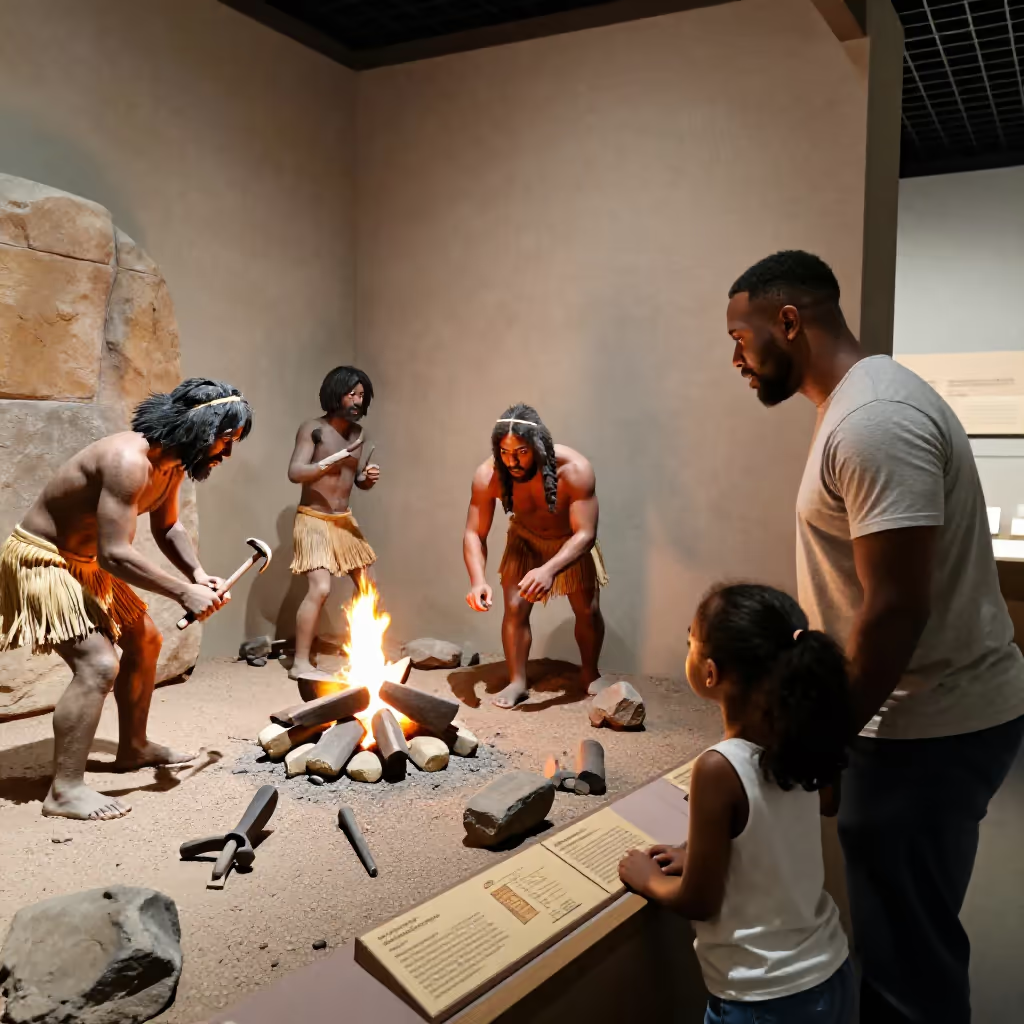
An era characterized by a particular technology, social phenomenon, or defining development.
example
Wir leben im digitalen Zeitalter, in dem Informationen sofort verfügbar sind.
We live in the digital age, in which information is available instantly.
Usage tips
Word composition
The word consists of 'die Zeit' (time) and 'das Alter' (age). So it literally describes an 'age' or a large section within time, which helps you remember the meaning 'Epoche' (epoch/era).
EXAMPLE
Die Erfindung des Buchdrucks markierte den Beginn eines neuen Zeitalters.
The invention of the printing press marked the beginning of a new age.
Typical collocations
'Zeitalter' (age/era) is often specified more precisely by an adjective or a noun in the genitive to name the era. Common examples are 'das digitale Zeitalter' (the digital age), 'das goldene Zeitalter' (the golden age), or 'das Zeitalter der Aufklärung' (the Age of Enlightenment).
EXAMPLE
Das Viktorianische Zeitalter war geprägt von industriellem Fortschritt und sozialen Spannungen.
The Victorian era was shaped by industrial progress and social tensions.
Sentence structure and preposition
To express that something takes place in a particular era, the preposition 'in' with the dative is almost always used: 'im Zeitalter von …' (in the age of …) or 'im digitalen Zeitalter' (in the digital age).
EXAMPLE
Im Zeitalter der Globalisierung sind internationale Kontakte wichtiger denn je.
In the age of globalization, international contacts are more important than ever.
Compare with
near_synonym · confusable
Zeitalter vs Zeit
time
'die Zeit' and 'das Zeitalter' can both mean a period in history or in life. However, 'Zeit' is much more general and can refer to short or long periods, for example 'eine schöne Zeit' (a nice time), 'die Schulzeit' (school years), or 'die Zeit nach der Arbeit' (the time after work). 'Zeitalter' almost always means a major, important period shaped by something special, for example technology, culture, or history. Learners may confuse the words because both have to do with periods of time. As a practical rule: for normal periods, people usually say 'Zeit'; for major historical or social phases, 'Zeitalter' is more likely.
Zeitalter
Das digitale Zeitalter verändert, wie wir arbeiten und lernen.
The digital age is changing how we work and learn.
Zeit
Nach der Arbeit habe ich endlich Zeit für einen Spaziergang.