

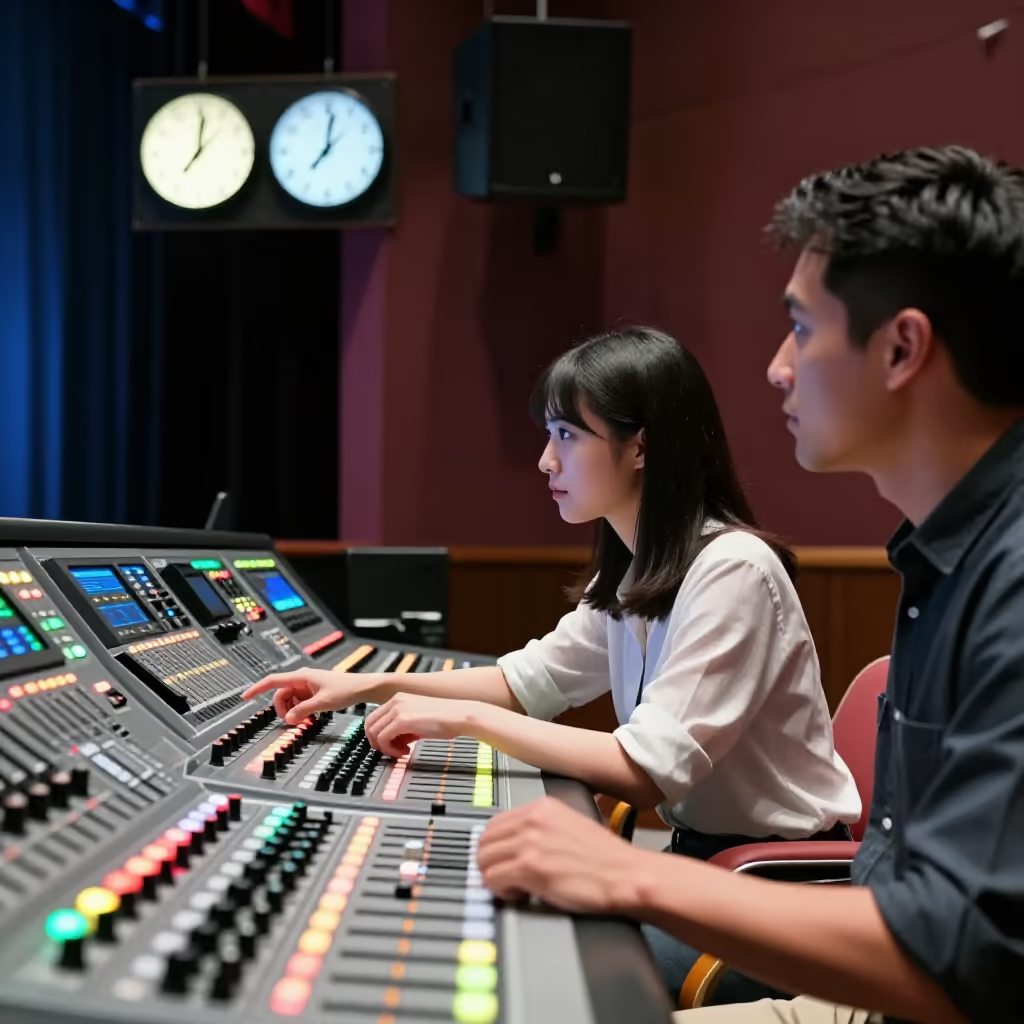
zeitgleich
simultaneous
Describes that two or more events or actions take place at exactly the same time.
EXAMPLE
Die beiden Läufer überquerten zeitgleich die Ziellinie.
The two runners crossed the finish line simultaneously.
simultaneous
Loading your saved state.
simultaneous
Describes that two or more events or actions take place at exactly the same time.
Die beiden Läufer überquerten zeitgleich die Ziellinie.
The two runners crossed the finish line simultaneously.
The word is made up of 'Zeit' (time) and 'gleich' (same/equal). So it literally means “at the same time,” which makes it easy to understand.
Die Ampeln schalteten zeitgleich auf Grün.
The traffic lights turned green simultaneously.
'Zeitgleich' (simultaneous/simultaneously) is mostly used like an adverb. It can stand at the beginning of a sentence, which moves the verb to position 2, or in the middle of the sentence.
Zeitgleich mit dem Film startete auch eine neue Serie.
At the same time as the film, a new series also started.
'Zeitgleich' (simultaneous/simultaneously) is often combined with verbs that describe an event. Typical verbs are 'stattfinden' (to take place), 'beginnen' (to begin), 'enden' (to end), or 'ankommen' (to arrive).
Die Explosionen fanden an zwei Orten fast zeitgleich statt.
The explosions took place in two locations almost simultaneously.
simultaneously / at the same time
“Gleichzeitig” and “zeitgleich” can express that events take place at the same time. However, “zeitgleich” places greater emphasis on exact correspondence in time, while “gleichzeitig” can also refer more generally to parallel events. Use “zeitgleich” for precise temporal equality and “gleichzeitig” as the neutral standard form.
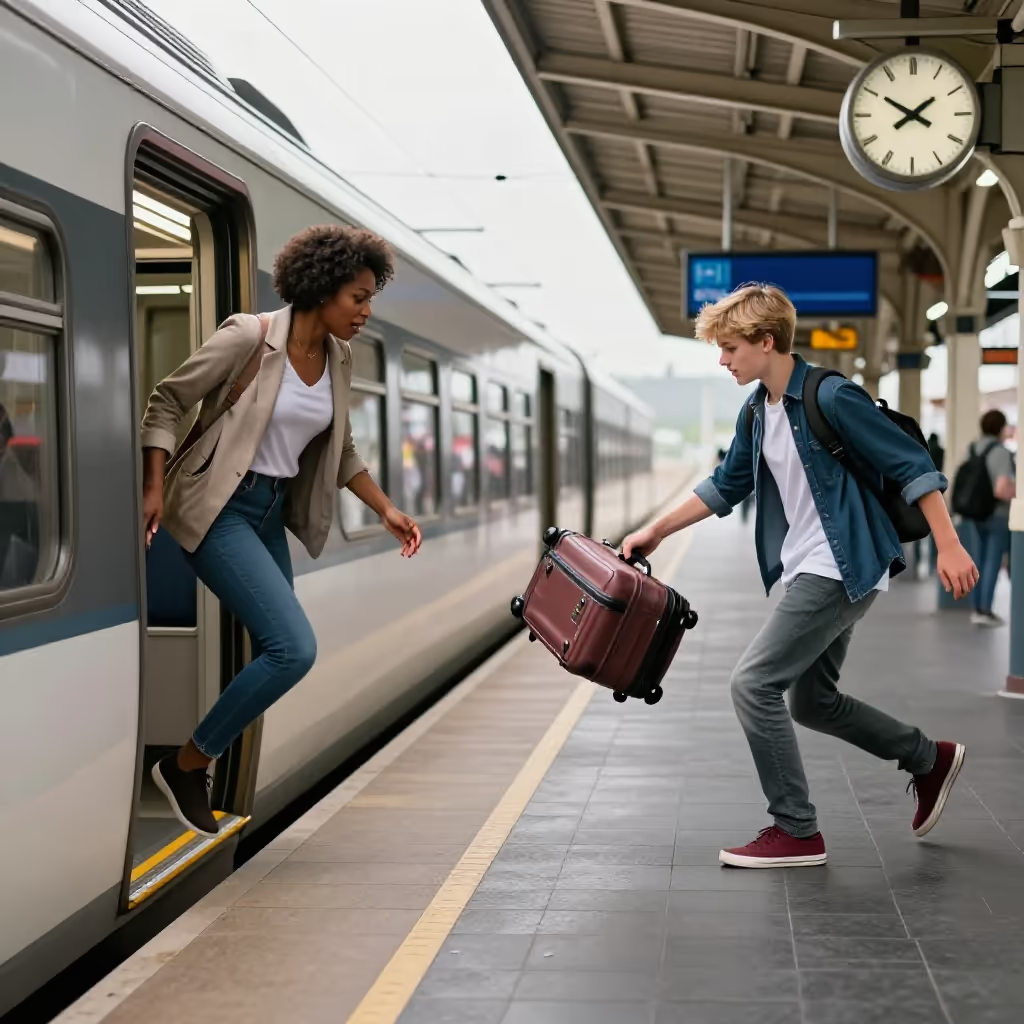
Die beiden Züge kamen zeitgleich am Bahnhof an.
The two trains arrived at the station simultaneously.
Die beiden Züge kamen gleichzeitig am Bahnhof an.
The two trains arrived at the station at the same time.