

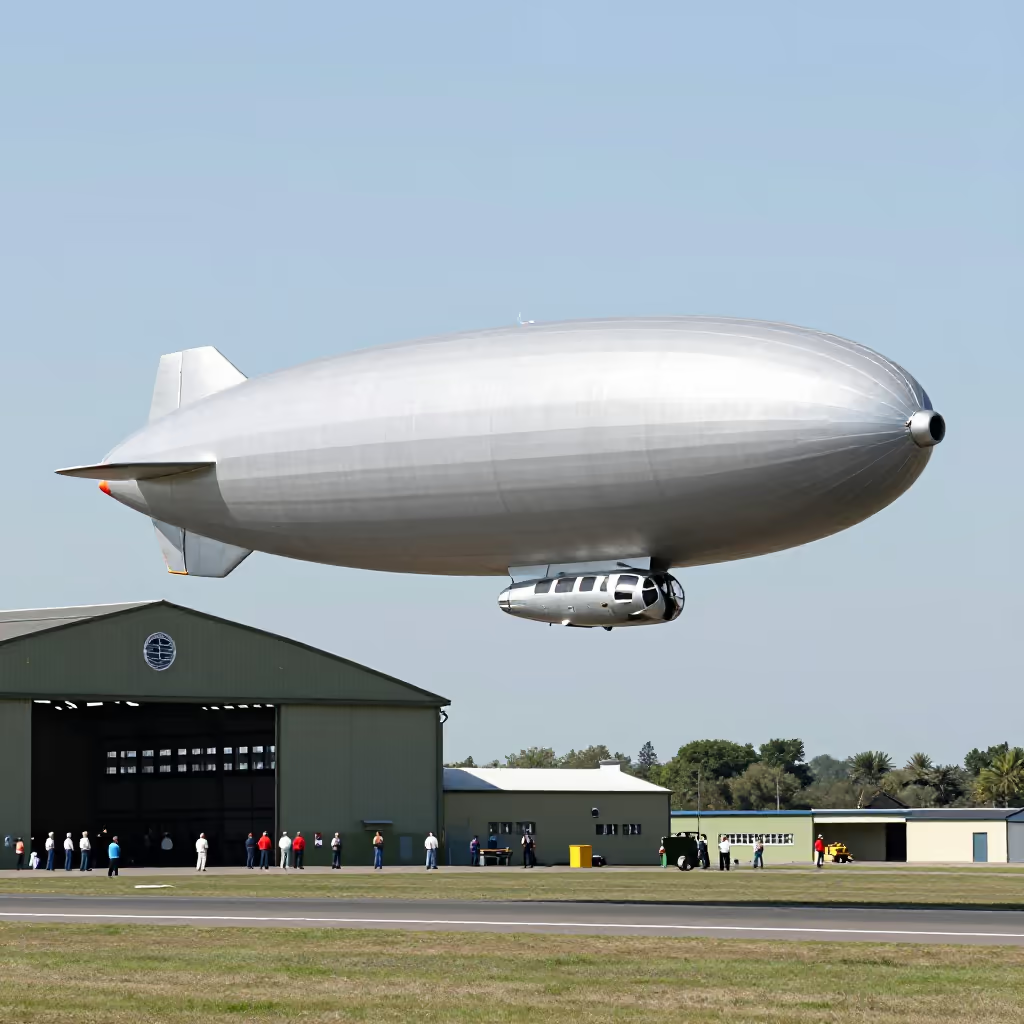
A large, steerable rigid airship with a fixed frame, named after its inventor Ferdinand von Zeppelin.
example
Der Zeppelin Hindenburg war ein Symbol für die zivile Luftfahrt in den 1930er Jahren.
The zeppelin Hindenburg was a symbol of civilian aviation in the 1930s.
Usage tips
Origin of the word
'Zeppelin' is named after its inventor, the German count Ferdinand von Zeppelin. Words like this, which go back to a proper name, are called eponyms.
EXAMPLE
Graf von Zeppelin entwickelte die ersten Starrluftschiffe um 1900.
Count von Zeppelin developed the first rigid airships around 1900.
Typical verbs
Although a zeppelin flies, in everyday German the verb 'fahren' (to travel/go by vehicle) is often used too, similar to ships or trains. 'Fliegen' (to fly) is also correct, however.
EXAMPLE
Früher konnte man mit dem Zeppelin über den Atlantik fahren.
In the past, you could travel across the Atlantic by zeppelin.
Cultural context
Zeppelins are strongly associated with the history of the early 20th century and are considered a symbol of technological progress and a luxurious way of traveling during that period.
EXAMPLE
Viele alte Fotos zeigen den Zeppelin über den Dächern von New York.
Many old photos show the zeppelin above the rooftops of New York.
Compare with
confusable
Zeppelin vs Ballon
balloon
'Ballon' and 'Zeppelin' can both refer to large aircraft that float in the air. The difference is important: a 'Ballon', usually a 'Heißluftballon' (hot-air balloon), does not have a fixed shape like an airplane and is carried by warm air or gas. It can only be steered to a limited extent. A 'Zeppelin' is a large, steerable rigid airship with a fixed frame. Learners may confuse the words because both fly slowly in the sky and feel similarly old-fashioned. If you mean a round envelope under a basket, you say 'Ballon'. If you mean a long, rigidly built airship, you say 'Zeppelin'.
Zeppelin
Über dem See flog ein Zeppelin, und viele Menschen machten Fotos.
A zeppelin flew over the lake, and many people took photos.
Ballon
Am frühen Morgen steigt der Ballon langsam über die Felder.
Early in the morning, the balloon slowly rises above the fields.