


zerkratzen
to scratch up
To damage the surface of something with many scratches made by sharp objects.
EXAMPLE
Pass auf, dass du die neue CD nicht zerkratzt.
Be careful not to scratch up the new CD.
to scratch up
Loading your saved state.
to scratch up
To damage the surface of something with many scratches made by sharp objects.
Pass auf, dass du die neue CD nicht zerkratzt.
Be careful not to scratch up the new CD.

to scratch oneself
To give oneself scratches on the skin, usually unintentionally, for example because of an itch.
Das Kind hat sich wegen der Mückenstiche den ganzen Arm zerkratzt.
Because of the mosquito bites, the child scratched up their whole arm.
The prefix 'zer-' is inseparable and is always written together with the verb 'kratzen' (to scratch). Here, 'zer-' intensifies the meaning and implies damage or destruction of the surface.
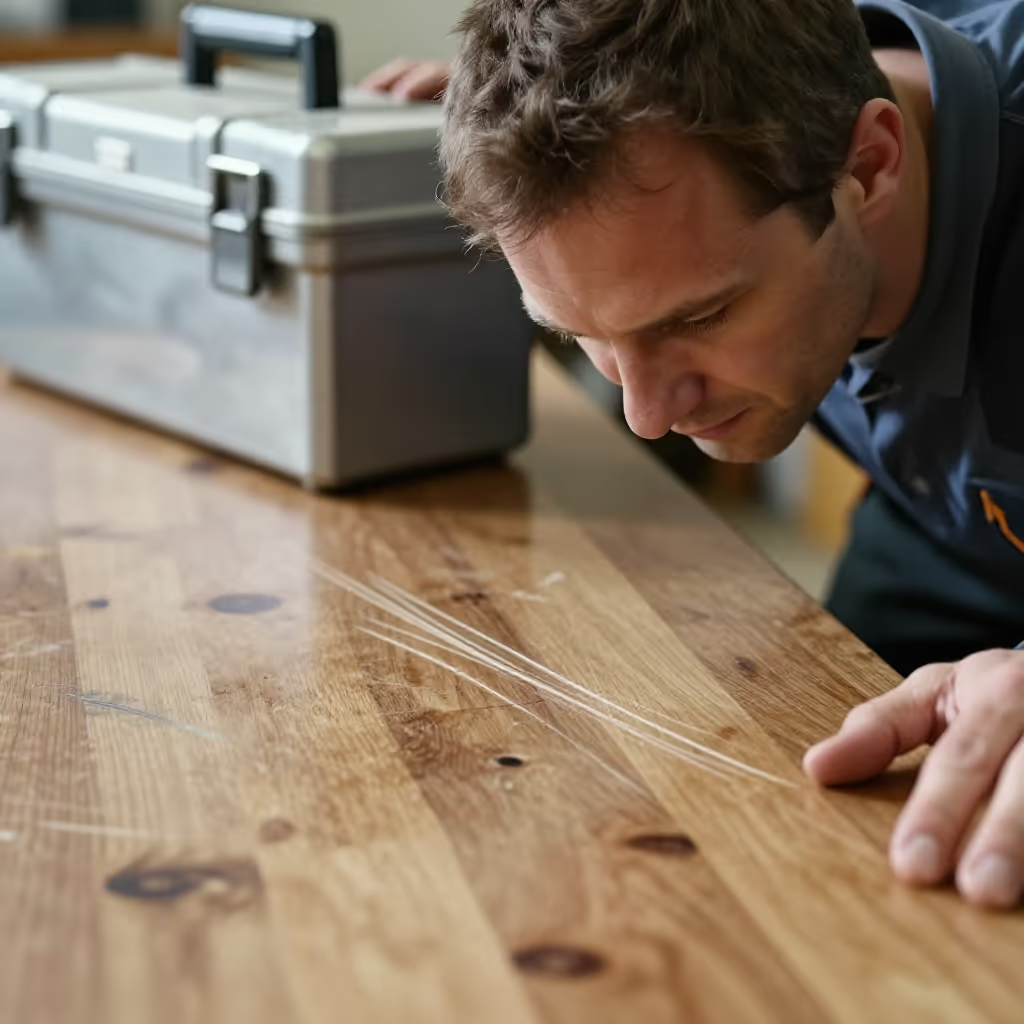
Wer hat den Holztisch so zerkratzt?
Who scratched up the wooden table like that?
The use of the reflexive pronoun 'sich' changes the meaning. 'Etwas zerkratzen' (to scratch something up) means to damage someone else's surface or an external surface. 'Sich zerkratzen' (to scratch oneself) means to injure one's own skin.
Meine Katze hat die neue Couch zerkratzt.
My cat scratched up the new couch.
Typical objects that get scratched up are delicate surfaces. These include furniture, cars, glasses, eyeglasses, or a phone display, for example.
Ich habe aus Versehen das Display meines Handys mit dem Schlüssel zerkratzt.
I accidentally scratched up my phone display with my key.
to scratch
Kratzen can already refer to causing a single superficial scratch or groove. Zerkratzen emphasizes the result more strongly: the surface is damaged by many scratches. For a noticeably damaged surface, zerkratzen is therefore the better choice.
Der Schlüsselbund zerkratzte den Lack an mehreren Stellen.
The key ring scratched up the paint in several places.
Der Schlüssel kratzte eine feine Rille in den Lack.
The key scratched a fine groove in the paint.