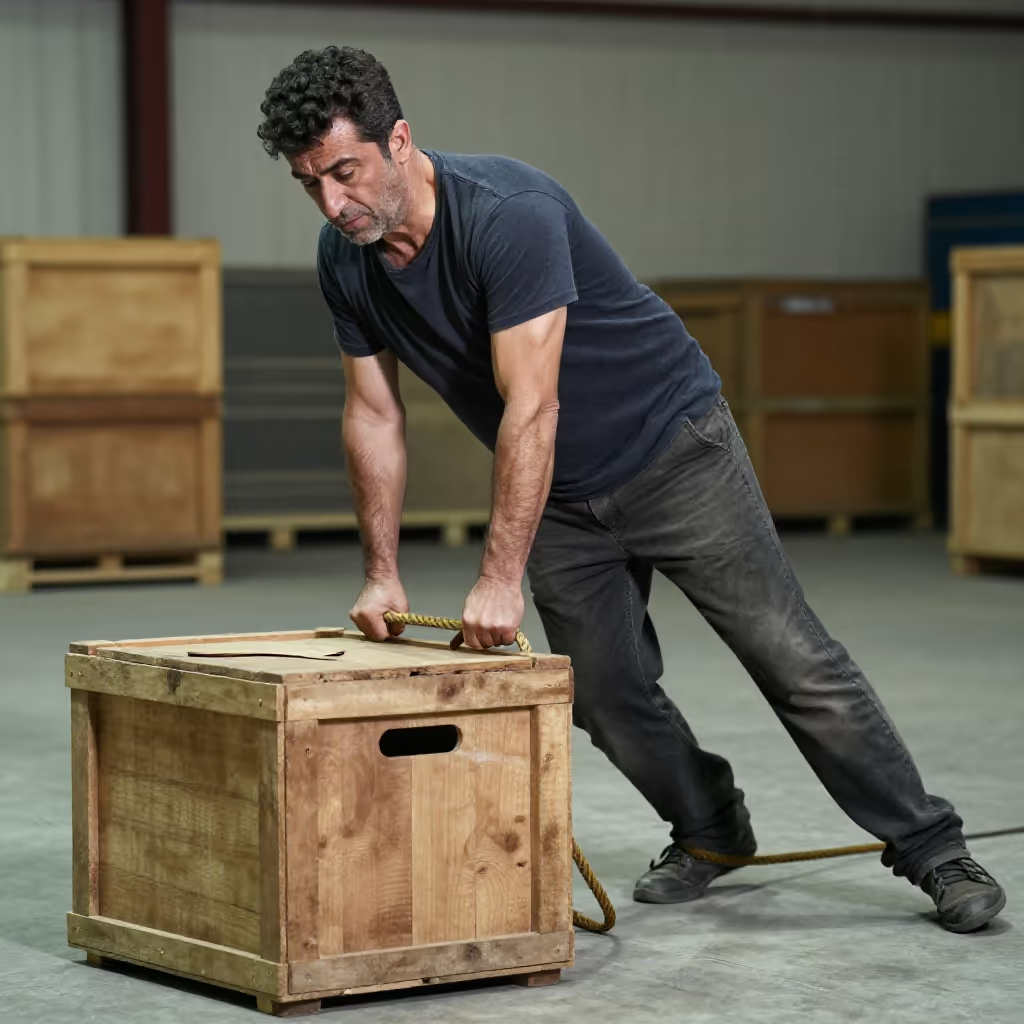
To pull something or someone with great force and often jerkily or roughly.
example
Das Kind zerrte ungeduldig am Ärmel seiner Mutter, weil es weitergehen wollte.
The child impatiently yanked at his mother's sleeve because he wanted to keep going.

Usage tips
Word structure
The prefix 'zer-' is inseparable and often indicates a forceful, sometimes destructive action. Here it intensifies the idea of pulling into a rough, violent act.
EXAMPLE
Er zerrte das schwere Paket die Treppe hinauf.
He yanked the heavy package up the stairs.
Sentence structure and usage
You can either say 'etwas (Akkusativ) zerren' (to yank something; accusative) to move it, or 'an etwas (Dativ) zerren' (to yank at something; dative) to pull on a part of something. Pay attention to the different cases.
EXAMPLE
Die Polizei zerrte den Demonstranten von der Straße.
The police yanked the protester off the street.
Fixed expression
In the figurative meaning, 'zerren' (to strain) is almost always used in the fixed expression 'an den Nerven zerren' (to strain someone's nerves). It describes a situation that is very mentally exhausting.
EXAMPLE
Der ständige Baulärm von nebenan zerrt an meinen Nerven.
The constant construction noise from next door is straining my nerves.
Compare with
near_synonym · confusable
zerren vs ziehen
to pull / move
'ziehen' and 'zerren' both describe moving something or someone with force. 'ziehen' is neutral and can be calm or careful. 'zerren' is stronger: it sounds rough, jerky, or impatient. Learners may confuse the words because both express a pulling movement. When the movement is described normally or neutrally, 'ziehen' fits. When someone pulls too hard, hastily, or roughly, 'zerren' fits better.
zerren
Vor dem Laden zerrt der Hund ungeduldig an der Leine.
In front of the shop, the dog impatiently yanks at the leash.
ziehen
Bitte zieh die Tür leise zu, das Kind schläft.
Please pull the door closed quietly; the child is sleeping.