

schleppen
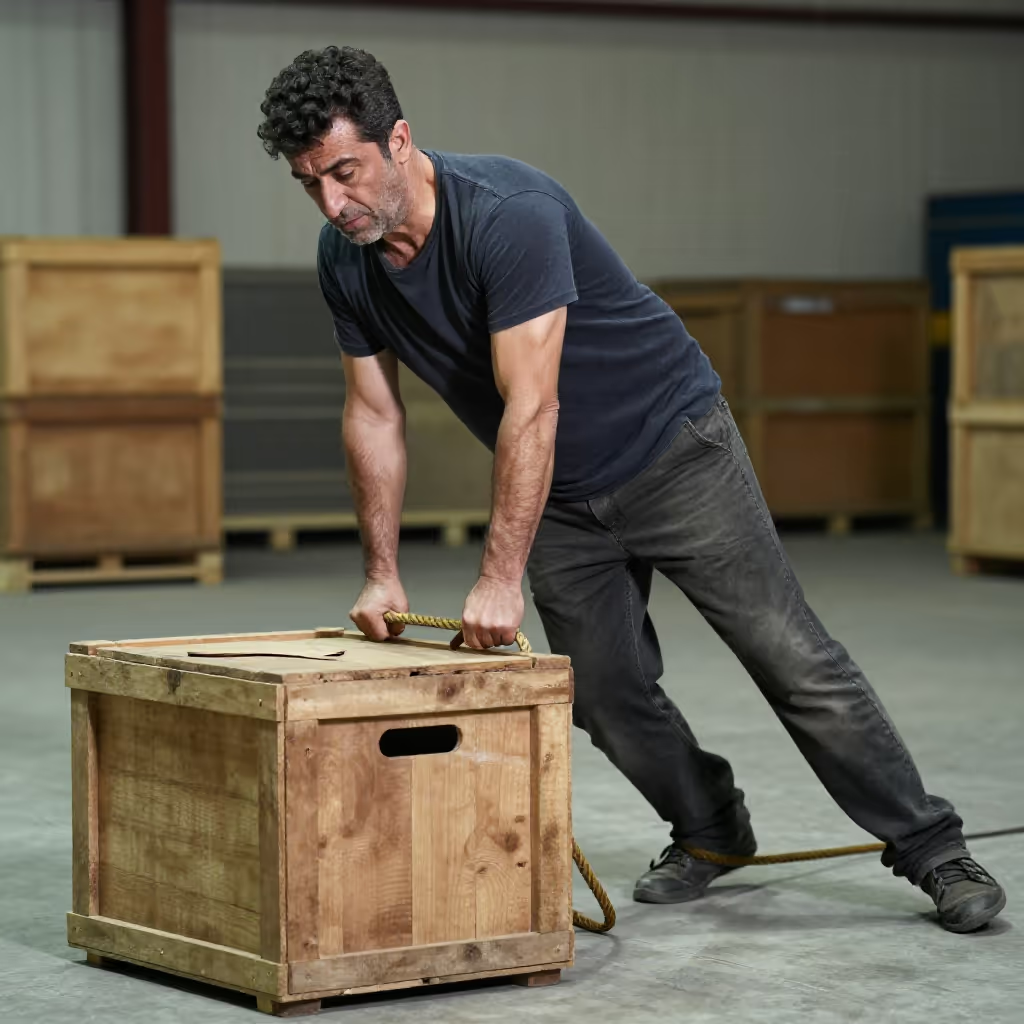
to lug
To pull or carry something heavy with effort.
EXAMPLE
Er musste die schweren Koffer die Treppe hoch schleppen.
He had to lug the heavy suitcases up the stairs.
to lug / to drag
Loading your saved state.
to lug
To pull or carry something heavy with effort.
Er musste die schweren Koffer die Treppe hoch schleppen.
He had to lug the heavy suitcases up the stairs.

to drag oneself
To move slowly and with great effort, often because of exhaustion or illness.
Nach dem langen Arbeitstag schleppte sie sich müde nach Hause.
After the long workday, she dragged herself home tired.
to tow
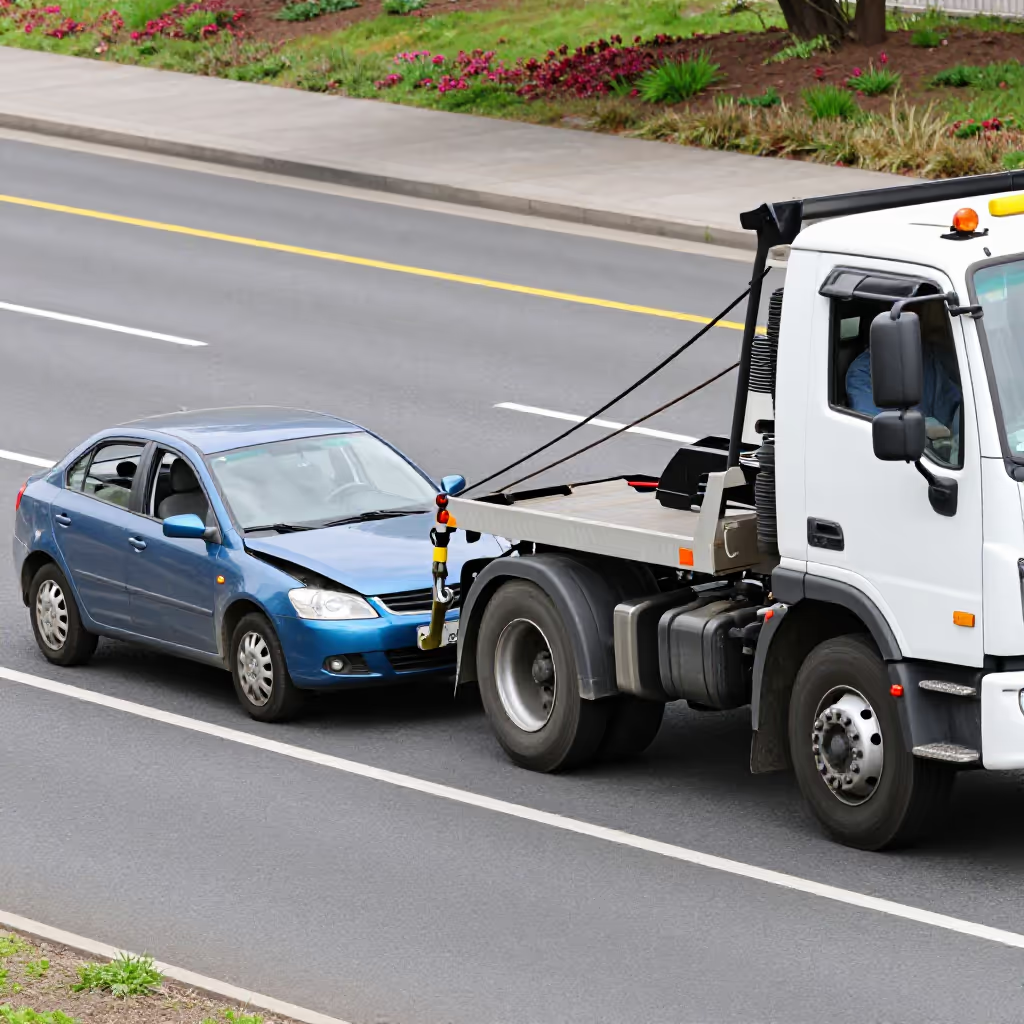
To pull a vehicle or ship with the help of another one; to tow away.
Das kaputte Auto wurde von einem Abschleppwagen in die Werkstatt geschleppt.
The broken-down car was towed to the repair shop by a tow truck.

to drag on
In reference to a process or action: to make progress very slowly and laboriously.
Die Verhandlungen schleppen sich schon seit Monaten dahin.
The negotiations have been dragging on for months.
The verb 'schleppen' can be used reflexively or non-reflexively. When a person or thing moves a heavy object, use 'schleppen' with the accusative. When a person or a process moves with difficulty, use 'sich schleppen'.
Ich habe den ganzen Tag schwere Kisten geschleppt.
I lugged heavy boxes around all day.
When you use 'schleppen' instead of 'tragen' (to carry), you emphasize the great effort, the heavy weight, or the reluctance involved in the activity. It sounds more strenuous and often a little negative.
Musst du wirklich all diese alten Zeitschriften in die neue Wohnung schleppen?
Do you really have to lug all these old magazines to the new apartment?
In this meaning, 'schleppen' is used almost exclusively for pulling vehicles or ships. In this context, the verb 'abschleppen' (to tow away) is also often used.
Ein Traktor schleppte das im Schlamm steckende Auto heraus.
A tractor towed the car that was stuck in the mud out.
The reflexive form 'sich schleppen' is often used figuratively for processes that make progress only very slowly and with difficulty. It is frequently used together with the adverb 'dahin'.
Die Besprechung schleppte sich ohne Ergebnis über drei Stunden dahin.
The meeting dragged on for three hours without any result.
to pull / move
Both words can mean moving a heavy object by pulling it. „Ziehen“ initially describes the movement itself, while „schleppen“ additionally emphasizes the effort and the object’s considerable weight. Use „ziehen“ for a neutral description and „schleppen“ when the movement is clearly laborious.
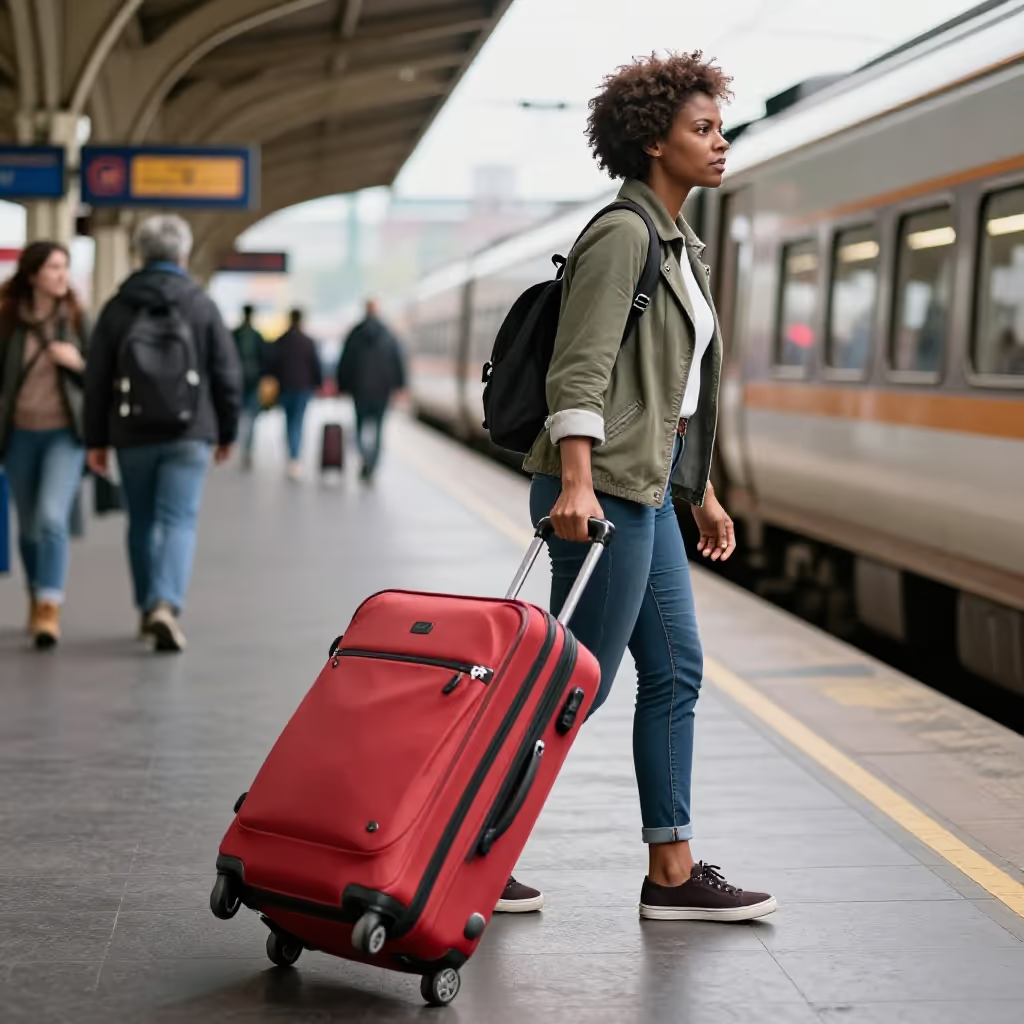
Wir schleppten den schweren Schlitten mühsam den verschneiten Weg hinauf.
We laboriously lugged the heavy sled up the snowy path.
Wir zogen den Schlitten gemeinsam den verschneiten Weg hinauf.
Together, we pulled the sled up the snowy path.