


zurechtkommen
to cope
To successfully manage a situation, a task, a person, or a new environment; to find one's way in it or get along well with it.
EXAMPLE
Kommst du mit der neuen Software gut zurecht?
Are you coping well with the new software?
to cope / get by
Loading your saved state.
to cope
To successfully manage a situation, a task, a person, or a new environment; to find one's way in it or get along well with it.
Kommst du mit der neuen Software gut zurecht?
Are you coping well with the new software?
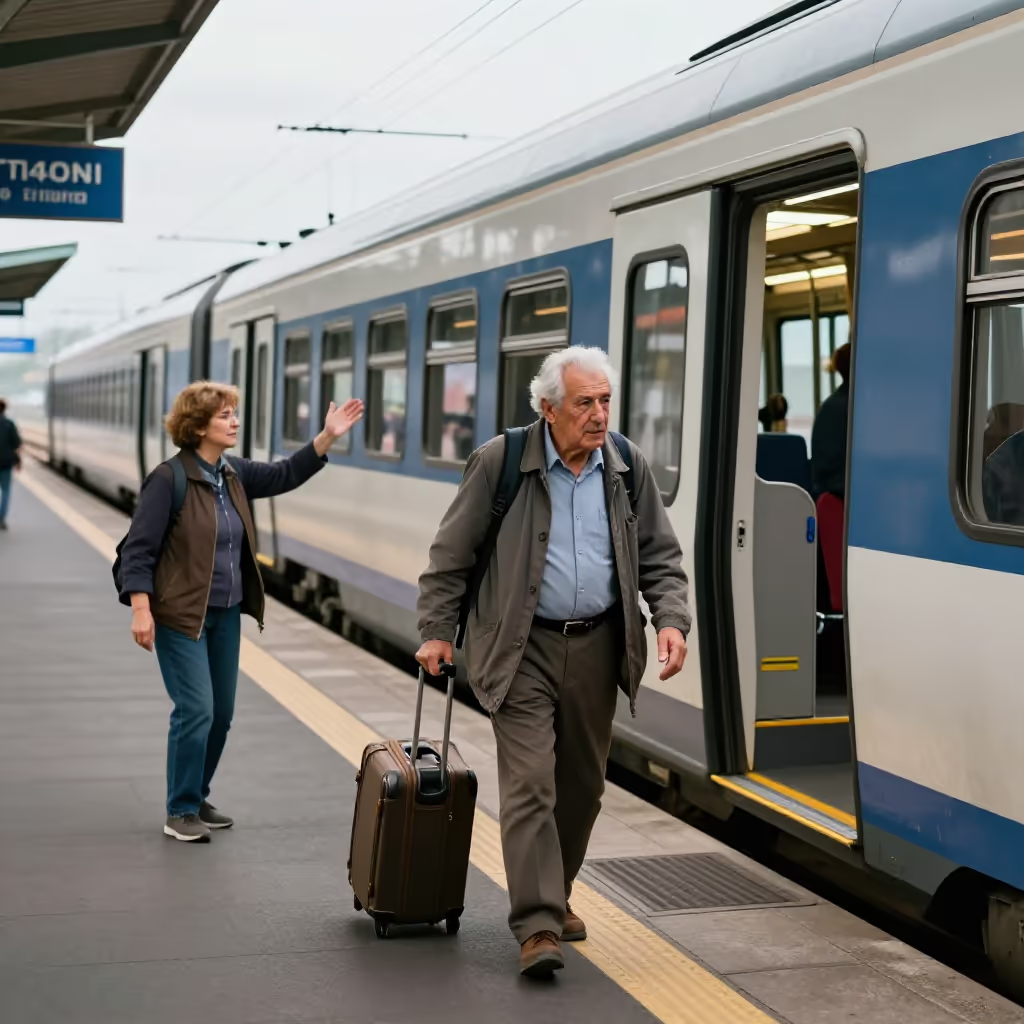
to arrive in time
To arrive at a place on time or at a suitable moment. This meaning is rarer and is partly considered outdated.
Wenn du jetzt losgehst, solltest du noch zurechtkommen, bevor der Laden schließt.
If you leave now, you should still arrive in time before the store closes.
'Zurechtkommen' (to cope/get by) is a separable verb. The prefix 'zurecht-' comes at the end in a main clause. In a subordinate clause, the verb stays together, and in the infinitive with 'zu', 'zu' goes in the middle.
Er kommt in der neuen Stadt gut zurecht.
He is getting by well in the new city.
In the main meaning 'etwas bewältigen' (to manage something), 'zurechtkommen' (to cope) is almost always used with the preposition 'mit' (with) and the dative. You cope 'mit' (with) a person, a thing, or a situation.
Sie kommt mit ihrem neuen Chef nicht gut zurecht.
She doesn't cope well with her new boss.
The meaning 'rechtzeitig ankommen' (to arrive in time) is very rare today and is considered outdated. In modern language, the word is used almost exclusively in the meaning 'etwas bewältigen' (to manage something).
Er beeilte sich, um vor dem Regen noch zurechtzukommen.
He hurried in order to arrive in time before the rain.
to arrive
For arriving on time, ankommen is the normal choice in present-day standard German. Zurechtkommen can also have this meaning, but it is rare and partly outdated. In ordinary conversation, ankommen is therefore used instead.

Trotz des Staus sind wir noch rechtzeitig am Bahnhof zurechtgekommen.
Despite the traffic jam, we still arrived at the station on time.
Trotz des Staus sind wir noch rechtzeitig am Bahnhof angekommen.
Despite the traffic jam, we still arrived at the station on time.