

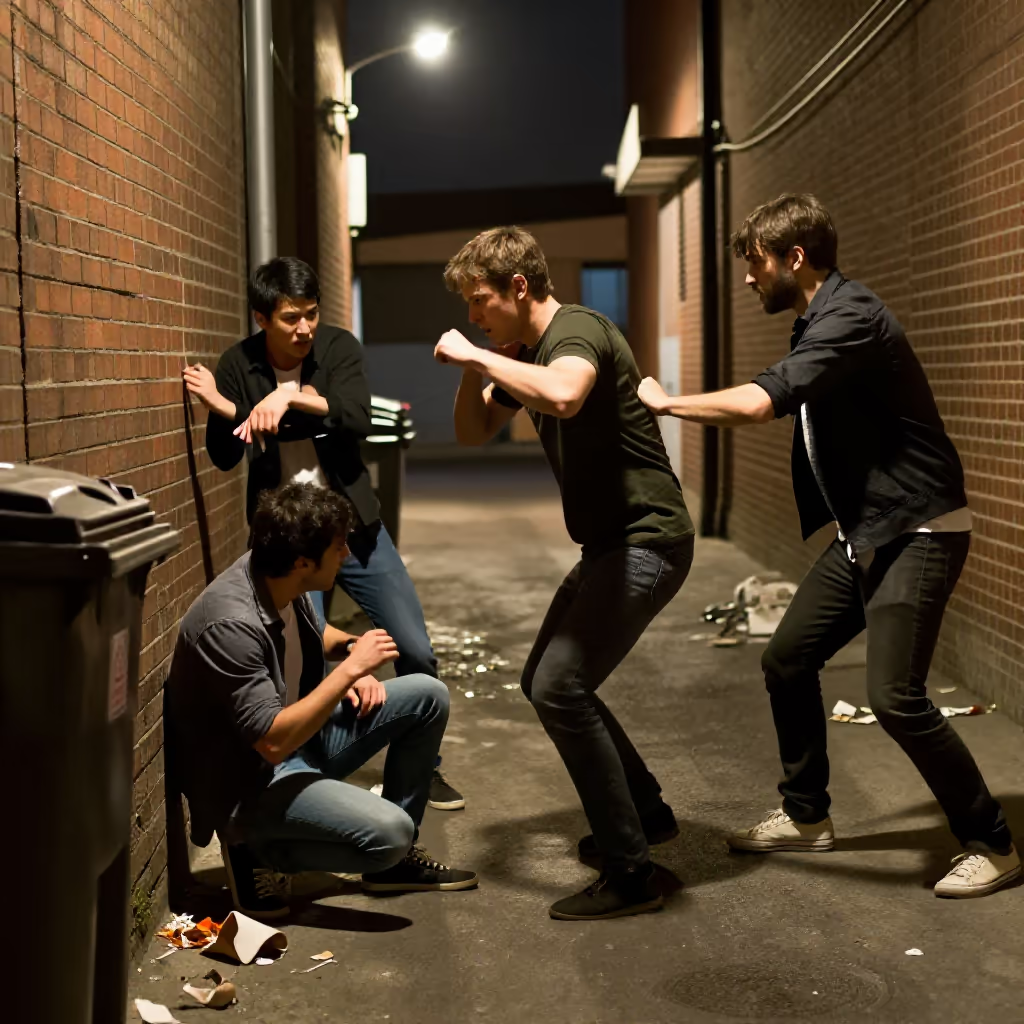
zusammenschlagen
to beat up
To violently attack and injure someone with blows, often by several people.
EXAMPLE
Die Gruppe hat den Mann grundlos zusammengeschlagen.
The group beat up the man for no reason.
to beat up / beat together
Loading your saved state.
to beat up
To violently attack and injure someone with blows, often by several people.
Die Gruppe hat den Mann grundlos zusammengeschlagen.
The group beat up the man for no reason.
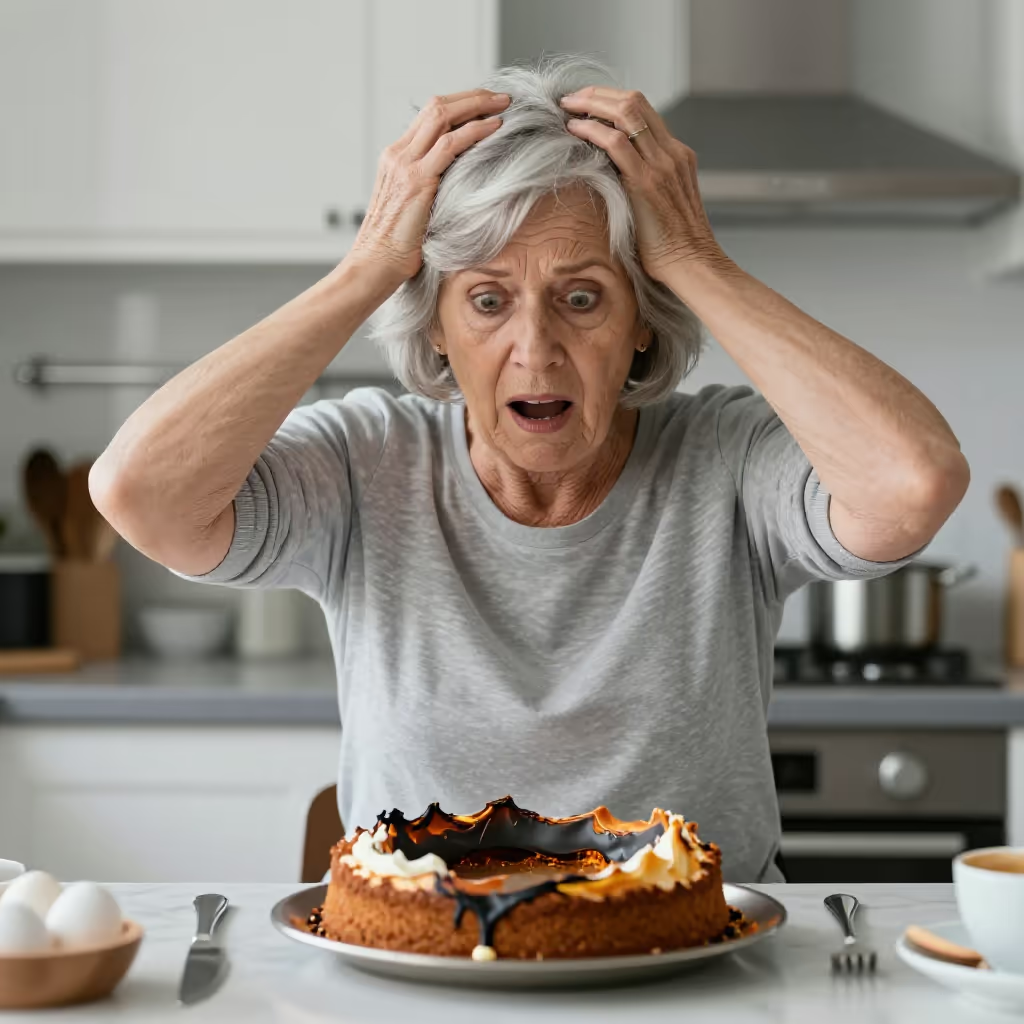
to throw one's hands up in horror
To make a gesture of despair, horror, or surprise by striking or placing one's hands over or on one's head.
Als sie das Chaos in der Wohnung sah, schlug sie die Hände über dem Kopf zusammen.
When she saw the chaos in the apartment, she threw her hands up in horror.
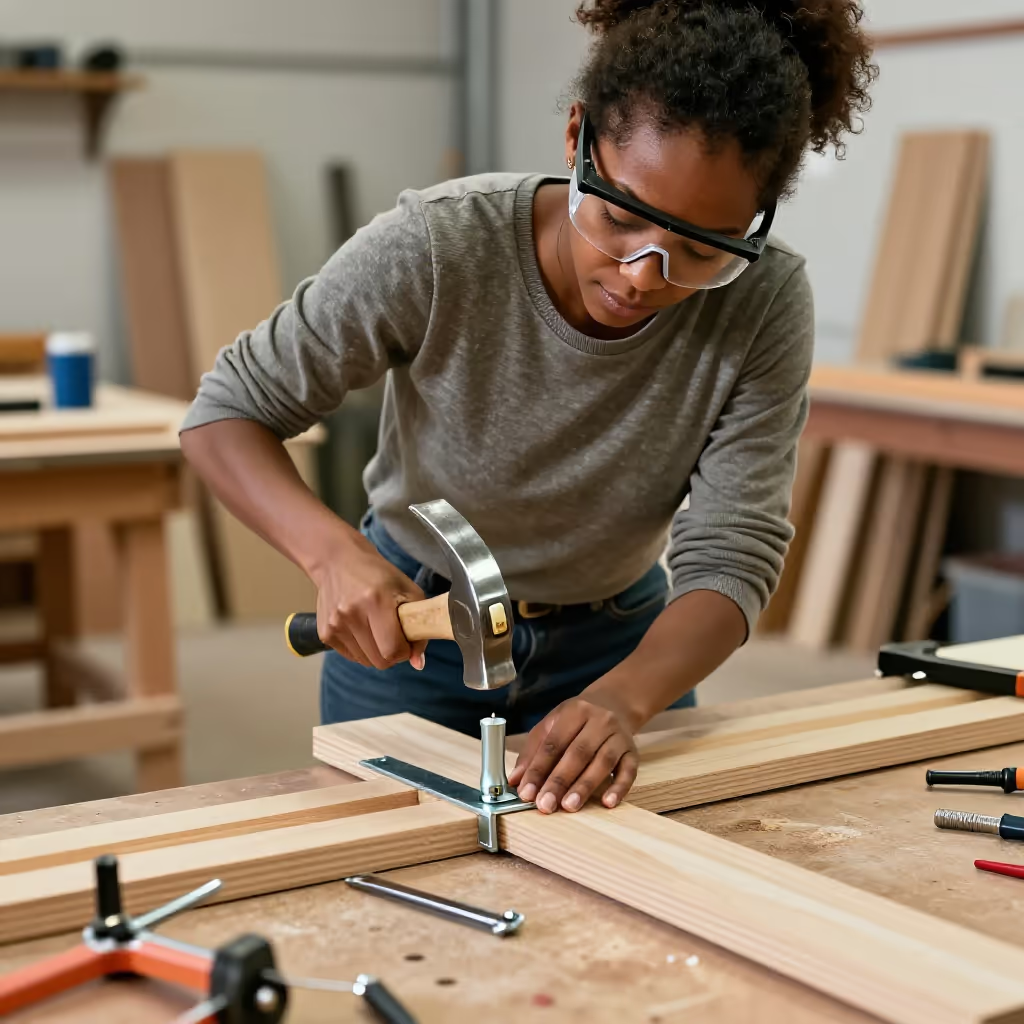
to hammer together
To firmly join two or more parts together with blows, for example with a hammer.
Der Zimmermann schlug die Holzbalken für den Dachstuhl zusammen.
The carpenter hammered the wooden beams together for the roof truss.
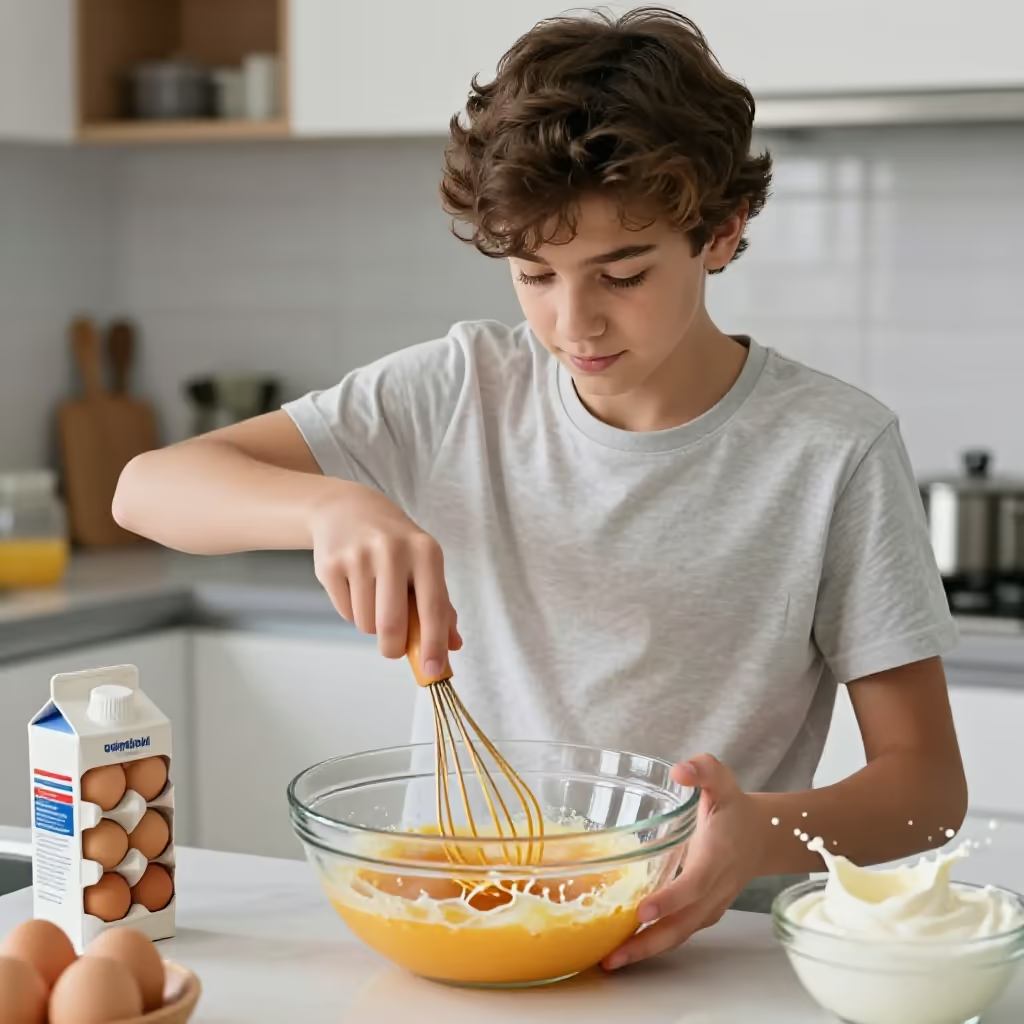
to beat together
To mix ingredients, especially eggs or cream, by stirring or beating vigorously.
Für das Omelett müssen Sie zuerst die Eier mit etwas Milch zusammenschlagen.
For the omelet, you first have to beat the eggs together with a little milk.
'Zusammenschlagen' (to beat up / beat together) is a separable verb. In a main clause, the prefix 'zusammen' appears at the end. In subordinate clauses and in the infinitive with 'zu', the prefix and verb stay together.
Die Jungen schlugen den Schneemann aus Spaß zusammen.
The boys knocked the snowman down for fun.
The verb consists of the prefix 'zusammen' (together) and the verb 'schlagen' (to hit/beat). The prefix expresses that several things or actions come together: several attackers, two hands, two construction parts, or several ingredients.
Für den Teig schlägt man Eier und Zucker zusammen.
For the dough, you beat eggs and sugar together.
You can recognize the meaning of 'zusammenschlagen' (to beat up / beat together) from the object. If it is a person, violence is meant. With 'Händen' (hands), it is a gesture; with materials, it is crafts/workmanship; and with ingredients, it is cooking.
Er schlug die Bretter zu einer Kiste zusammen.
He hammered the boards together into a box.
The gesture of horror is almost always expressed in the fixed phrase 'die Hände über dem Kopf zusammenschlagen' (to throw one's hands up in horror). The parts 'die Hände' (the hands) and 'über dem Kopf' (over one's head) are fixed components.
Als der Chef die schlechten Zahlen sah, schlug er die Hände über dem Kopf zusammen.
When the boss saw the bad figures, he threw his hands up in horror.
to beat up
Verprügeln and zusammenschlagen both refer to a violent attack involving blows. Verprügeln emphasizes repeated hitting, while zusammenschlagen highlights an especially violent attack that causes injuries and often involves several people. However, the involvement of several people is not a fixed requirement.

Mehrere Täter schlugen den Mann zusammen und verletzten ihn schwer.
Several attackers beat the man up and seriously injured him.
Ein Täter verprügelte den Mann mit zahlreichen Faustschlägen.
One attacker beat the man up with numerous punches.