

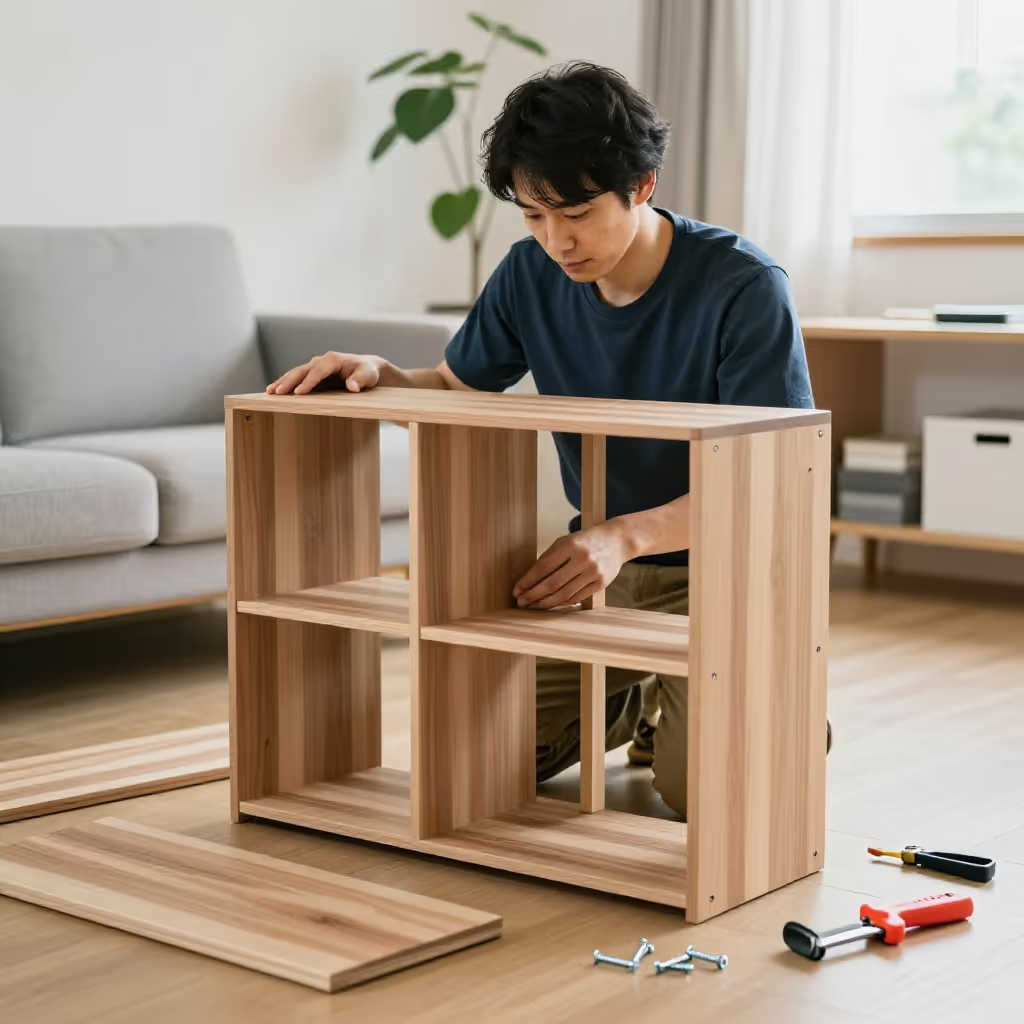
zusammensetzen
to assemble
To make or put together a whole from individual parts or components.
EXAMPLE
Nach dem Umzug mussten wir alle Möbel wieder zusammensetzen.
After the move, we had to assemble all the furniture again.
to assemble / be composed / meet
Loading your saved state.
to assemble
To make or put together a whole from individual parts or components.
Nach dem Umzug mussten wir alle Möbel wieder zusammensetzen.
After the move, we had to assemble all the furniture again.

to be composed of
To consist of or be formed from certain elements, parts, or people.
Das Gremium setzt sich aus Vertretern der Wirtschaft und der Politik zusammen.
The committee is composed of representatives from business and politics.
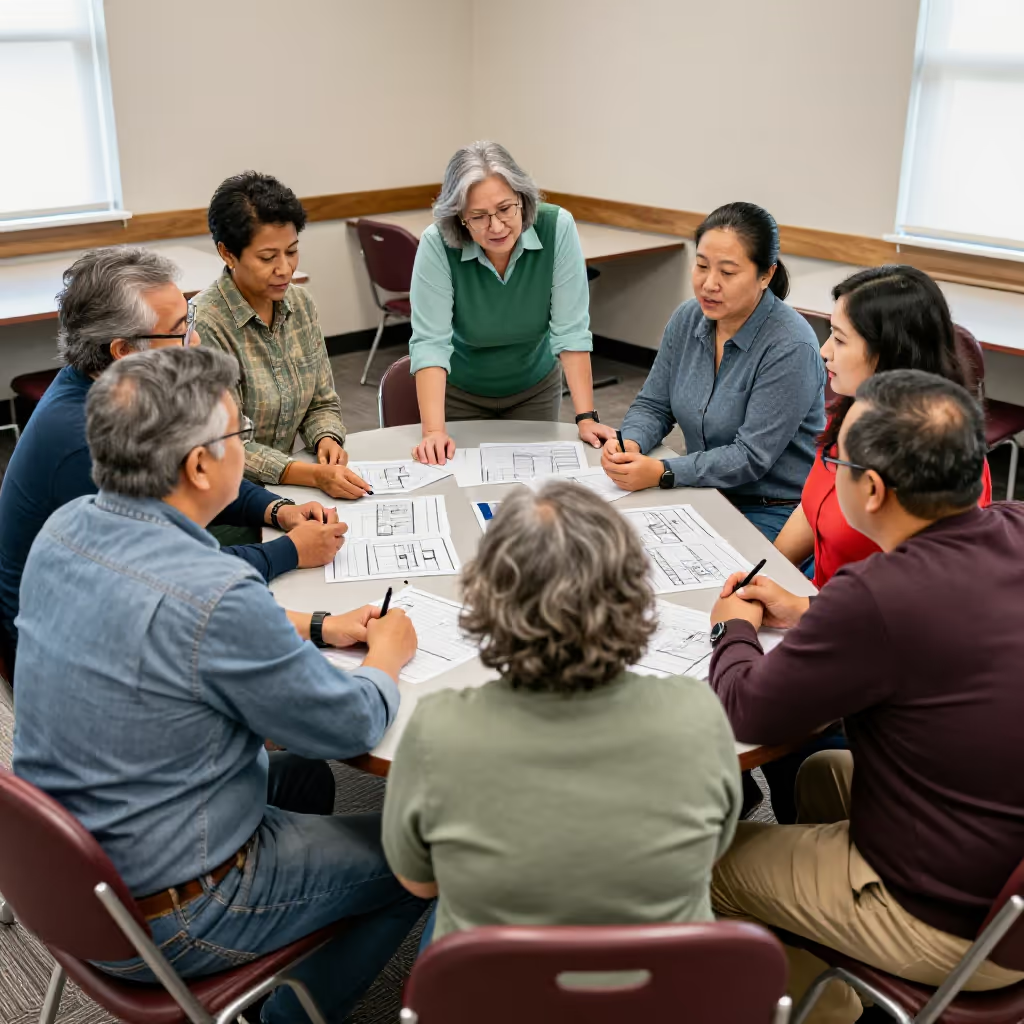
to meet
To gather as a group in one place, usually to discuss something or do something together.
Lasst uns morgen früh zusammensetzen, um die Details des Projekts zu klären.
Let's meet tomorrow morning to clarify the details of the project.
'Zusammensetzen' (to assemble / be composed / meet) is a separable verb. The prefix 'zusammen-' comes at the end in a main clause, while in a subordinate clause and in the infinitive it remains attached to the verb.
Er setzt das Modellflugzeug zusammen.
He assembles the model airplane.
The verb consists of the adverb 'zusammen' (together) and the verb 'setzen' (to set/put). The literal meaning, 'to bring something together into one place,' helps you understand the different meanings.
Die Kinder setzen die Bausteine zu einem Turm zusammen.
The children assemble the building blocks into a tower.
This verb has both non-reflexive and reflexive meanings. When you assemble something, it is non-reflexive ('etwas zusammensetzen' = to assemble something). When something consists of parts or a group meets, it is used reflexively ('sich zusammensetzen' = to be composed / to meet).
Ich setze gerade den neuen Stuhl zusammen.
I am assembling the new chair right now.
In the meaning 'bestehen aus' (to consist of), the verb is always reflexive and used with the preposition 'aus' followed by the dative: 'sich zusammensetzen aus etwas' (to be composed of something).
Wasser setzt sich aus Wasserstoff und Sauerstoff zusammen.
Water is composed of hydrogen and oxygen.
When 'sich zusammensetzen' is used without the preposition 'aus,' it means that a group of people meets to discuss something or work together.
Die Familie setzte sich am Abend zusammen, um über den Urlaub zu sprechen.
The family met in the evening to talk about the vacation.
to form / educate
“Bilden” and “sich zusammensetzen aus” can both explain what a whole consists of. “Bilden” foregrounds the result created by the parts together, while “sich zusammensetzen aus” explicitly names the individual components. Use the second form when the composition is described in detail.
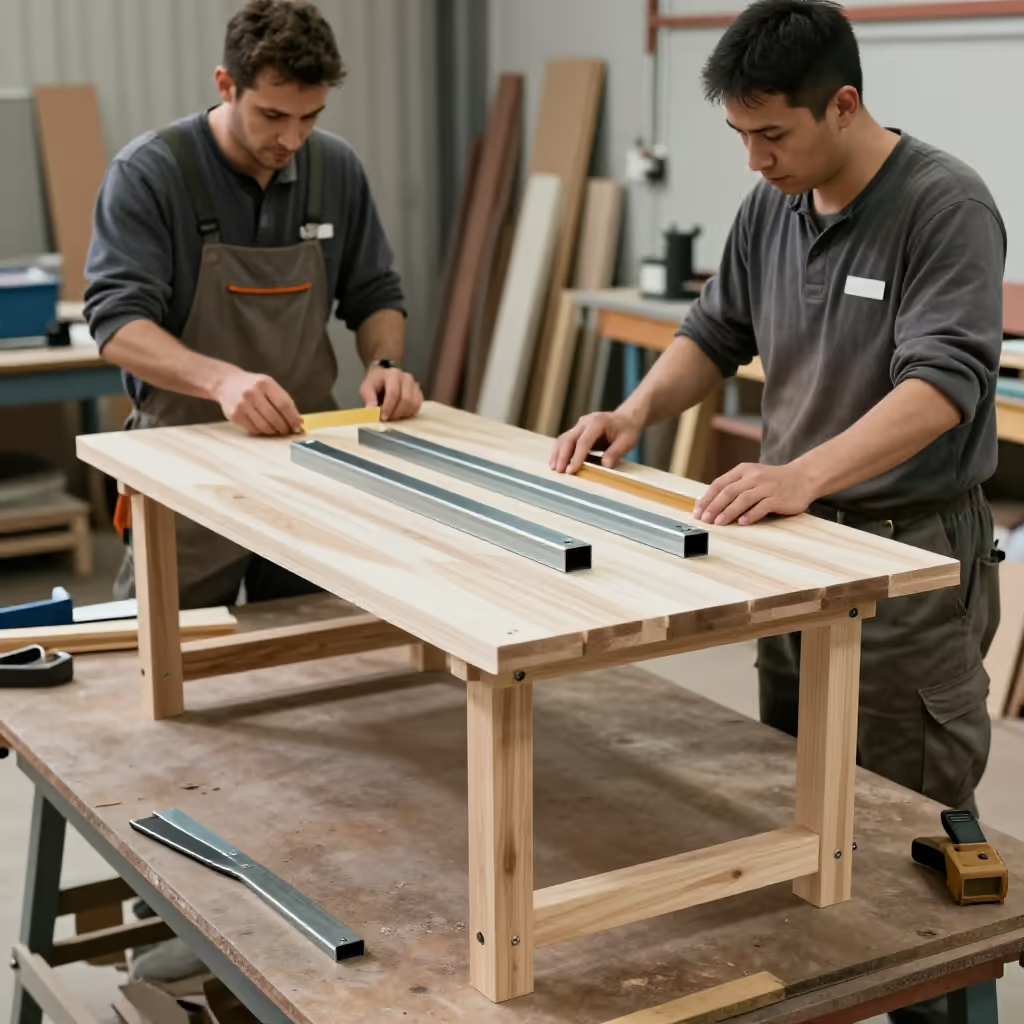
Das gemeinsame Geschenk setzt sich aus vielen kleinen Beiträgen zusammen.
The joint gift is made up of many small contributions.
Die vielen kleinen Beiträge bilden am Ende ein gemeinsames Geschenk.
The many small contributions eventually form one joint gift.