

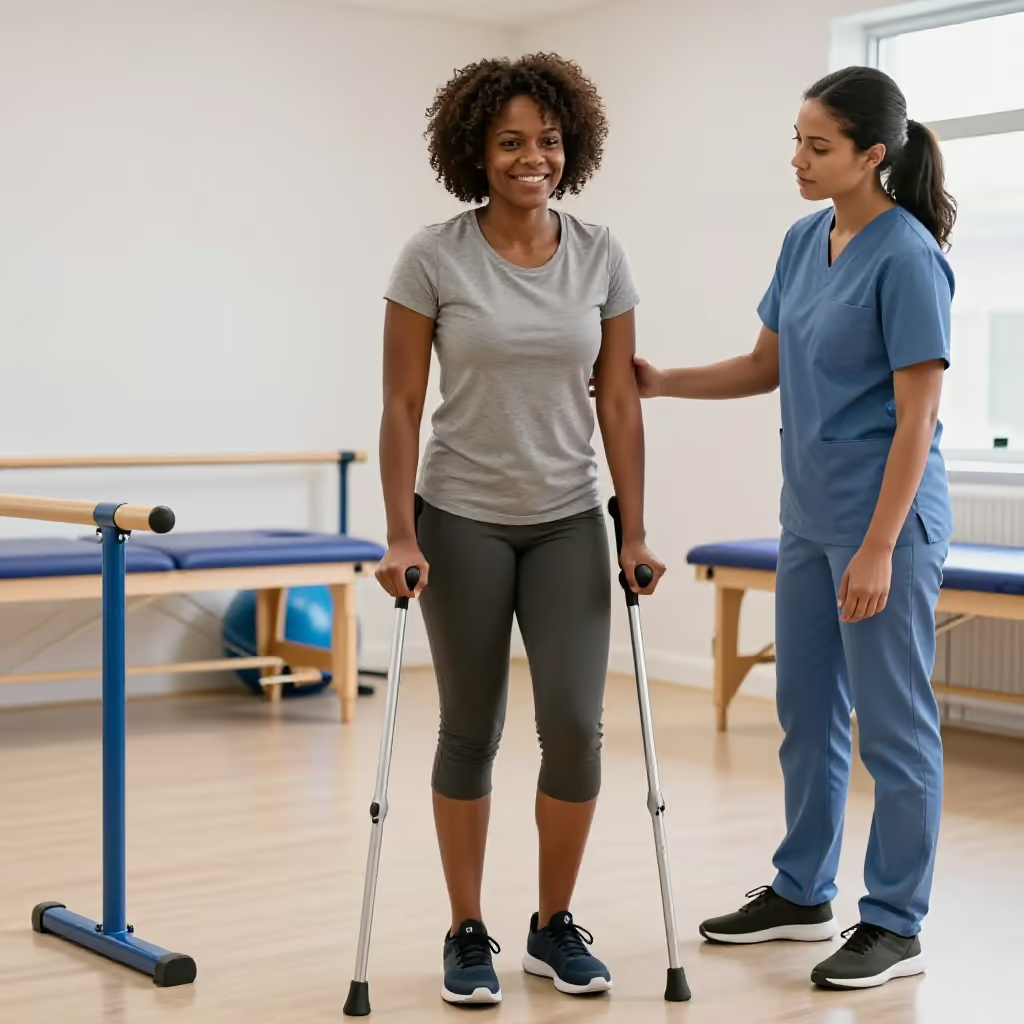
A firm trust in a positive development in the future or in one's own abilities; optimism.
example
Trotz der Schwierigkeiten blickt sie mit großer Zuversicht in die Zukunft.
Despite the difficulties, she looks to the future with great confidence.
Usage tips
Word family
'Zuversicht' (confidence) belongs to the word family of the adjective 'zuversichtlich' (confident). If someone is 'zuversichtlich', then that person has 'Zuversicht' (confidence).
EXAMPLE
Er ist ein sehr zuversichtlicher Mensch.
He is a very confident person.
Typical verbs
'Zuversicht' (confidence) is often combined with certain verbs. You can say 'Zuversicht haben' (to have confidence), 'Zuversicht ausstrahlen' (to radiate confidence), 'Zuversicht gewinnen' (to gain confidence), or 'die Zuversicht verlieren' (to lose confidence).
EXAMPLE
Nach dem Gespräch habe ich wieder Zuversicht gewonnen.
After the conversation, I gained confidence again.
Fixed expression
A very common and useful expression is 'mit Zuversicht in die Zukunft blicken' (to look to the future with confidence). It expresses an optimistic attitude toward what is to come.
EXAMPLE
Nach dem erfolgreichen Abschluss blickt sie mit Zuversicht in die Zukunft.
After successfully completing it, she looks to the future with confidence.
Compare with
near_synonym · confusable
Zuversicht vs Hoffnung
hope
'die Hoffnung' and 'die Zuversicht' both describe a positive view of the future. 'Hoffnung' is often used when you wish for something but do not know for sure whether it will happen. 'Zuversicht' sounds stronger: you trust more firmly that something will turn out well or that you can manage something. Learners may confuse the words because both are positive. A practical tip: for a wish, you are more likely to say 'Hoffnung'; for calm confidence, 'Zuversicht' is more likely.
Zuversicht
Nach dem Gespräch ging mein Nachbar mit neuer Zuversicht nach Hause.
After the conversation, my neighbor went home with renewed confidence.
Hoffnung
Trotz der schlechten Nachricht gibt Anna die Hoffnung nicht auf.