

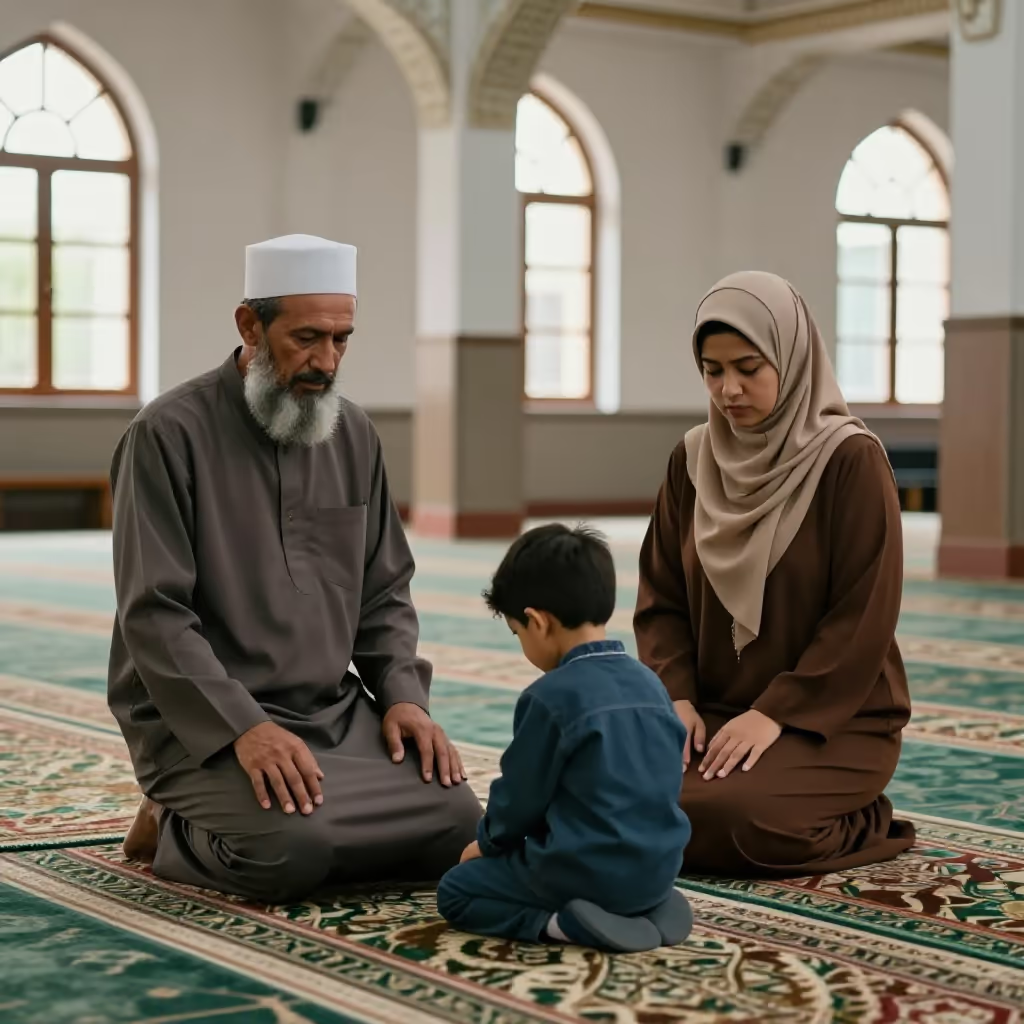
der Glaube
faith
The religious conviction in the existence of one or more gods or a higher power, and the teachings connected with it.
EXAMPLE
Sein Glaube gibt ihm in schwierigen Zeiten Halt.
His faith gives him support in difficult times.
faith / belief
Loading your saved state.
faith
The religious conviction in the existence of one or more gods or a higher power, and the teachings connected with it.
Sein Glaube gibt ihm in schwierigen Zeiten Halt.
His faith gives him support in difficult times.

belief
A firm conviction or trust in the correctness, truth, or value of something or someone, without there being definitive proof of it.
Ich habe den Glauben an die Gerechtigkeit noch nicht verloren.
I have not yet lost my belief in justice.

faith / religion
Refers to a specific religion or denomination.
Menschen unterschiedlichen Glaubens kamen zum interreligiösen Dialog zusammen.
People of different faiths came together for interfaith dialogue.
'Der Glaube' (faith/belief) is the noun related to the verb 'glauben' (to believe). If you know the verb, you can easily work out the meaning of the noun.
Ich glaube an eine bessere Zukunft, und dieser Glaube gibt mir Kraft.
I believe in a better future, and this belief gives me strength.
The noun 'Glaube' (faith/belief) is very often used with the preposition 'an' and the accusative. This structure expresses what the conviction or trust is directed toward.
Der Glaube an den Fortschritt war im 19. Jahrhundert sehr stark.
Belief in progress was very strong in the 19th century.
You can tell from context whether the religious or the general meaning is intended. 'Der Glaube an Gott' (faith in God) is religious, while 'der Glaube an die Wissenschaft' (belief in science) or 'der Glaube an das Gute im Menschen' (belief in the good in people) describes a general conviction.
Der Glaube an die Demokratie ist die Basis unserer Gesellschaft.
Belief in democracy is the foundation of our society.
In the meaning of 'Vertrauen' (trust), 'Glaube' is often used in fixed expressions, such as 'den Glauben an etwas verlieren' (to lose belief/faith in something), 'im guten Glauben handeln' (to act in good faith), or 'der Glaube versetzt Berge' (faith can move mountains).
Er handelte im guten Glauben, das Richtige zu tun.
He acted in good faith, believing he was doing the right thing.
When a specific religion is meant, 'Glaube' often appears in the plural or in genitive constructions such as 'Menschen unterschiedlichen Glaubens' (people of different faiths). The context is then usually about different religions or cultures.
In dieser Stadt leben Menschen vieler verschiedener Glaubensrichtungen friedlich zusammen.
In this city, people of many different faiths live together peacefully.
religion
Religion generally refers to an entire belief system with teachings, rules, and rituals. Glaube focuses more on a person’s personal religious conviction and trust in a higher power. Religion is therefore appropriate for a community, while Glaube usually refers to an inner conviction.

Ihr Glaube an Gott gibt ihr in schweren Zeiten Hoffnung.
Her faith in God gives her hope in difficult times.
Ihre Religion umfasst gemeinsame Gebete, Feste und moralische Regeln.
Her religion includes communal prayers, festivals, and moral rules.