

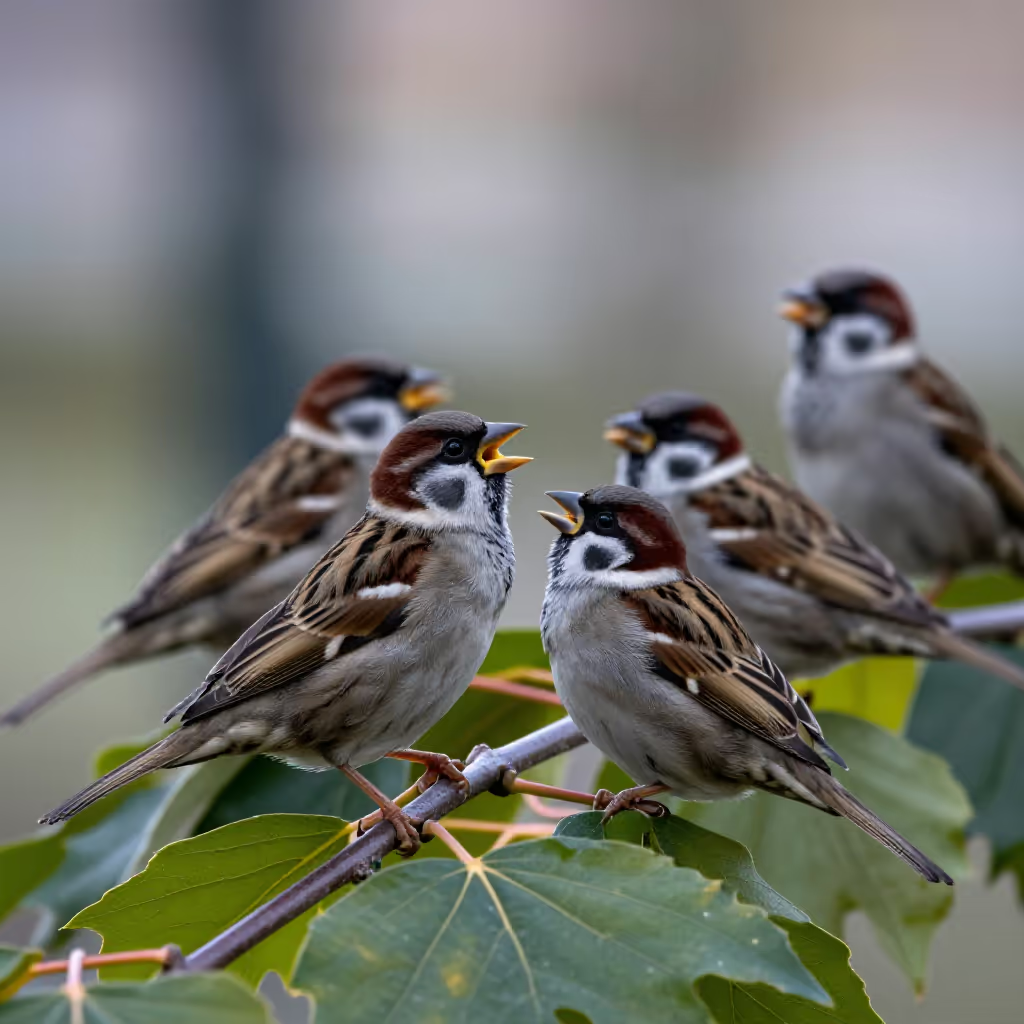
zwitschern
to chirp
The typical high, short sound that small birds such as sparrows or finches make.
EXAMPLE
Am Morgen hört man die Vögel vor dem Fenster zwitschern.
In the morning, you can hear the birds chirping outside the window.
to chirp / tweet
Loading your saved state.
to chirp
The typical high, short sound that small birds such as sparrows or finches make.
Am Morgen hört man die Vögel vor dem Fenster zwitschern.
In the morning, you can hear the birds chirping outside the window.

to tweet
In colloquial language, especially with reference to social media, to publish a short message on the platform Twitter (now X).
Er zwitscherte seine Meinung zum neuen Gesetz direkt nach der Ankündigung.
He tweeted his opinion on the new law right after the announcement.
'Zwitschern' (to chirp) is an onomatopoeic word. The sound of the word imitates the noise it describes—the high, short sounds made by small birds.
Ich liebe es, im Frühling aufzuwachen, wenn die Vögel zwitschern.
I love waking up in spring when the birds are chirping.
In its main meaning, it is always small birds that 'zwitschern' (chirp). Typical subjects are 'die Vögel' (the birds), 'die Spatzen' (the sparrows), or 'die Finken' (the finches).
Ein kleiner Spatz zwitscherte fröhlich auf dem Dach.
A little sparrow chirped happily on the roof.
You can recognize the modern, colloquial meaning from the subject of the sentence. If a person (e.g. 'er' (he), 'die Journalistin' (the journalist)) 'zwitschert' (tweets), it means publishing a message on social media.
Der Politiker zwitscherte gestern Abend seine Reaktion auf die Debatte.
The politician tweeted his reaction to the debate last night.
Using 'zwitschern' (to tweet) for social media messages is colloquial. It comes directly from the name of the platform 'Twitter', whose logo is a bird.
Sie zwitschert mehrmals täglich über ihr Leben als Künstlerin.
She tweets several times a day about her life as an artist.
to sing
Both words describe the melodic sounds made by small birds. „Singen“ emphasizes continuous birdsong, while „zwitschern“ refers more to short, high-pitched individual sounds. „Singen“ is suitable for a longer melodic sequence, while „zwitschern“ is more suitable for individual bright sounds.
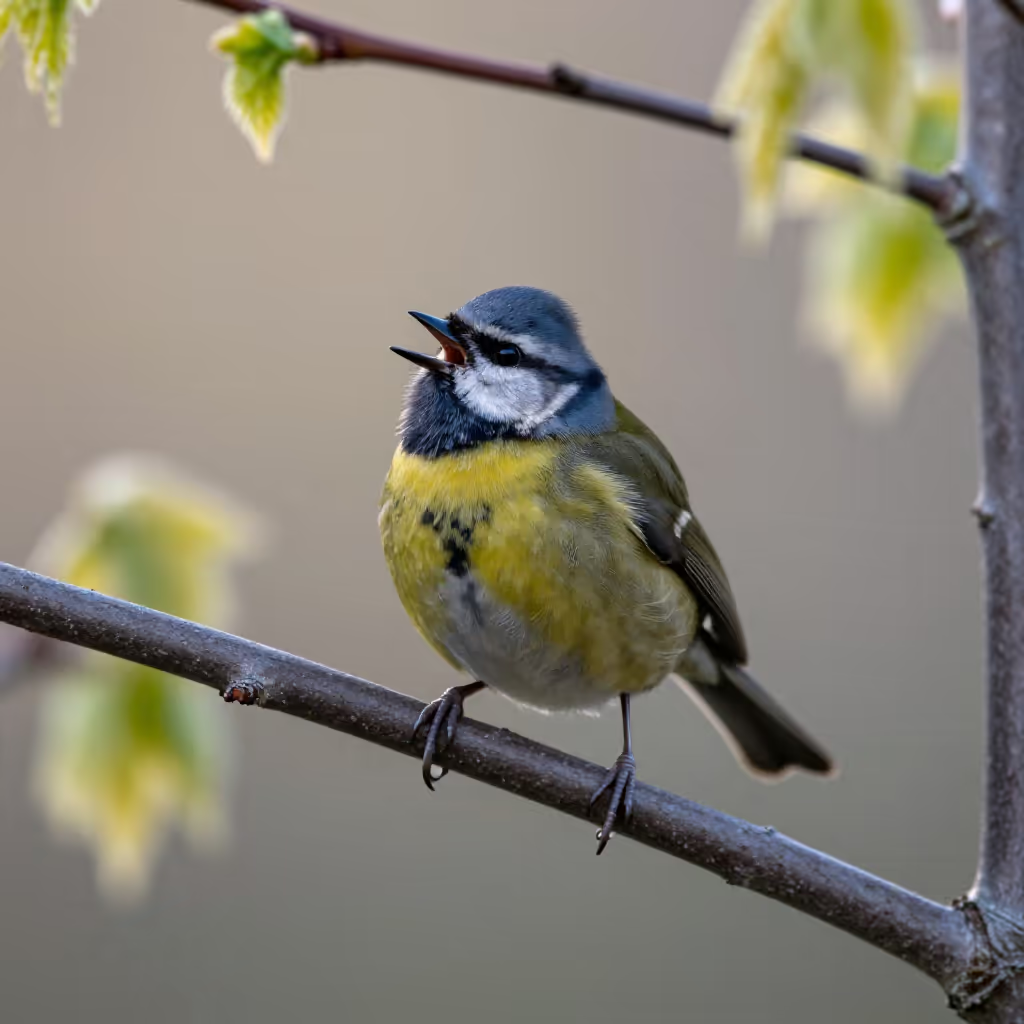
Am Morgen zwitschert der kleine Vogel kurz und hell im Garten.
In the morning, the little bird chirps briefly in a high, bright tone in the garden.
Am Morgen singt der kleine Vogel lange und melodisch im Garten.
In the morning, the little bird sings a long, melodious song in the garden.